
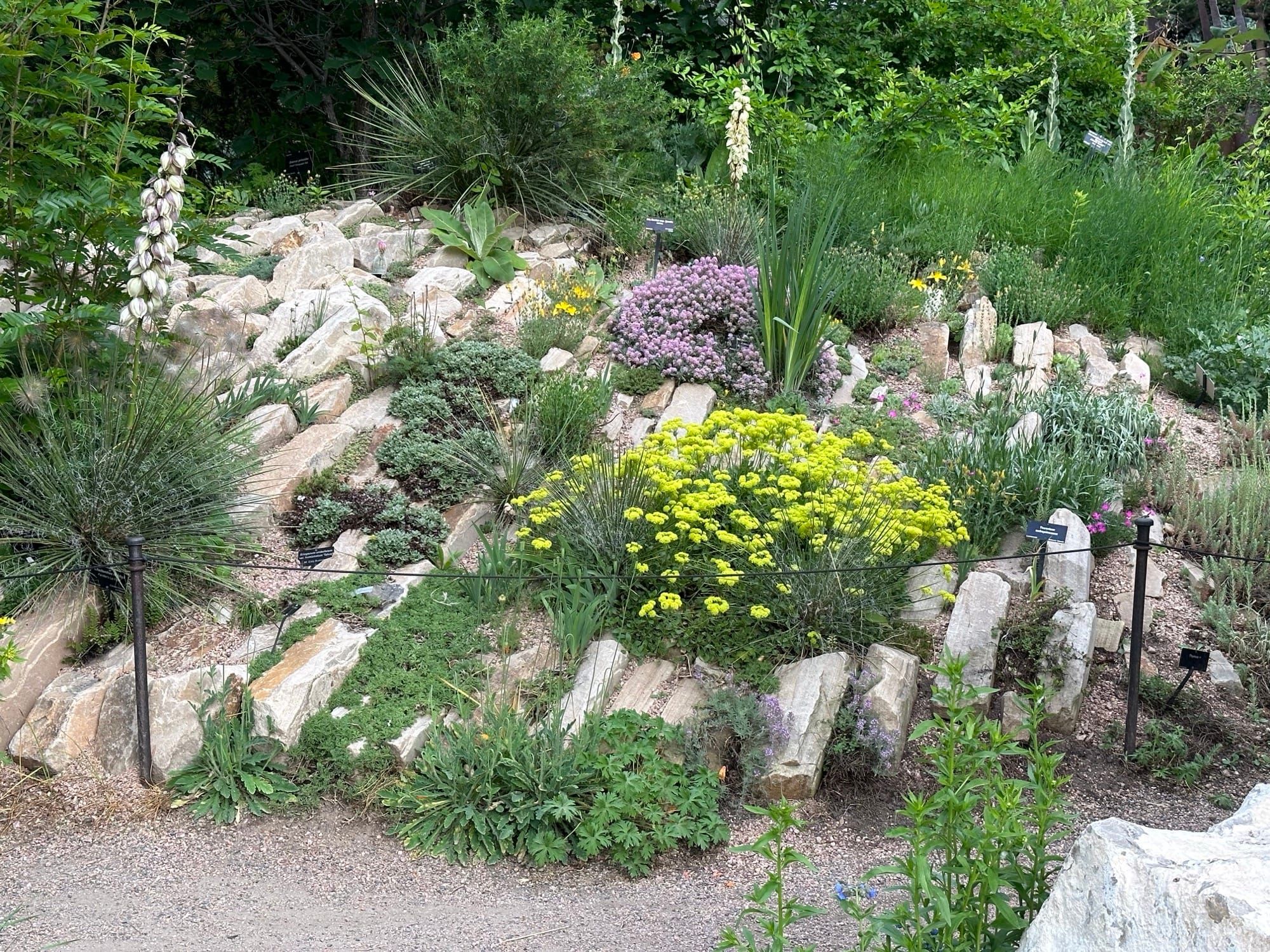
Xeriscaping a slope is the rare case where the low-water approach isn't just cheaper to run — it's structurally better. Slopes are where lawns fail hardest: mowing is dangerous, sprinkler water sheets off before it soaks in, and every storm carries a little more topsoil to the sidewalk. A xeriscaped slope flips all three problems into features. Here's the erosion-proof playbook.
Why slopes shed water (and how to make them stop)
Water obeys gravity faster than it obeys soil. On a grade, rainfall and irrigation run downhill before infiltrating — so the top of a slope is a desert and the bottom is a bog, and moving water takes soil with it. Every technique below does one of two jobs: slow the water down or hold the soil in place. Do both and the slope takes care of itself.
Shape the slope first
Terrace anything steeper than 3:1. A few low retaining walls — dry-stacked stone, block, or timber — turn one erosive slope into flat, plantable steps. Keep each wall under about 3 feet; taller usually means permits and engineering, and two short terraces beat one tall wall anyway.
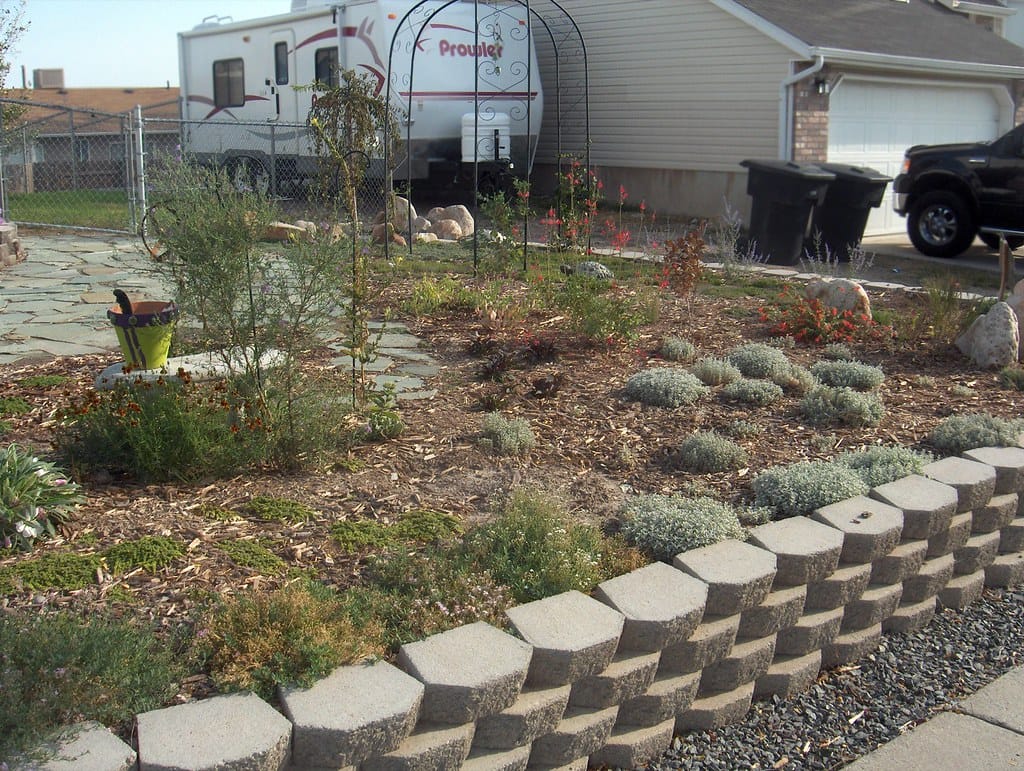
Key in boulders. Bury large rocks a third to half deep in staggered rows across the slope (never straight lines down it). They act as check dams, create planting pockets, and look geological. This is rock garden design doing double duty as engineering.
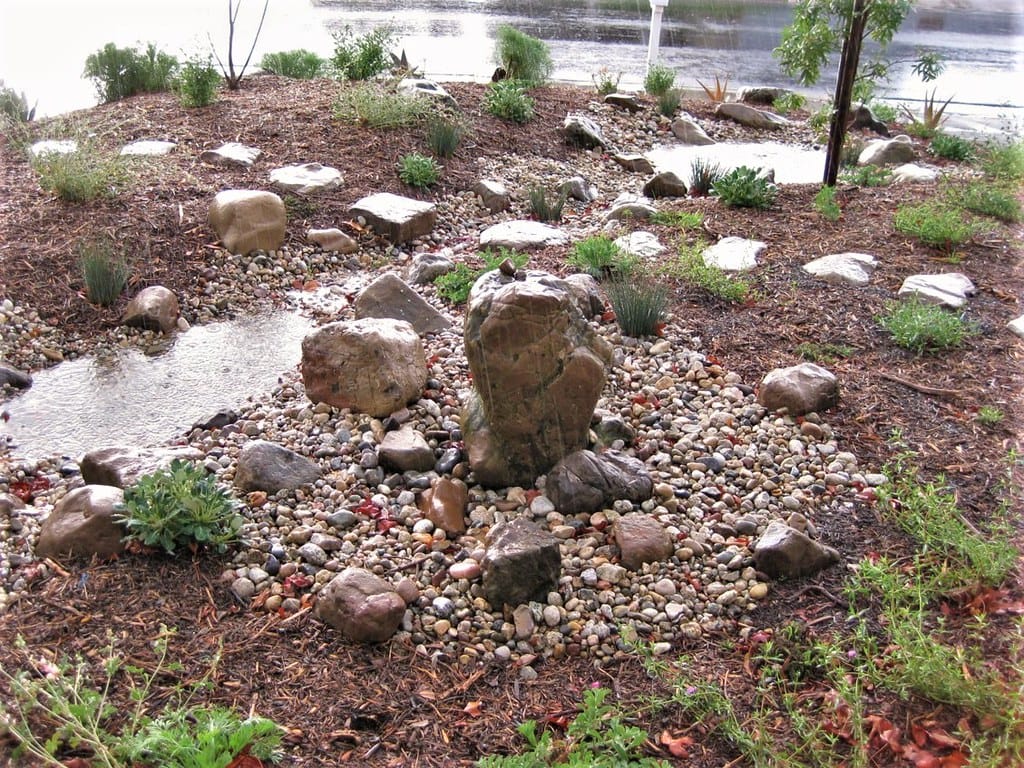
Cut planting basins, not shelves. Behind each boulder and each plant, carve a small crescent-shaped basin — a flat "cup" that catches water and gives roots time to drink.
Route the big flows. If the slope catches roof runoff or a neighbor's drainage, give it a channel: a dry creek bed running diagonally across the grade is the classic move — beautiful, and it takes the destructive water out of the planting.
Plant like a root system, not a decorator
Plants are the permanent erosion control; everything else buys time until they knit.
- Deep-rooted anchor shrubs every few feet: sumac, rabbitbrush, manzanita, cenizo by region — shrub options here.
- Bunchgrasses between them. Little bluestem, blue grama, and muhly roots run several feet down (grass picks).
- Spreading groundcovers to close the gaps: creeping veronica, sedums, ice plant, kinnikinnick — the groundcover roster is your slope's living blanket.
- Plant densely. Slopes are the one place to overplant on purpose — aim for full coverage in two seasons, not five.
- Match plants to the microclimates: the dry, sun-blasted top gets the toughest natives; the moister toe of the slope can take the thirstier-end perennials.
Water without runoff
Spray irrigation on a slope is a runoff machine. Use drip — or convert the old spray zone — with these slope-specific tweaks:
- Run lines across the slope on contour, one emitter uphill of each plant so water soaks down into the roots.
- Cycle-and-soak: two or three short runs with breaks between beats one long run, because slopes absorb slowly. Many controllers have this built in.
- Pressure-compensating emitters keep the bottom of the run from getting more water than the top.
Hold the surface while it establishes
- Gravel mulch beats wood on grades — bark floats and migrates downhill in the first storm (the mulch matchup). Use angular rock, not rounded pea gravel, which rolls.
- Jute or coir netting pinned over the soil between new plants holds everything through the first year, then biodegrades on schedule as roots take over.
- Skip solid plastic and weed fabric. Water races along the top of it, taking the mulch with it — and it doesn't stop weeds anyway.
- Patrol year one. Refill basins after storms and replace any washouts fast — first-year care is when the slope is won or lost.
The payoff
By year three the roots have knitted, the boulders have settled in, and the hill you used to mow sideways at your own peril has become the best view on the property — a terraced, blooming rock garden that waters itself with rain it used to shed. Start with the 10 Steps, and steal composition ideas from our front yard xeriscape roundup.
Flat yards get landscaped. Slopes get engineered — and a xeriscape is the prettiest engineering there is.