
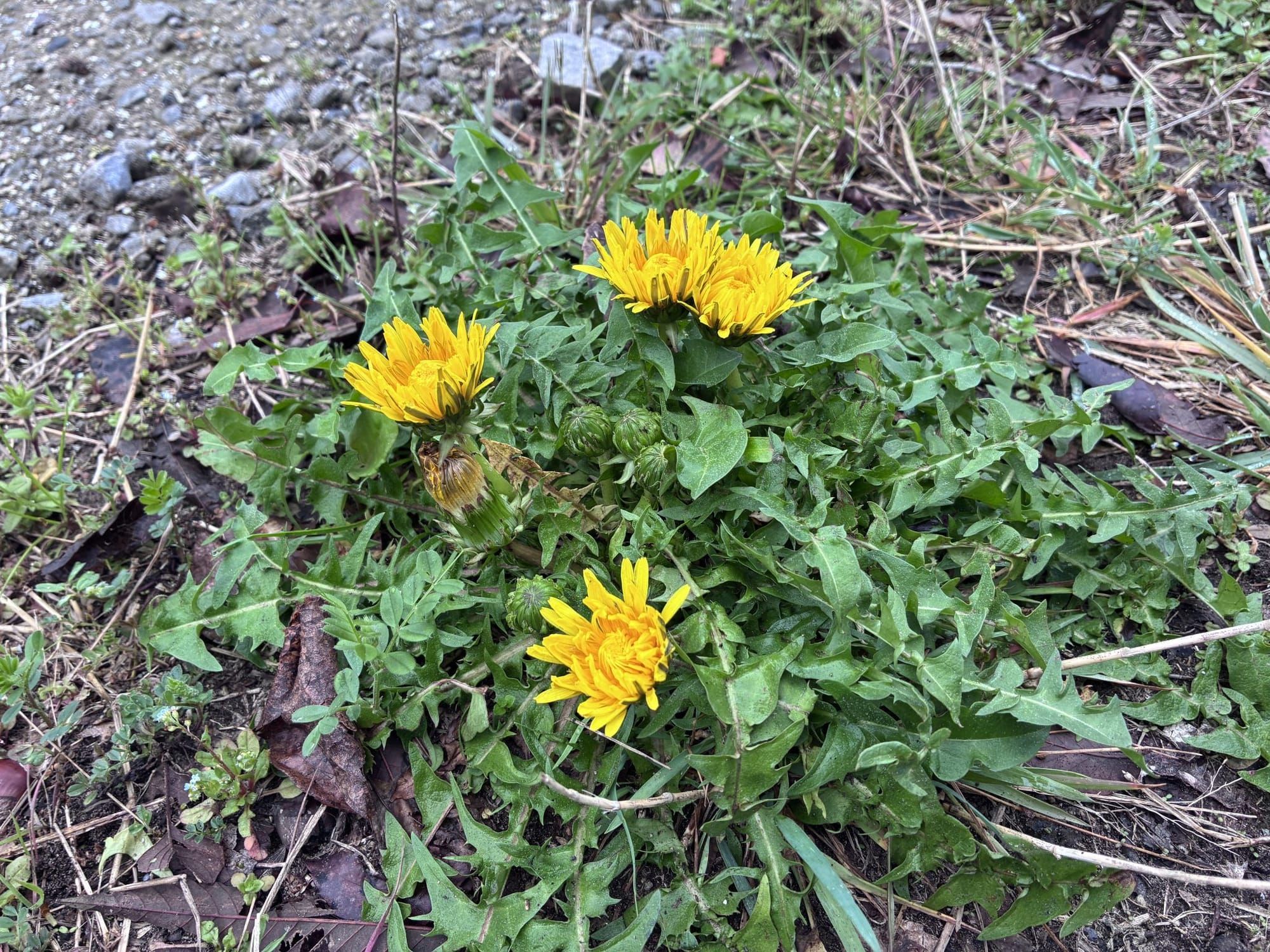
Here's the secret nobody tells you about how to stop weeds in gravel: the weeds aren't coming up from below. Almost every weed in a gravel bed germinated in the gravel itself — in the thin layer of dust, dead leaves, and blown-in soil that settles between the stones. Wind delivers the seeds; the gravel's own debris is the potting mix. Once you understand that, the whole strategy changes — and the products that don't work start making sense.
Why landscape fabric alone disappoints
Fabric under gravel does one job well: it keeps gravel from sinking into soil and blocks weeds pushing up from the old seed bank. Worth doing under any new gravel area. But it does nothing about seeds landing on top — which is where most gravel weeds come from. People install fabric, get two clean years while the dust layer builds, then conclude fabric "stopped working." It didn't; the battlefield just moved above it.
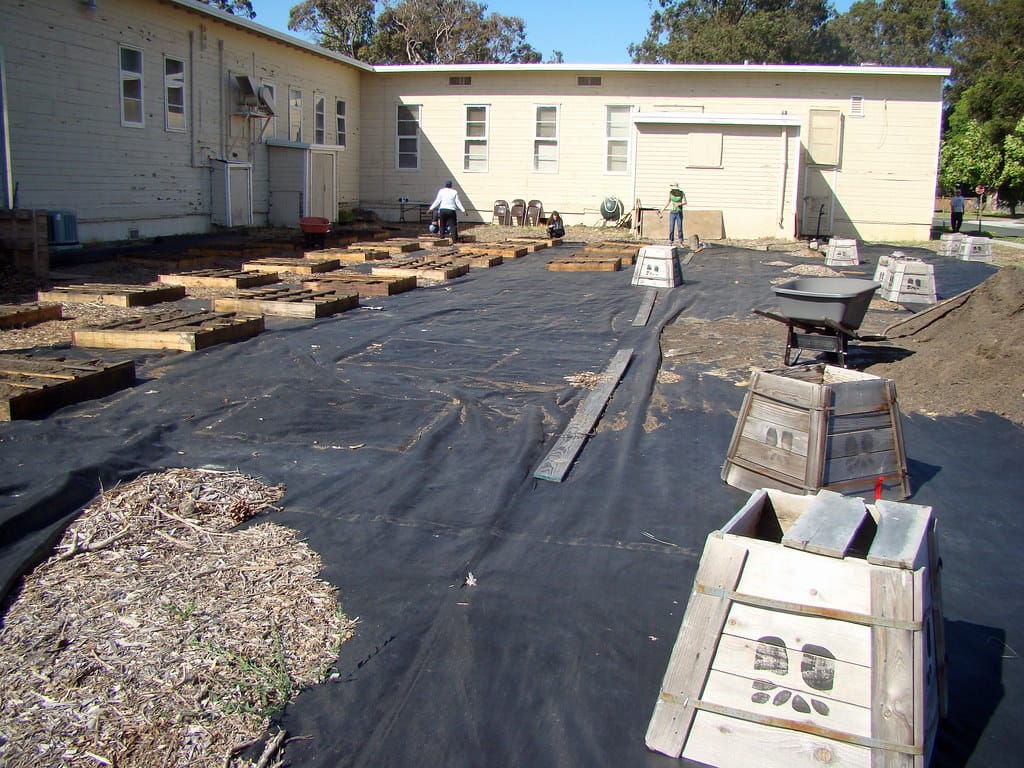
And skip plastic sheeting entirely — it kills soil life, sheds water sideways, and weeds colonize the debris on top of it anyway. More on what belongs under mulch here.
Build gravel areas that resist weeds
If you're installing (or willing to rehab) gravel, most of the war is won at construction:
- Strip existing weeds and grass completely — same methods as lawn removal, roots included. Bindweed under new gravel is a life sentence.
- Quality woven fabric, overlapped 6+ inches at seams, pinned tight. Cheap thin fabric tears and lets weeds stitch through.
- Go deep: 3–4 inches of stone. Thin gravel is the #1 weed invitation — seeds reach warm moist fabric fast. Deep gravel dries fast and starves seedlings.
- Edge it. Steel or concrete edging keeps soil from washing in and lawn from creeping sideways. The weediest gravel is always at an unedged lawn seam — exactly where the dandelions in the photo above got their start.
- Keep organic debris off. Blow or rake off leaves each fall. Leaves become compost; compost between stones becomes a nursery.
Killing the weeds you already have
Pick your tool by the weed:
- Hand-pull after rain — small annuals slide out of gravel easier than any other surface. Ten minutes monthly beats an hour quarterly.
- Flame weeder — a propane torch is made for gravel: fast, chemical-free, and the rocks don't care. Wilt, don't incinerate. Not in wildfire season, not near dry mulch.
- Boiling water — the free version of the same idea, for paths near the kitchen.
- Horticultural vinegar (20–30%) on a hot sunny day burns down young top growth. It doesn't kill mature taproots, and it's not the harmless water it sounds like — gloves and eye protection.
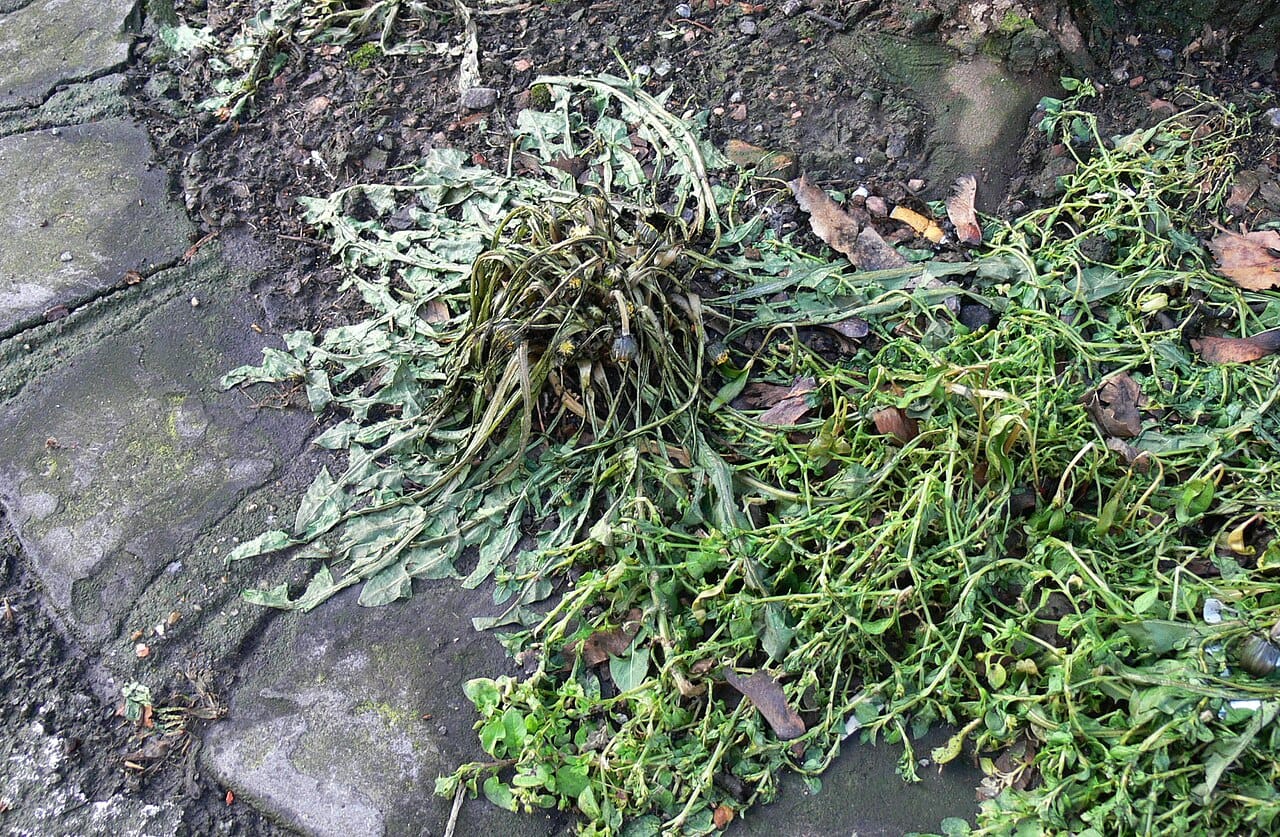
- Dig taprooted and running weeds (dandelion, bindweed, bermudagrass). Anything that regrows from a root fragment must come out whole or be spot-treated; burning the tops of bindweed is cardio, not control.
The prevention layer most people skip
Pre-emergent herbicide stops seeds from germinating and does nothing to existing plants — which makes gravel its ideal use case. Apply in early spring (and again in fall for winter annuals) after cleaning the gravel. Corn gluten meal is the organic option, with genuinely mixed results — hedge your expectations. Whatever you use, read the label; pre-emergent near beds where you want plants to self-seed will stop that too.
Polymeric sand or fines, packed into the surface is the heavier-duty option for paths and patios: it locks the top layer so there's no loose dust pocket for germination. Decomposed granite with stabilizer works on the same principle.
The honest maintenance schedule
- Monthly in the growing season: a 10-minute patrol — pull or flame the babies.
- Spring and fall: blow off debris; pre-emergent if you use it.
- Every few years: rake the gravel to redistribute, top up thin spots to full depth.
A gravel area maintained this way produces a handful of weeds a month, pulled while your coffee cools — which is the actual promise of low-maintenance landscaping. "For good" doesn't mean weeds never land; it means they never win.