
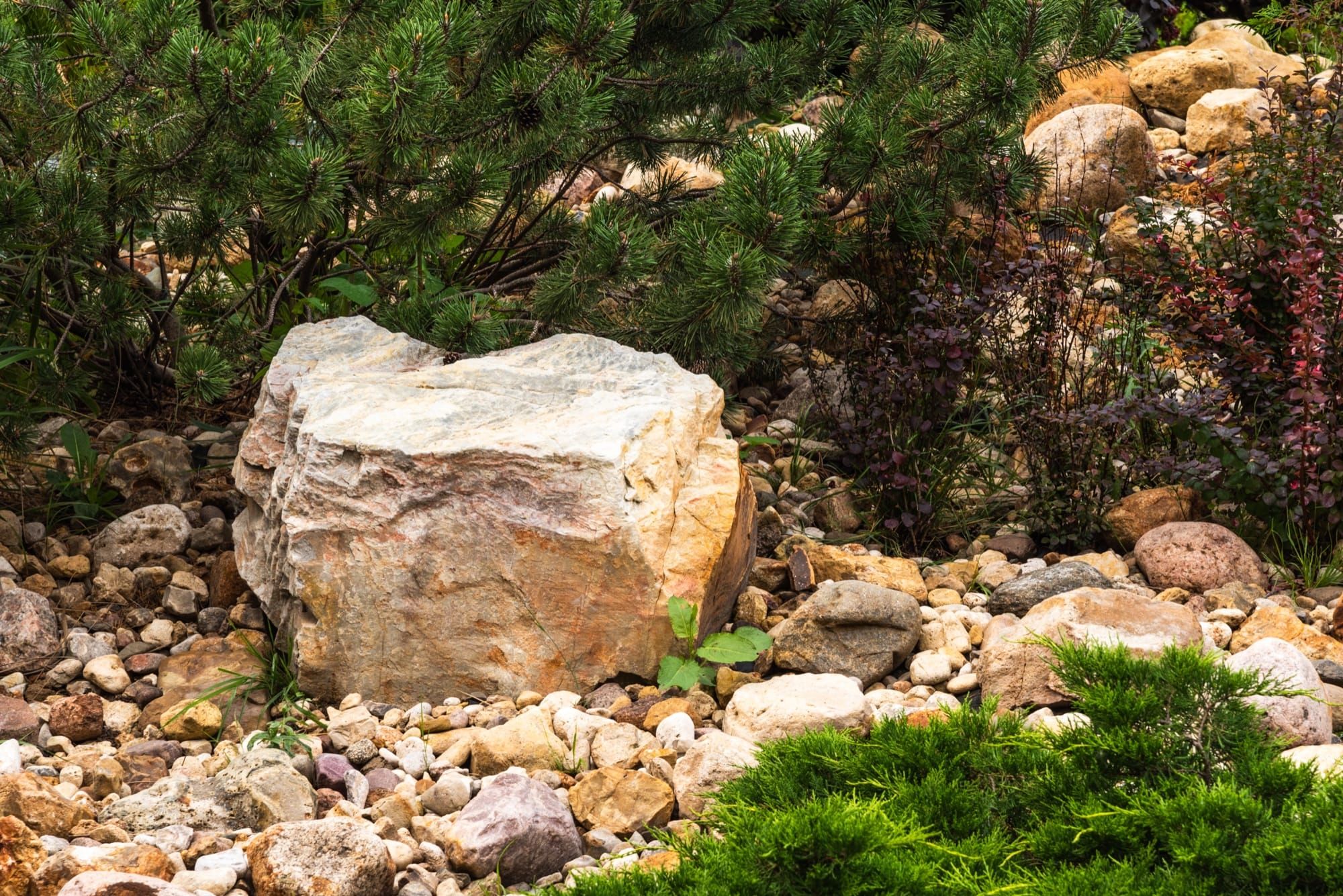
Every xeriscape needs 2–3 inches of mulch — that part isn't debatable. Mulch is the cheapest water-saving tool in landscaping: it blocks evaporation, suppresses weeds, and buffers soil temperature. The real question is which mulch where, because gravel and wood behave very differently, and using the wrong one in the wrong place quietly costs you plants.
Wood mulch: the soil-builder
Shredded bark, wood chips, or arborist chips ("chip drop" loads are often free).
Strengths
- Feeds the soil. Wood breaks down into organic matter — exactly what perennial and shrub beds want.
- Superior moisture retention — the best choice over root zones of thirstier plantings.
- Cool. Wood stays temperate in sun; roots below it stay happy.
- Cheap in bulk, and comfortable to kneel and work in.
Weaknesses
- It decomposes — plan on topping up every 1–2 years.
- It travels. Wind and water move it; it floats out of swales in a storm.
- Fire. In wildfire-prone zones, keep wood mulch 5+ feet away from structures.
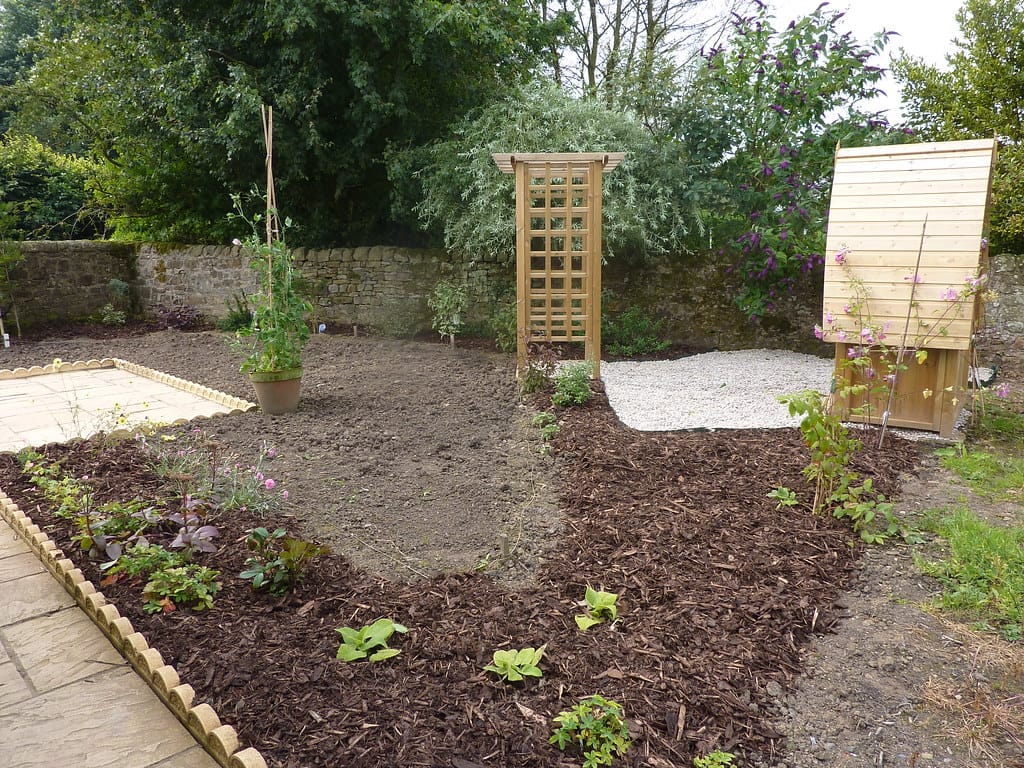
Gravel & rock: the desert skin
Crushed rock, pea gravel, or decomposed granite (DG) over landscape zones.
Strengths
- Permanent. Buy once; it never composts away.
- Keeps crowns dry — the difference between life and death for agave, cactus, lavender, penstemon, and the whole sharp-drainage crowd.
- Stays put on slopes and in wind, and won't wash out of a dry creek bed.
- Fireproof — the right choice against the house in fire country.
Weaknesses
- Heat. Rock absorbs and radiates — dark gravel against a south wall cooks nearby plants and the room behind the wall. Choose light colors in hot exposures.
- Builds no soil. Beds under rock stay lean forever (fine for natives, wrong for hungrier plantings).
- Weeds anyway. Dust settles between stones and weeds germinate in it — the gravel-weed fix is its own article.
- Miserable to change your mind about. Removing rock mulch is a punishment.
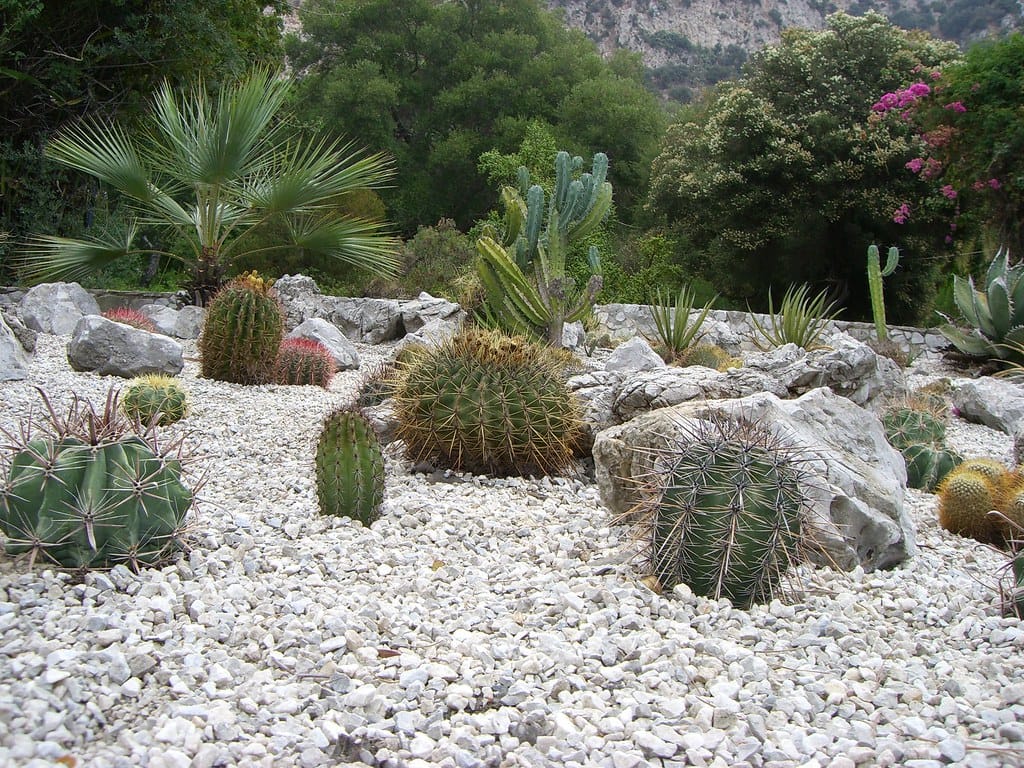
The placement cheat sheet
| Zone | Use | Why |
|---|---|---|
| Perennial & shrub beds | Wood | Builds soil, holds moisture |
| Cactus, agave, Mediterranean herbs | Gravel | Dry crowns, sharp drainage |
| Rock gardens | Gravel | Look + drainage |
| Slopes & swales | Gravel/rock | Won't wash or blow |
| Against the house (fire zones) | Gravel | Non-combustible |
| Under trees | Wood (chips) | Mimics forest floor |
| Hot south walls | Light gravel, plants set back | Manage the heat load |
| Paths | DG or gravel | Firm, permanent, cheap |
Most well-designed xeriscapes use both — wood in the planted beds, gravel in the driest zones, paths, and drainage features. The two-mulch yard isn't a compromise; it's the correct answer.
Application rules (both kinds)
- 2–3 inches deep. Less doesn't suppress weeds; much more suffocates roots.
- Off the crowns and trunks. Mulch touching stems = rot and rodents.
- Skip the plastic sheeting underneath. It kills soil life and fails anyway. Under gravel, a quality woven landscape fabric is defensible; under wood, use nothing — let it feed the soil.
- Top up wood every year or two; rake and refresh gravel every few years.
Where does mulching fall in the build? Step 9 of the 10 Steps to Xeriscaping — right after planting, right before the first deep watering.