
"Low-maintenance" is the most abused phrase in landscaping. Everything gets called it; almost nothing is. So here's the honest version: a ranking of landscape types by what they actually demand from you in a year — and the design choices that genuinely buy back your weekends.
The hierarchy (most work → least)
1. Conventional lawn: 60–100+ hours a year. Mowing 25–30 times, edging, fertilizing, aerating, irrigating, patching, fall cleanup. It's a part-time job you pay to have. (The full lawn math is here.)
2. Traditional ornamental beds: 40–60 hours. Thirsty perennial borders, annual color swaps, deadheading, staking, dividing, constant watering.
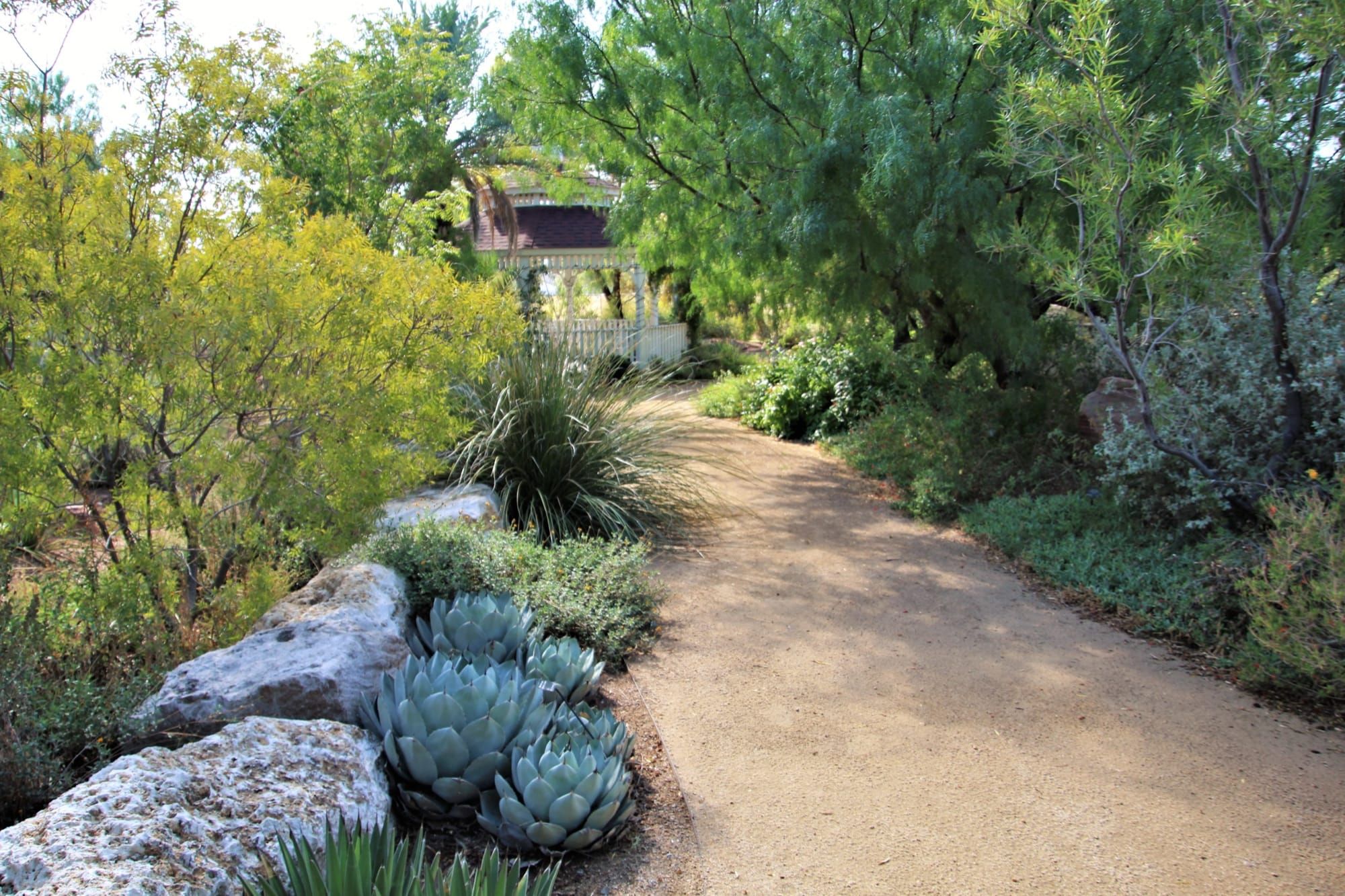
3. A well-designed xeriscape: 15–25 hours. One spring cutback, occasional weeding, a mulch top-up, and light seasonal watering checks. This is the sweet spot of the entire chart — real landscape, real color, a tenth of the labor.
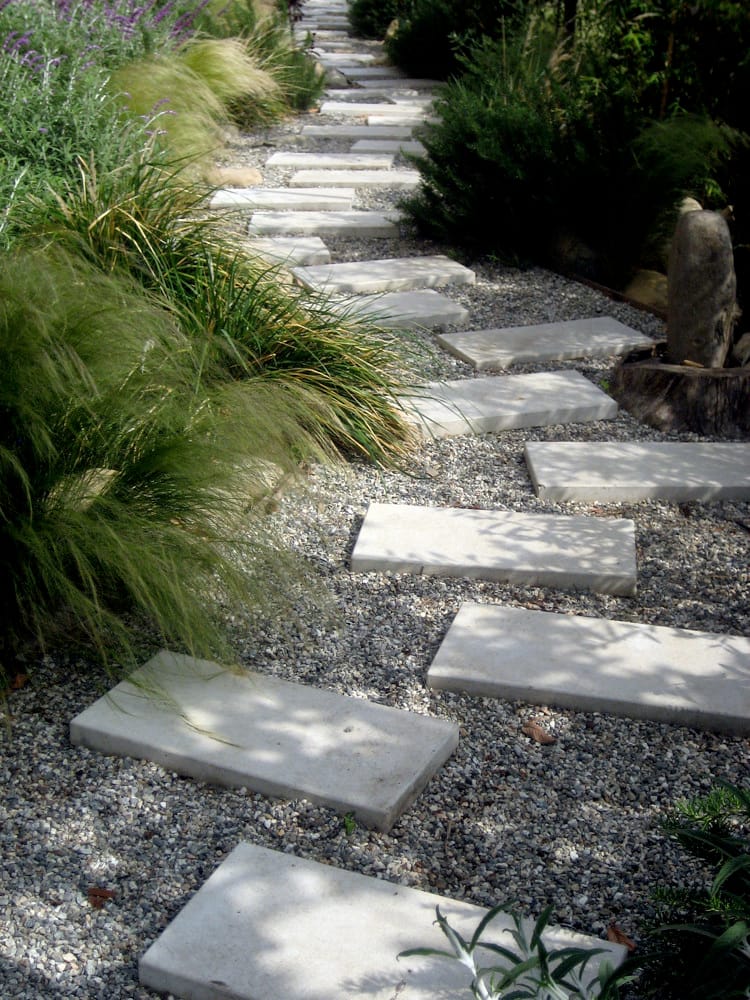
4. Hardscape-heavy zeroscape: 10–20 hours. Surprised it's not lower? Weeds germinate happily in gravel, and there are no plants to shade them out. And you paid for it in heat and curb appeal.
The takeaway: the xeriscape beats the "zero" option — near-lowest labor, but you get an actual garden.
What makes a landscape genuinely low-maintenance
Right plants, unpampered. Climate-adapted plants (zone-checked) don't need coddling. Most of the work in a traditional yard is life support for the wrong species.
Dense planting. Bare mulch is a weed nursery. Plants touching plants means the canopy does your weeding. Design toward 70–80% ground coverage at maturity.
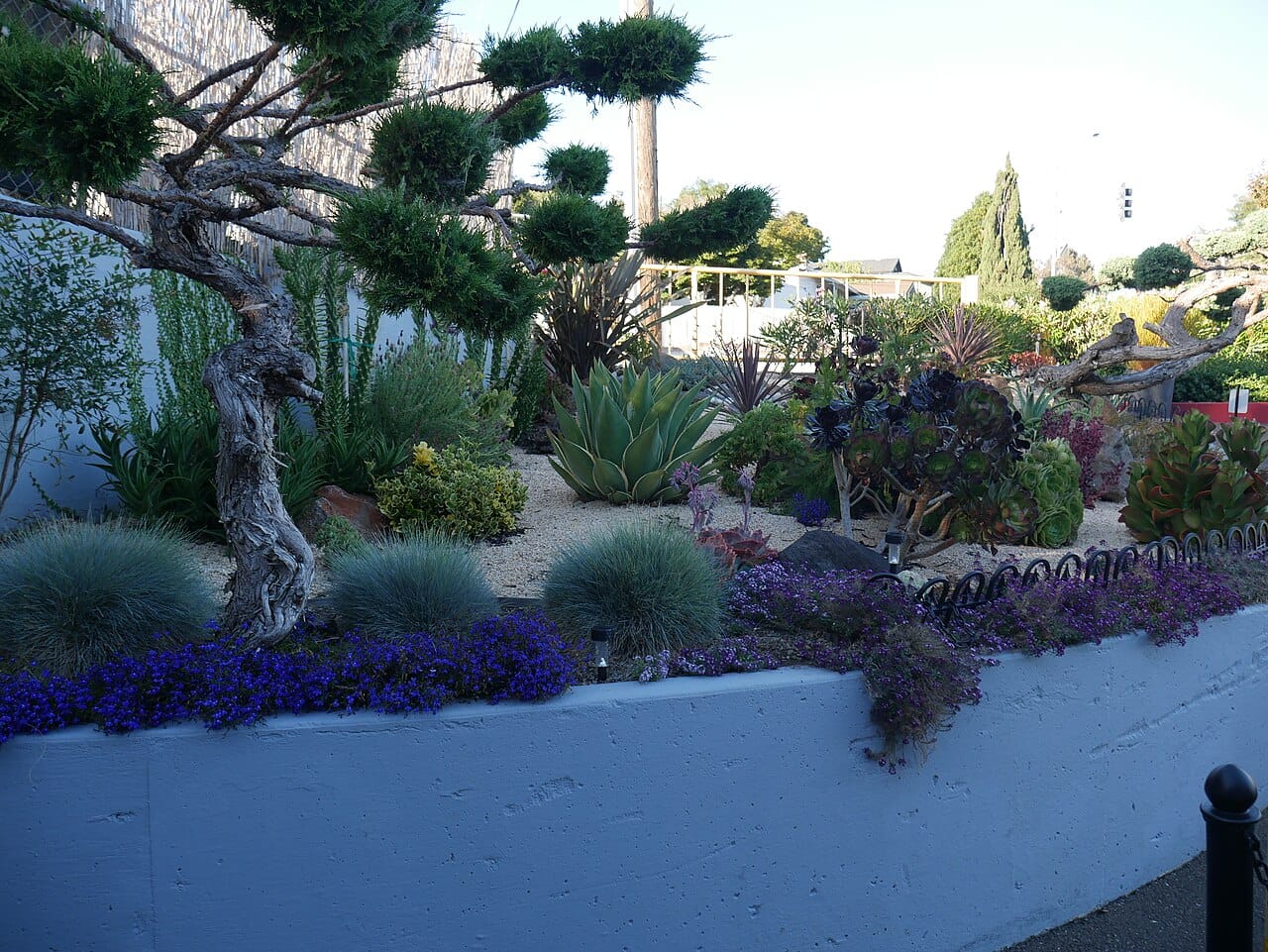
Mass and repeat. Ten kinds of plants in drifts beat forty species in singles — visually and in your maintenance brain. Everything gets the same treatment on the same day.
Drip on a timer. Watering by hand is the silent hour-eater. Drip irrigation with a smart controller removes the chore and the guesswork.
Deep mulch, maintained. 2–3 inches, topped up every year or two — the right mulch in the right place.
No fertilizer program. Xeric plants in lean soil skip the feed-flush-flop-stake cycle entirely.
Self-cleaning plants. Favor plants that don't demand deadheading — grasses, rabbitbrush, sedums, yucca — and perennials whose seed heads are winter features, not chores.
The maintenance calendar, honestly
A mature xeriscape's whole year: spring — cut back grasses and perennials, top up mulch, check drip lines (a weekend). Summer — deep-water monthly in drought, pull the odd weed (minutes). Fall — leave everything standing for winter interest and habitat (zero). Winter — one deep watering during a warm dry spell in the arid West. That's the whole job. (Full calendar here.)
The catch — year one
Honesty requires it: a new xeriscape is not low-maintenance in its first season. Establishment watering and weed patrol while plants fill in are real work. You're trading one high-effort year for a decade of nearly free ones — the first-year guide gets you through it.
Ready to make the trade? Start with Why Xeriscaping? and the 10 Steps, and check what the conversion costs — including the rebates that shrink it.