
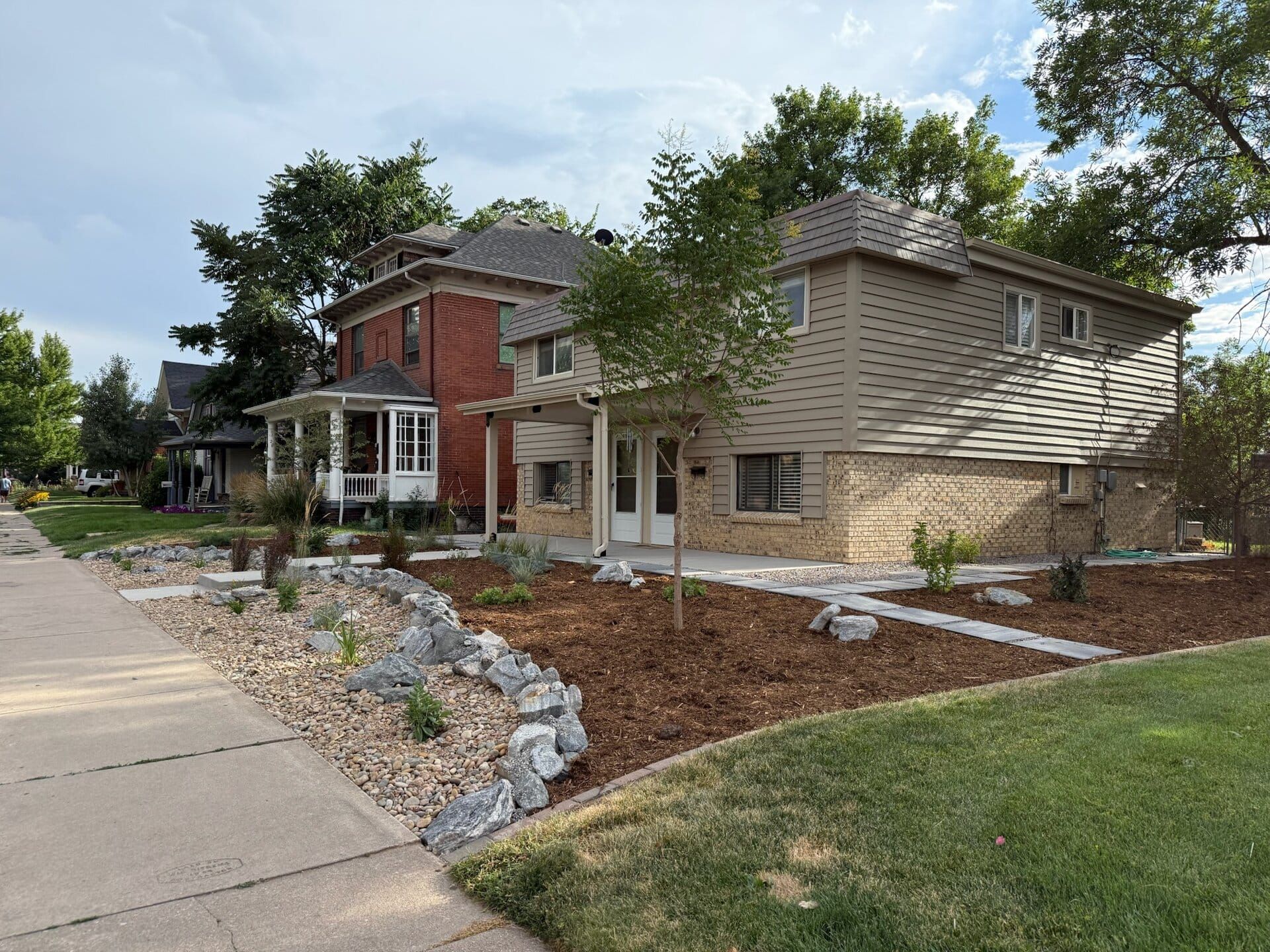
The xeriscape vs lawn debate usually gets argued with vibes. Let's argue it with a ledger instead. Grass is the cheapest landscape to install and one of the most expensive things to own; xeriscape is the reverse. Once you tally water, inputs, equipment, and your own weekends, the comparison stops being close — but a lawn still wins in a couple of specific situations, and we'll get to those.
What a lawn actually costs to own
Nobody itemizes their lawn, which is how it stays popular. The annual bill:
- Water — the big one. In dry-summer climates, outdoor irrigation is commonly half or more of a household's summer water use, and most of it goes to turf. Cool-season grasses like Kentucky bluegrass want roughly an inch or more of water per week through the heat — on a few thousand square feet, that's tens of thousands of gallons a season. Under tiered and rising rates, hundreds of dollars a year is typical in the West; check your own bill's summer spike for your number.
- Inputs. Fertilizer several times a year, pre-emergent, broadleaf herbicide, grub control, aeration, overseeding. Individually cheap; annually recurring; forever.
- Equipment. A mower plus trimmer and their fuel, blades, and eventual replacement.
- Your time. Mowing 25–30 times a year plus edging and the rest conservatively runs 50+ hours annually. Value your Saturdays however you like — the lawn is billing you.
What a xeriscape costs to own
The install is the expensive part — roughly 5–20 per square foot professionally, or 1–6 DIY (full breakdown here, and per-square-foot detail here). After establishment, the annual ledger gets quiet:
- Water: typically 50–75% less than the turf it replaced — here's where that number comes from. Many established beds need only occasional deep soakings; mature natives often need almost none.
- Inputs: no fertilizer program, no turf herbicides, occasional mulch top-ups.
- Time: a few focused hours per season — the full maintenance calendar — instead of a weekly appointment.
Add the one-time kicker: many western utilities pay you per square foot to remove turf (the rebate directory — confirm current rates and apply before you dig). Most homeowners come out ahead within 5–10 years on water and maintenance alone, faster with a rebate, faster still every time rates rise.
The non-money columns
- Ecology: a monoculture lawn feeds nearly nothing; a planted xeriscape is pollinator habitat with structure, seedheads, and four actual seasons of interest.
- Noise and emissions: no weekly mow is a gift to you and everyone within earshot.
- Looks: subjective — but a good xeriscape is a garden, not a yard of gravel. Green, blooming, and deliberate.
Where the lawn honestly wins
- Play surface. Kids, dogs, croquet — nothing beats turf underfoot. No serious xeriscaper argues otherwise.
- Upfront cost. Seed is nearly free; sod is cheap per foot. If you're selling next year, grass is the budget move.
- Zero learning curve. Everyone knows how to mow. A xeriscape asks you to learn a plant palette — once.
The answer most yards want: both, resized
This isn't a total-war decision. The pattern that works: keep a right-sized lawn where you actually use it, and convert everything else — the front yard that exists only to be looked at, the hell strip, the side yards, the slopes. That's turf as a feature instead of a default, which is exactly what the 7 principles of xeriscaping prescribe. And if you want the green without the bill, buffalograss and blue grama make a real lawn on a quarter of the water.
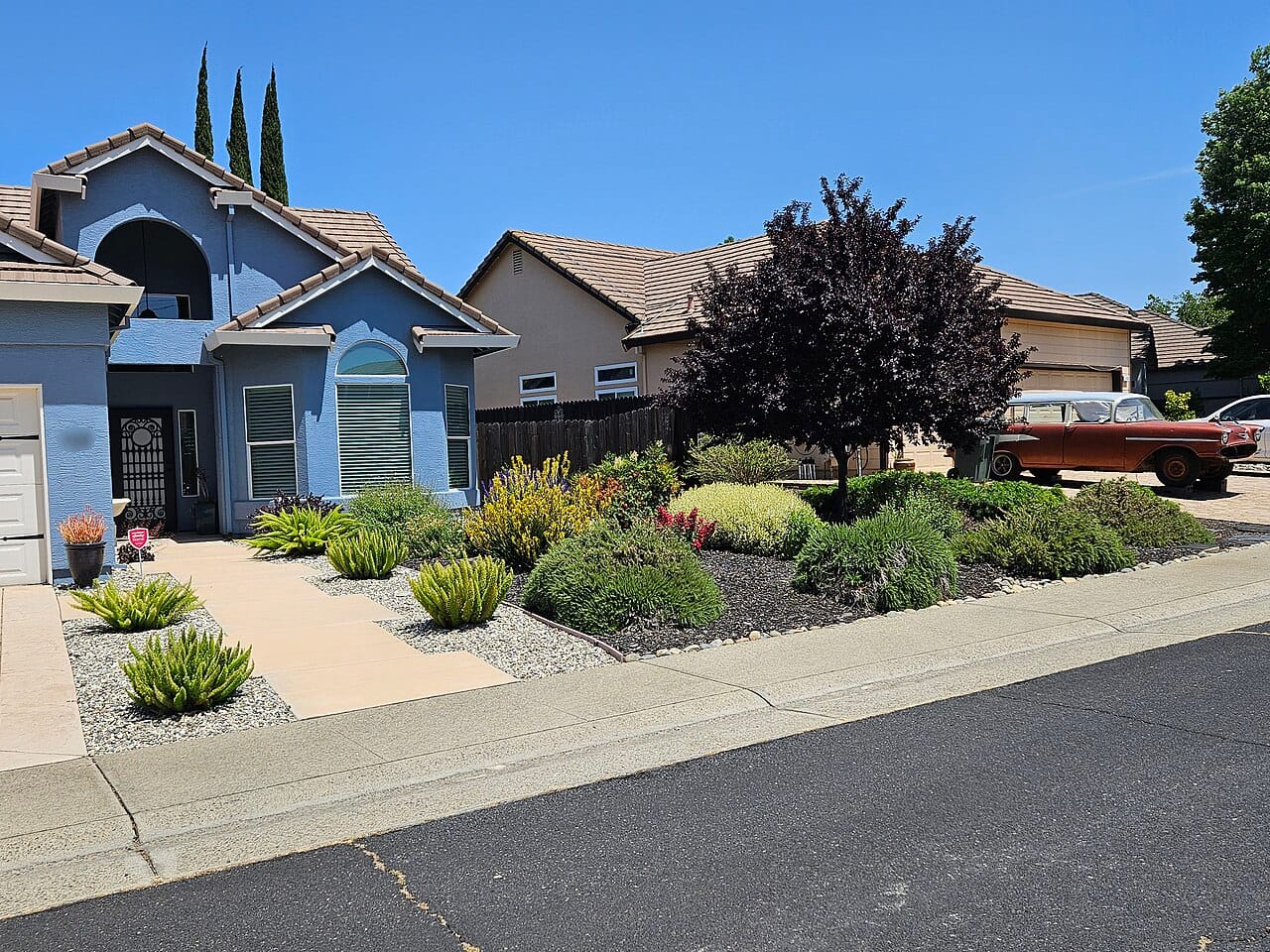
The photo above is what the middle of that decision looks like — lawn on one side, new xeriscape on the other, water bill already shrinking. Start with why xeriscaping works, then take the first steps. The grass gets one column in the ledger; you get the rest.