
Here's the xeriscaping cost per square foot, straight up: professionally installed xeriscaping runs about 5–20 per square foot; DIY materials run about 1–6. A 1,000-square-foot front yard is therefore roughly a 1, 000–6,000 project in materials if you do the work, or 5, 000–20,000 hired out. That's a wide range because "xeriscape" covers everything from seed-and-gravel to boulder-and-flagstone — so let's break down exactly what slides you toward each end.
Where you land in the range
| Spec | ~Low end ($5–8/sq ft pro, $1–2 DIY) | ~High end ($15–20/sq ft pro, $4–6 DIY) |
|---|---|---|
| Lawn removal | Sheet mulch (DIY, ~free) | Sod cut & hauled |
| Hardscape | Gravel + DG paths | Flagstone, boulders, walls |
| Plants | 1-gallon, spaced for growth | 5-gallon, planted dense |
| Irrigation | Hose-end drip on a timer | New valves + controller |
| Design | Your own plan | Professional design |
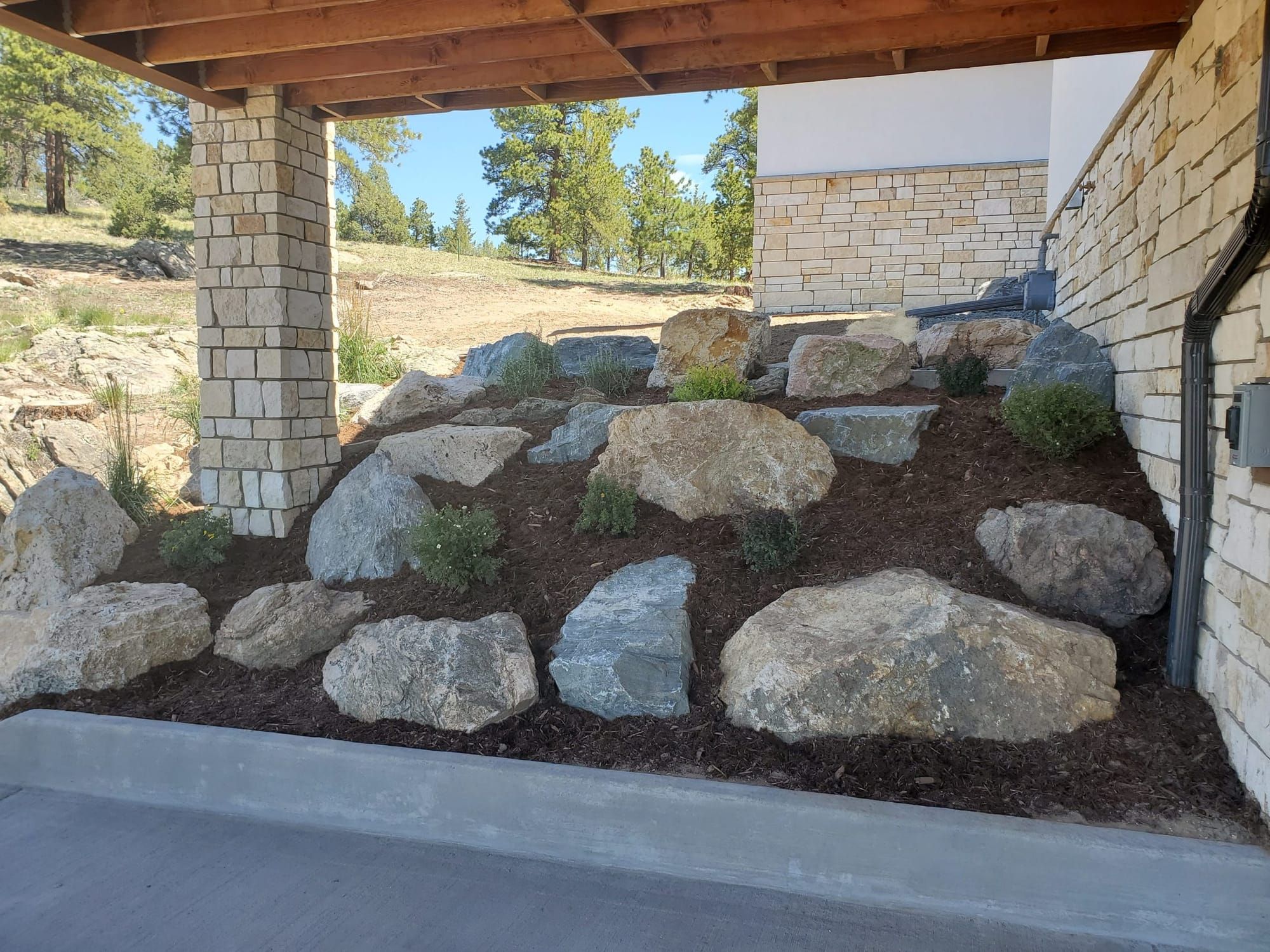
One high-end line item is enough to pull the whole project up: hardscape is the classic budget-eater. A yard that's mostly planted beds with gravel paths stays near the bottom of the range; a yard organized around stonework — like the boulder install pictured above — earns the top of it.
The per-square-foot line items
Roughly, and hedged — regional prices vary, so quote locally:
- Lawn removal: DIY sheet mulching ≈ free; pro sod removal typically adds 1–2/sq ft (the three methods compared).
- Soil prep: compost and amendments where beds need it — cents per square foot in bulk (what actually needs amending).
- Mulch: 2–3 inches of bulk wood chips or gravel lands under $1/sq ft delivered; which goes where.
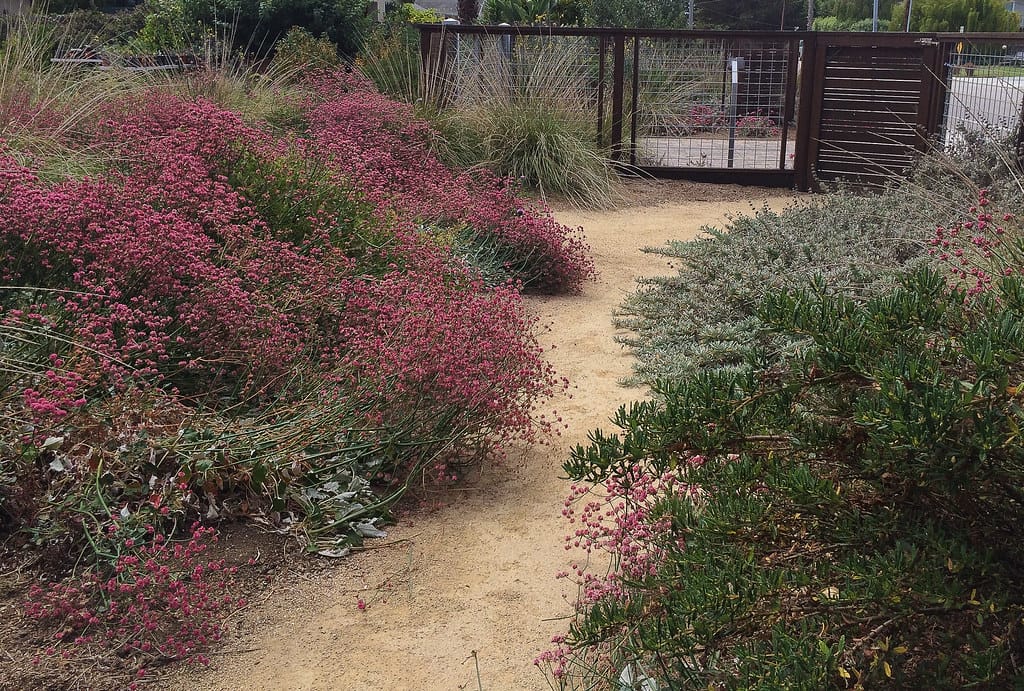
- Plants: the swing item. Small plants spaced to their mature size ≈ 1–2/sq ft; gallon-size density for instant fullness ≈ 3–6+/sq ft.
- Irrigation: DIY drip parts commonly work out to well under $1/sq ft; professionally installed systems run into the low thousands per yard. Converting existing sprinklers is cheaper than new lines.
- Hardscape: gravel and DG are the cheap end; flagstone, boulder placement, and any wall work are priced per project and can dominate everything above.
DIY vs. pro: the honest split
Labor is roughly half or more of a professional bid — that's the entire gap between $6 and $15 a square foot. But the DIY discount isn't uniform across tasks:
Biggest DIY savings (and very doable): lawn removal by sheet mulch, planting, mulching, hose-end drip. These are labor-heavy, skill-light — exactly where your sweat is worth the most per hour.
Worth paying for: grading and drainage, boulder placement (rocks that need machines), irrigation mainline/valve work, and a design consult if you're unsure. A few hundred dollars of design prevents thousands in do-overs — the most expensive xeriscape is the one you build twice.
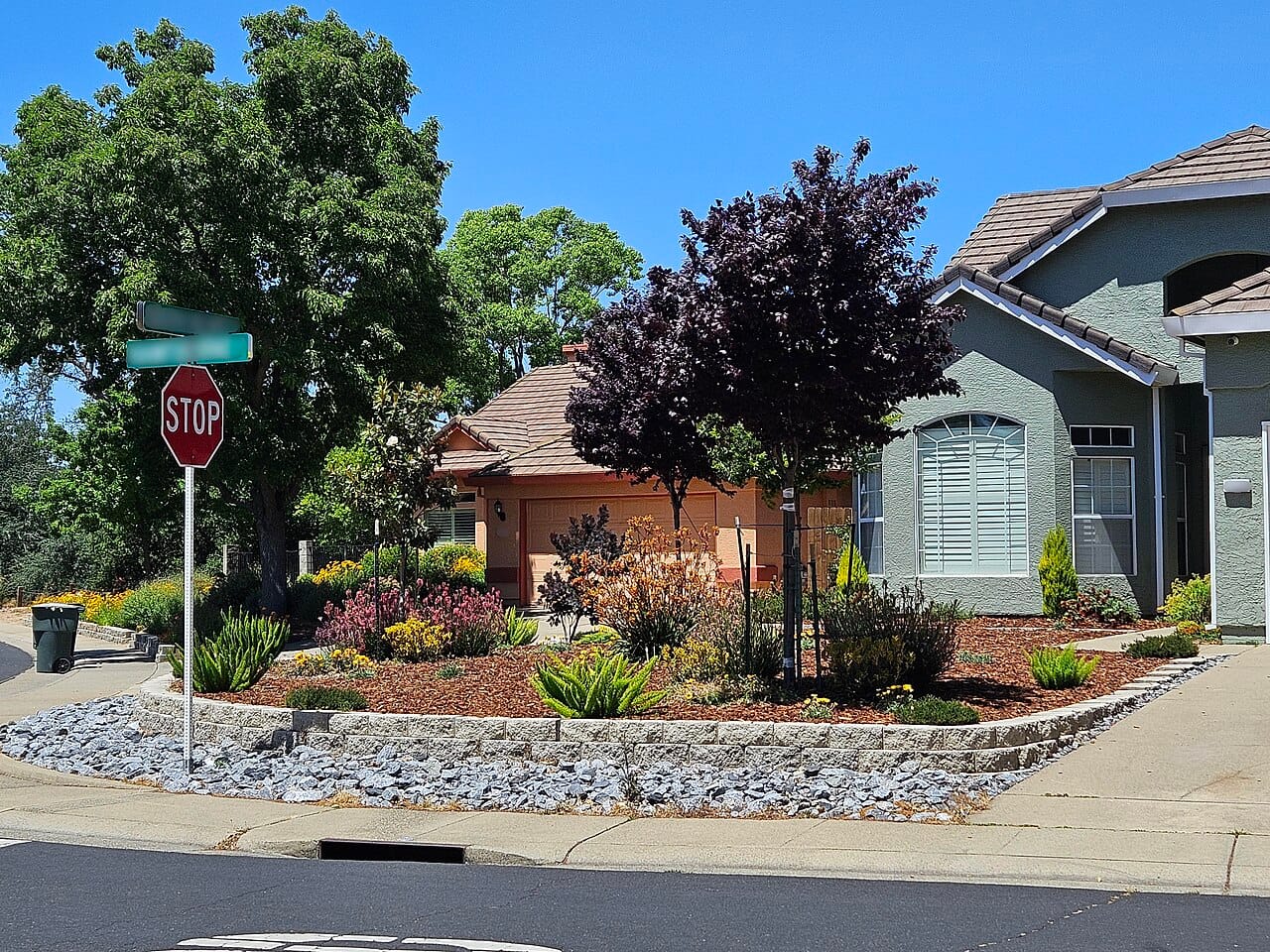
The hybrid play most budgets should run: pay a pro for design + the heavy hardscape day, then do demolition, planting, drip, and mulch yourself. It usually lands the project near the middle-low end of the installed range with a top-end result.
Don't forget the money coming back
Two offsets before you judge the number:
- Rebates. Many western utilities pay per square foot to remove turf — confirm current rates and apply before removing anything — the rebate directory.
- Water savings. Cutting outdoor use 50–75% is worth hundreds a year in much of the West (the savings math); typical payback runs 5–10 years, faster with a rebate.
Bottom line
Budget 1–6/sq ft DIY, 5–20/sq ft pro, and control your fate with three levers: less bought stone, smaller plants, more of your own labor. Phasing one zone per season spreads the cost invisibly — and the cheap-xeriscaping playbook shows how to make the low end of the range not look like the low end. For the full where-the-money-goes narrative, see How Much Does Xeriscaping Cost?, then work the 10 steps in order.