
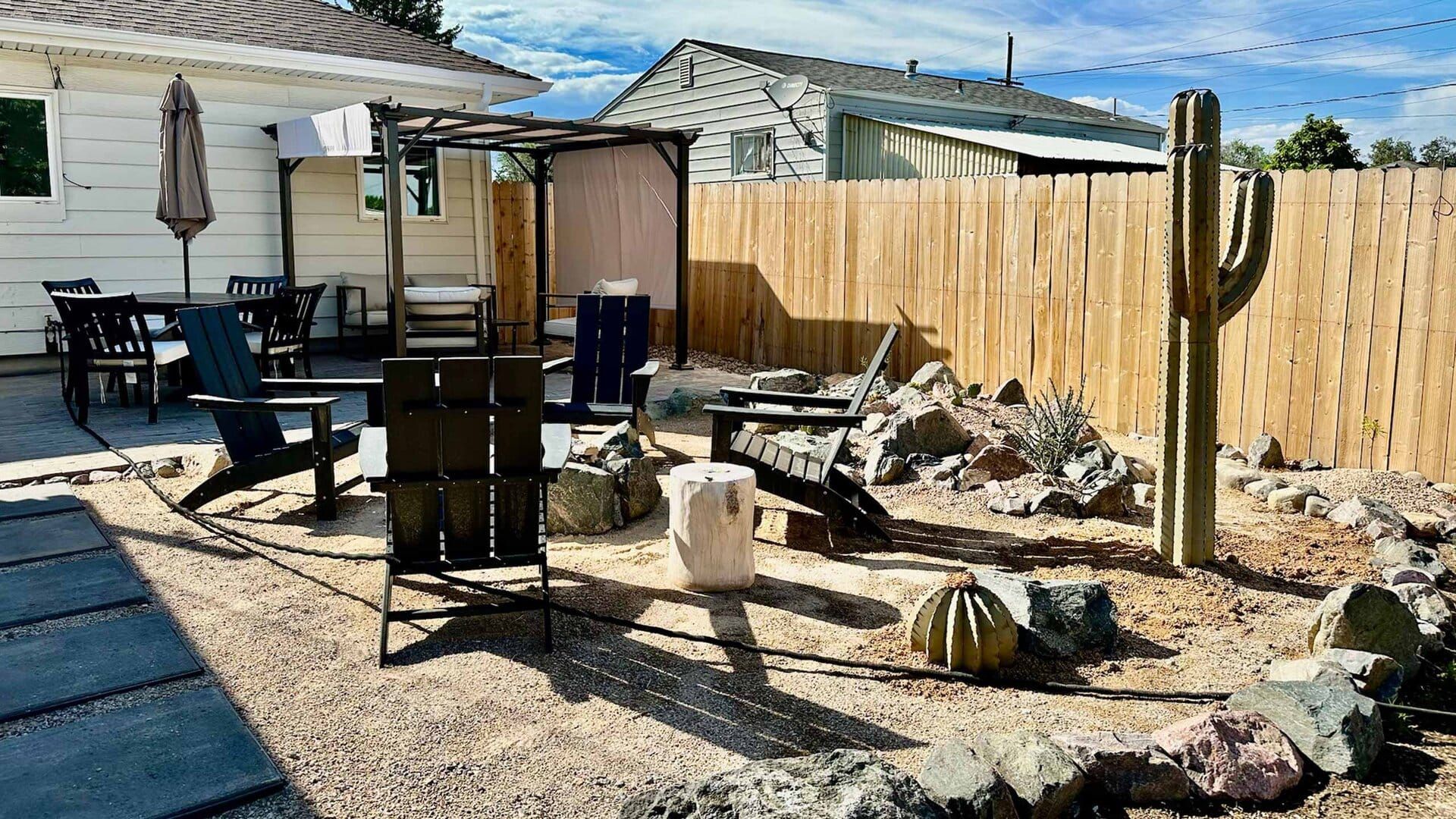
Good news for your wallet: the best cheap xeriscaping ideas are mostly the correct xeriscaping ideas done patiently. Xeriscaping's expensive version buys instant maturity — big plants, lots of stone, hired labor. The cheap version buys the same yard two years earlier in its life and lets water, time, and biology do the expensive part. Materials alone can run 1–6 per square foot DIY (versus 5–20 installed — full cost math here), and the twelve moves below live at the bottom of that range.
Kill the lawn for free
1. Sheet mulch instead of hauling sod. Cardboard plus 3–4 inches of mulch kills grass over a season at nearly zero cost — the full method. The patient option is the cheap option, every time.
2. Get the rebate first. If your utility offers a turf-replacement rebate, that's real money per square foot — but only if you apply before removing any grass. Confirm current rates; some programs cover a surprising share of a budget build.
Nearly free materials
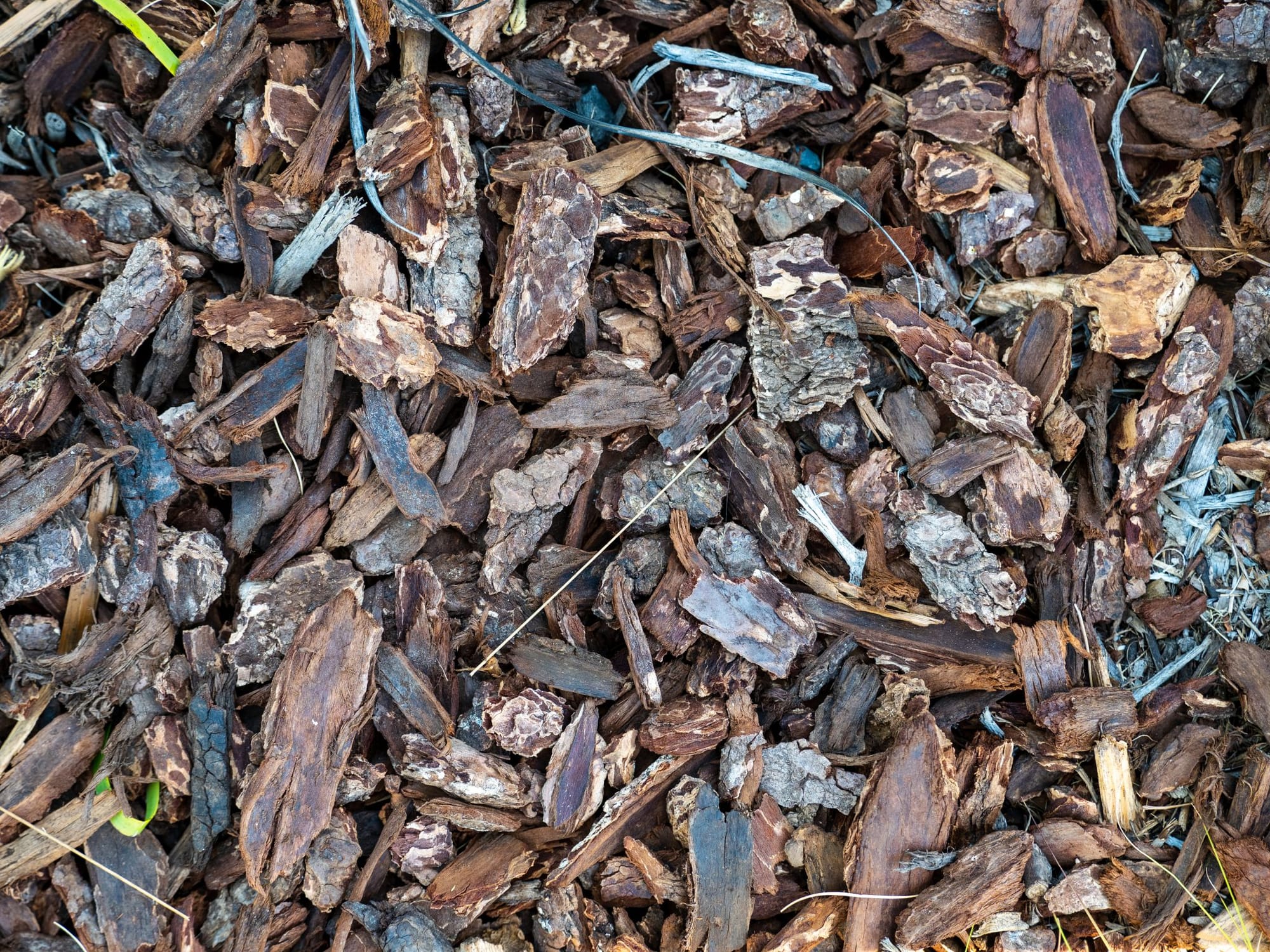
3. Free arborist chips. Tree companies give away wood-chip loads (chip-drop services exist for exactly this). It's the best bed mulch there is — where wood belongs vs. gravel — for the price of accepting a large pile in your driveway.
4. Scavenge rock legally. Construction sites (ask), Craigslist/Marketplace "free fill" listings, neighbors' renovations. Never from public lands. A dozen matched boulders are a budget-killer at the stone yard and routinely free within five miles of your house.
5. Buy bulk, not bags. Gravel, decomposed granite, and mulch by the cubic yard cost a fraction of bagged prices. Split a delivery with a neighbor and the delivery fee too.
6. Craigslist hardscape. Used flagstone, brick, and broken concrete ("urbanite") make paths and low walls for hauling cost. Urbanite laid flat and mulched between reads as deliberate design, not debris.
Plants: small, divided, seeded
7. Buy 1-gallon (or plugs), never 5-gallon. Drought-adapted plants establish so fast that a $6 plant catches a $30 one within two seasons. This is the single biggest plant-budget lever there is.
8. Divide and conquer. Ornamental grasses, sedums, yarrow, and many perennials divide into 3–5 free plants every few years. One flat of starts becomes a full yard on a three-year plan. Gardeners also give divisions away — ask around, join a local plant swap.
9. Grow the easy ones from seed. Blanket flower, blue flax, penstemon, California poppy — a few dollars of seed covers what $200 of nursery pots would. Fall-sow and let winter do the stratification.
10. Let self-seeders work for you. Choose plants that spread themselves and your yard literally fills in for free. Edit the volunteers; don't fight them.
Design tricks that hide the budget
11. Phase it, and mulch the future phases. Convert one zone per season, and cover not-yet-planted areas in a clean sheet of wood-chip mulch. A mulched bed with three plants looks intentional; bare dirt looks abandoned. The yard above is DG, rocks, and restraint — not money.
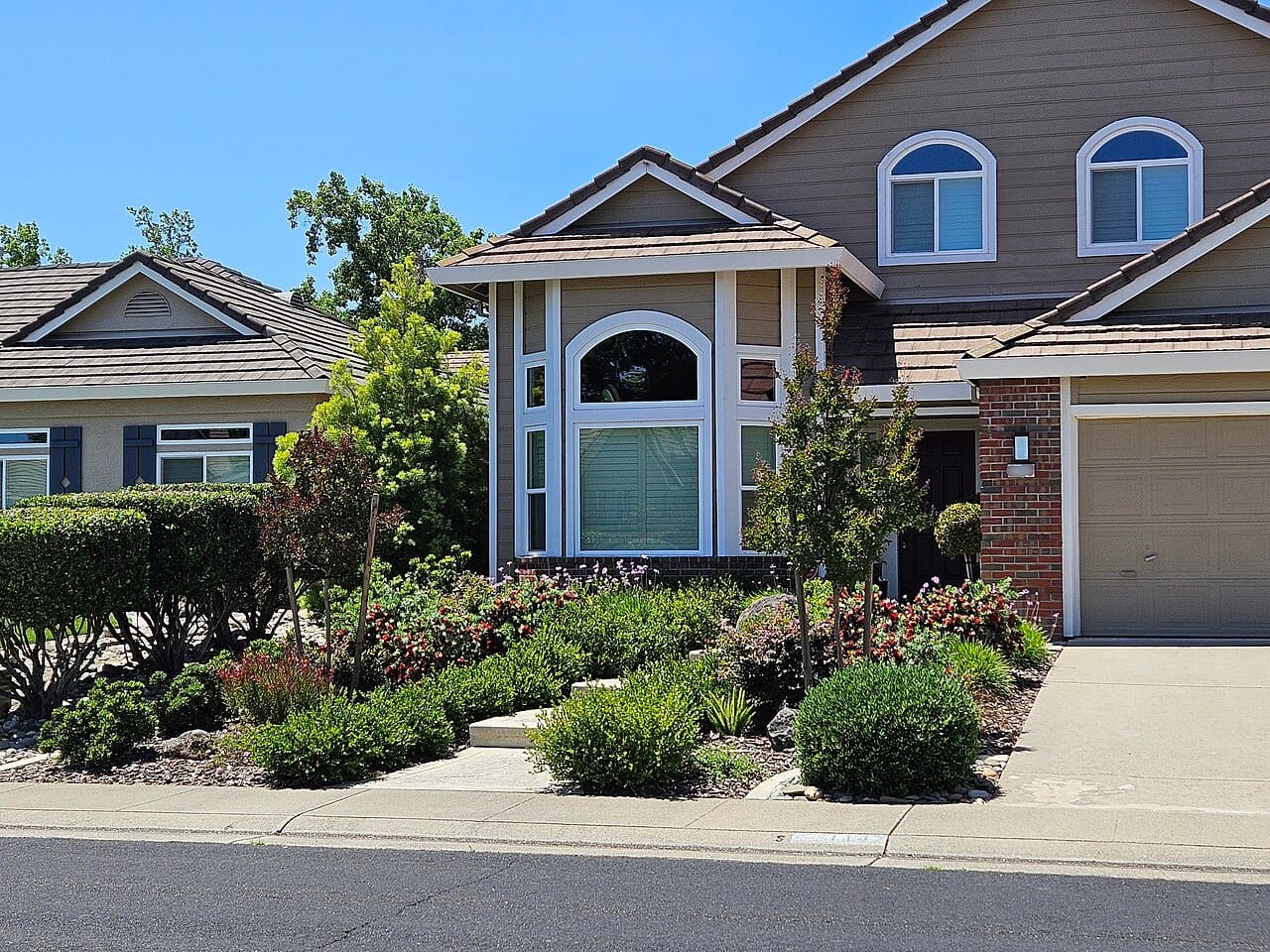
12. Spend the whole splurge on one focal point. One good boulder grouping, one small dry creek bed, or one specimen plant anchors a yard of inexpensive fill. Ten mediocre purchases read as cheap; one good one reads as designed. More layout help: front-yard ideas and the inspiration gallery.
What not to cheap out on
Honesty department: three things are worth real money even on a budget build. Mulch depth (2–3 inches everywhere — thin mulch means weeds forever), steel or solid edging (the line between "wild" and "unkempt"), and a basic drip system on a timer — parts are cheap, and dead plants are the most expensive thing in landscaping.
A budget xeriscape isn't a lesser xeriscape; it's the same yard on a two-year delivery schedule. Follow the 10-step sequence, spend where it counts, scavenge the rest, and let the plants grow into the design you couldn't afford to buy outright.