
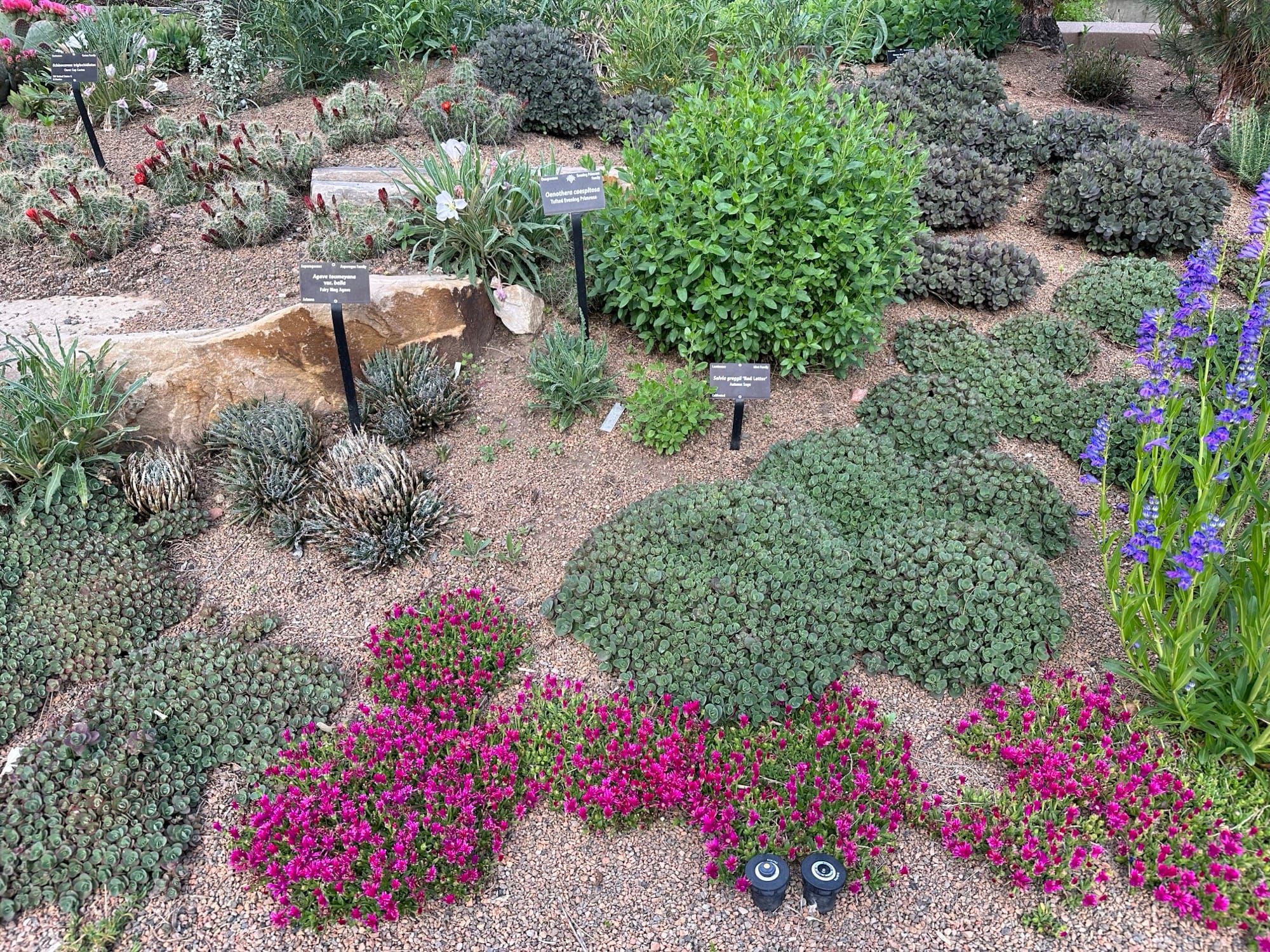
Most xeriscape soil preparation advice is copied from vegetable gardening: till deep, add compost everywhere, repeat yearly. For a xeriscape, that's half right and half actively harmful. The truth has a fork in it: garden-adapted plants want improved soil; true natives and desert plants want the lean stuff you already have. Prep the soil for the plants you're planting — not by habit.
First, learn what you've got
Two ten-minute tests beat any guess:
The jar test. Fill a jar one-third with soil, top with water, shake hard, and let it settle for a day. Sand drops first, silt next, clay last — the layers show your proportions at a glance.
The drainage test. Dig a hole a foot deep, fill it with water, let it drain, and fill it again. If the second fill drains within a few hours, you're fine. If it's still holding water the next day, drainage — not fertility — is your project.
The fork: amended beds vs. lean beds
Amend for garden-adapted xeric plants. Lavender, catmint, salvias, yarrow, and most of the waterwise perennial palette come from farmed or Mediterranean soils. For these beds, work 2–3 inches of compost into the top 6–8 inches at planting time. Once. This isn't a lawn — you won't be feeding annually.
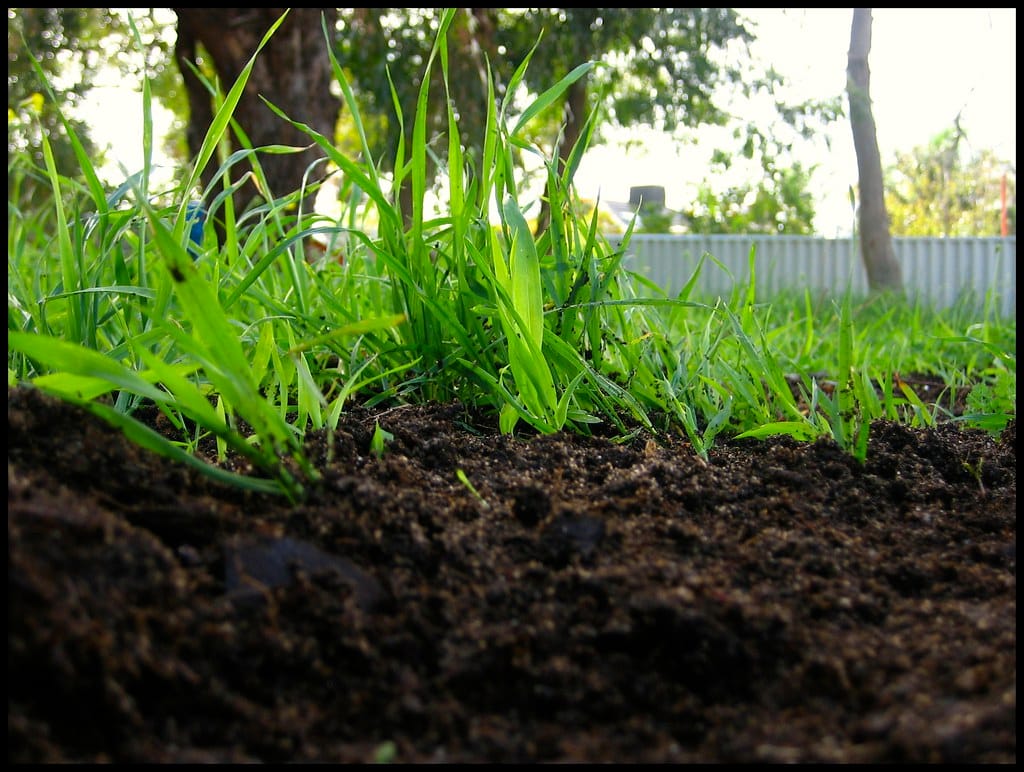
Stay lean for natives, cactus, and desert plants. Penstemon, blanket flower, buckwheats, agaves and yuccas, and most regional natives evolved in mineral soil. Rich soil makes them grow fast, flop, and die young — soft, lush growth also winters worse and invites pests. For these beds: no compost, or a bare dusting. Lean soil is a feature. It's also why a mature xeriscape needs no fertilizer program.
Group accordingly — this is really just hydrozoning applied underground. Amended oasis beds near the house, lean native beds beyond.
Fixing clay (without fighting it)
Heavy clay drains slowly and suffocates dryland roots in winter. In order of impact:
- Plant high. Set root balls an inch or two above grade, and build bermed or mounded beds 8–18 inches tall. Elevation is the cheapest drainage there is — most "drought-tolerant plant rotted" stories are flat-clay stories.
- Expanded shale (fired clay aggregate) worked into the top 6–8 inches opens clay permanently — the go-to trick in blackland-clay country like Dallas.
- Compost helps clay too — in the amended beds. In native beds, rely on mounding and shale instead.
- Never add sand to clay. Clay plus sand is how you manufacture something close to concrete.
Fixing sand
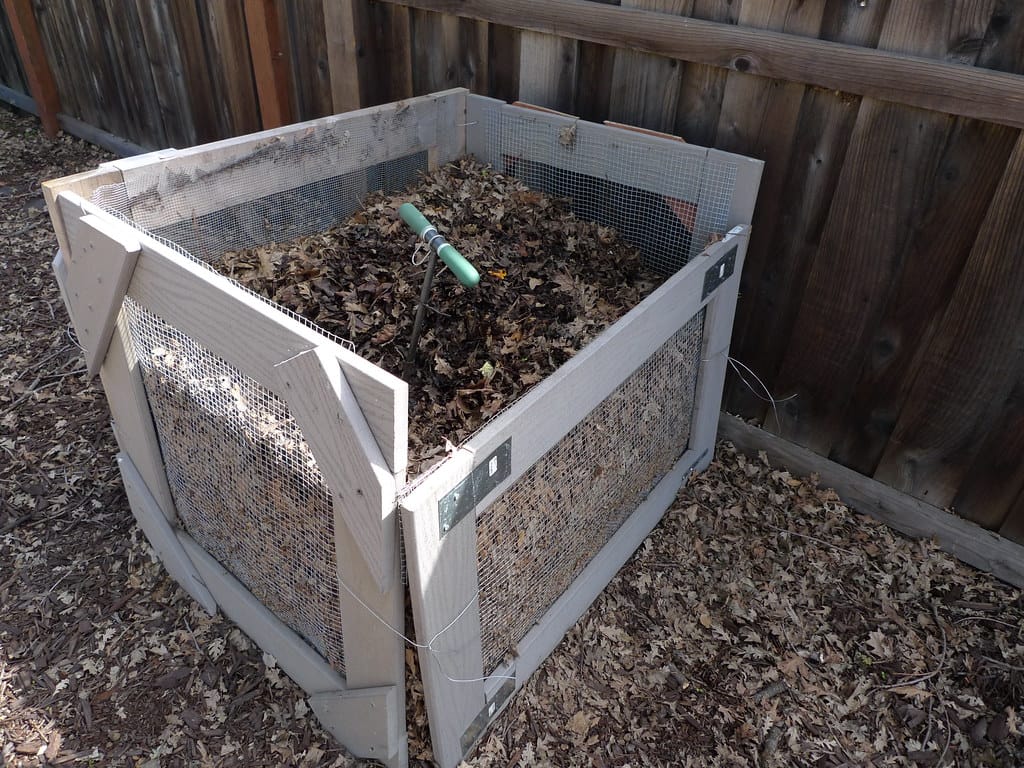
Fast-draining sand is easy mode for natives — most need nothing. For the amended beds, compost is the whole answer: it's the only thing that helps sand hold water and nutrients. Expect to mulch generously, since sandy beds dry from the top.
What NOT to do
- Don't put gravel in the bottom of planting holes. It doesn't improve drainage — it creates a perched water table that keeps roots wetter. Old myth, still killing plants.
- Don't till established areas wholesale. You'll wake up a decade of buried weed seeds. Amend planting zones, not the whole lot.
- Don't lay plastic sheeting under mulch, and be skeptical of landscape fabric — it strangles soil life and fails at weed control anyway.
- Don't over-fertilize at planting. A handful of compost in the backfill of an amended bed is plenty; skip the granular fertilizer entirely.
- Don't skip prep to save a weekend. Soil work is nearly impossible to redo after planting — it's step-one-or-never.
The sequence
Soil prep slots in right after the lawn comes out and before irrigation and planting: test, shape berms, amend the amended zones, leave the lean zones lean, then run drip lines and finish with 2–3 inches of the right mulch for each zone — wood over amended beds, gravel over lean ones. The full order of operations is in 10 Steps to Xeriscaping.
Feed the beds that want feeding. Starve the ones that don't. That one sentence is 90% of xeriscape soil prep.