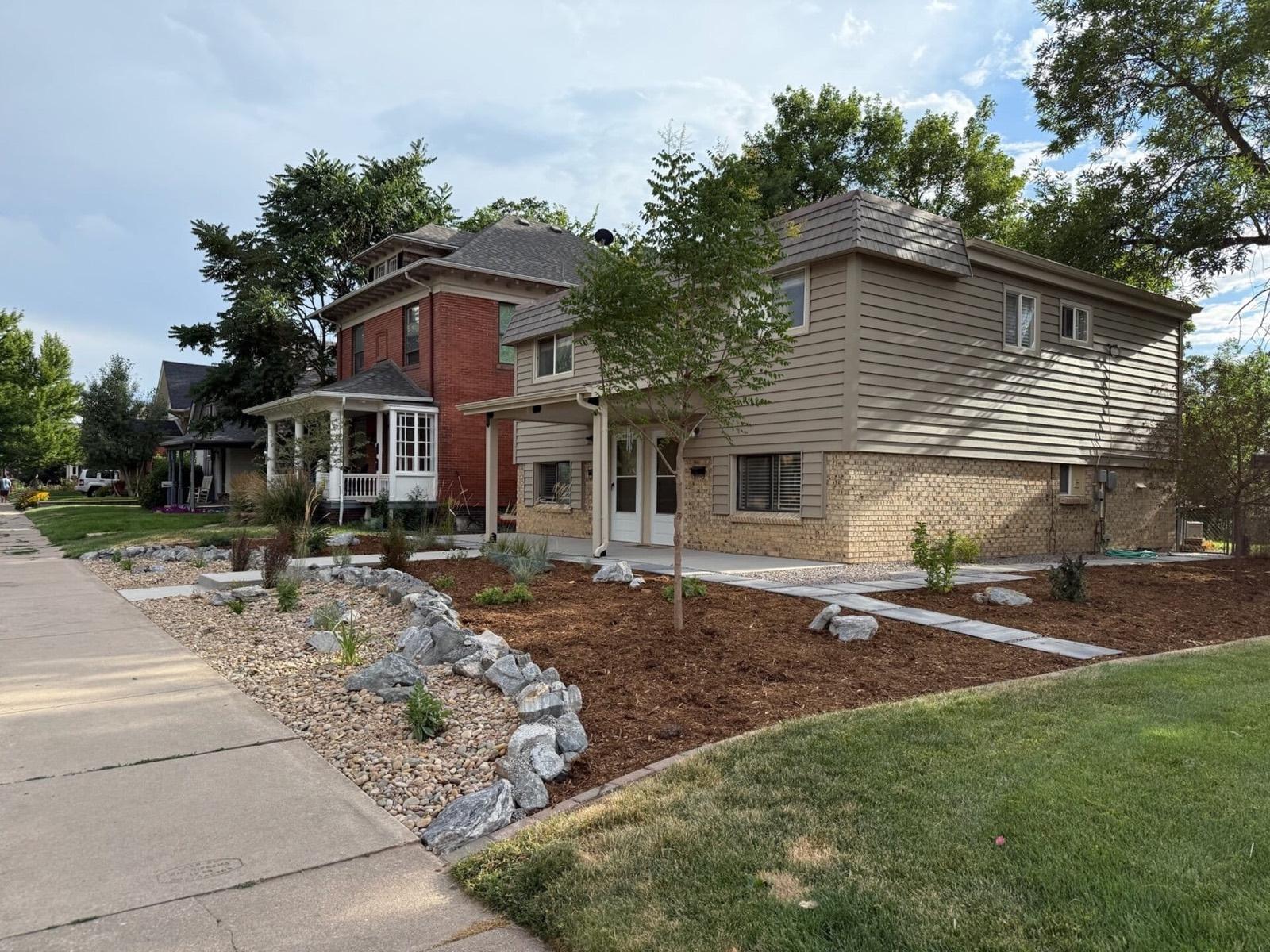
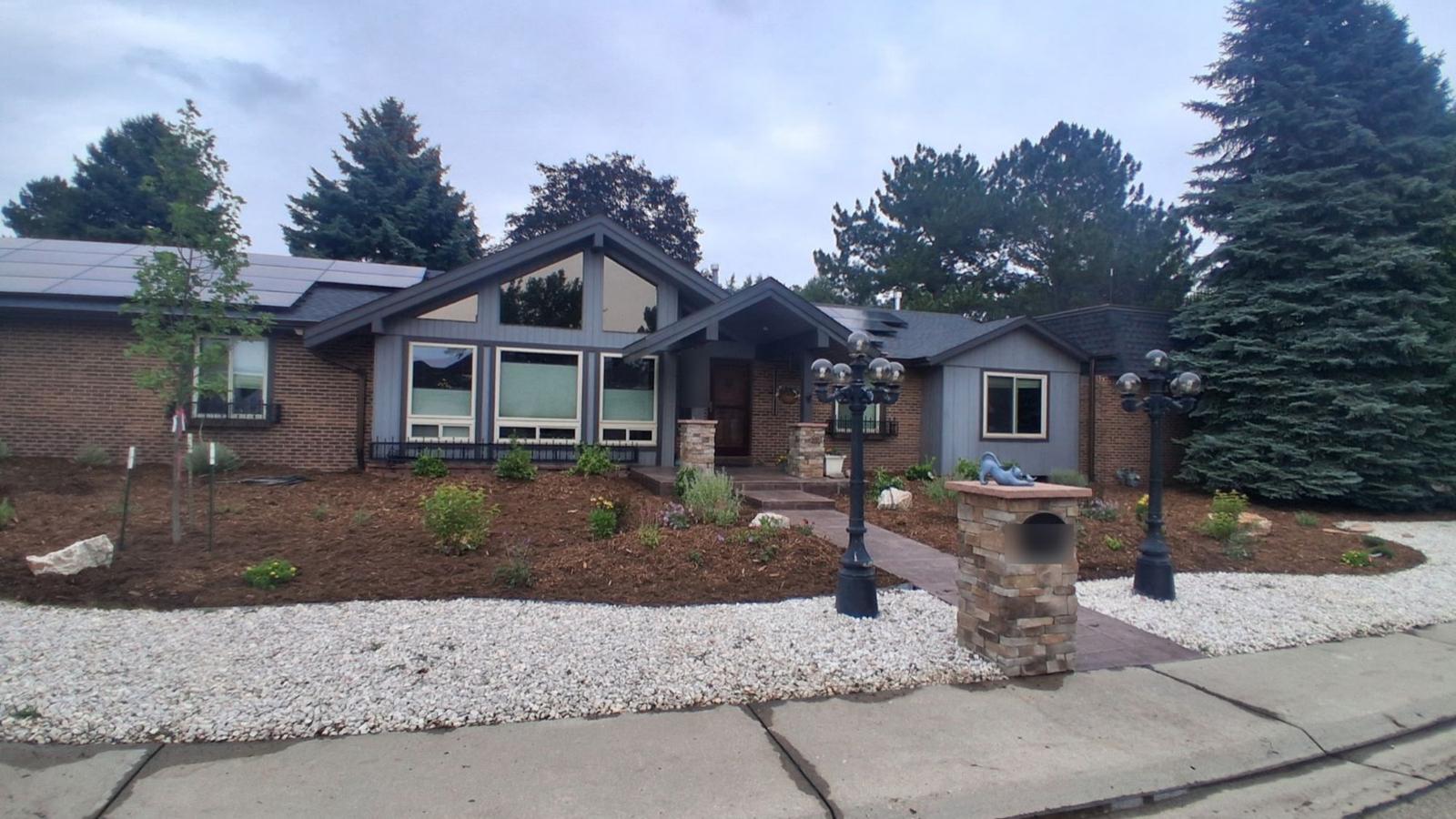
CSU Extension estimates that xeriscaping can lower outdoor water use by 30–50% or more, depending on how much you water now. On the ground you actually convert, the savings run higher, especially in hot desert cities. The best measured number comes from the Southern Nevada Water Authority's five-year study of homes that replaced lawn: the converted areas used 55.8 fewer gallons per square foot every year, and total household water use fell about 30%, or 96,000 gallons a year per home. How much water xeriscaping saves at your house depends on your climate, how heavily the lawn was watered before, and whether the new beds run on drip.
Below are the numbers from utility and university sources, a savings table by region, and the math to estimate your own yard.
Why the lawn is where the water goes
Outdoor watering is the biggest variable on most Western water bills. The US EPA puts the average American family at more than 300 gallons a day at home, with roughly 30% of that used outdoors. In dry regions the share climbs. EPA WaterSense says outdoor use can reach 60% of household water in arid regions, and state programs report similar or higher figures:
- Utah: about 60% of municipal and industrial water is used outdoors on landscapes.
- Arizona: the statewide Water — Use It Wisely campaign says up to 70% of household water is used outdoors.
- Colorado: CSU Extension notes that as much as 50% of household water goes to the yard and garden.
- Southern Nevada: SNWA states that the majority of the valley's water is used outdoors, and most of it evaporates rather than returning to Lake Mead.
A lot of that water never reaches a root. EPA estimates that as much as 50% of outdoor water is lost to wind, evaporation and runoff from inefficient irrigation, and Texas A&M AgriLife's WaterMyYard program makes the same point: over half of landscape water is wasted through overwatering and poorly maintained systems. Xeriscaping attacks both problems at once. It replaces the thirstiest plant in the yard and swaps spray heads for drip.
What a lawn actually needs
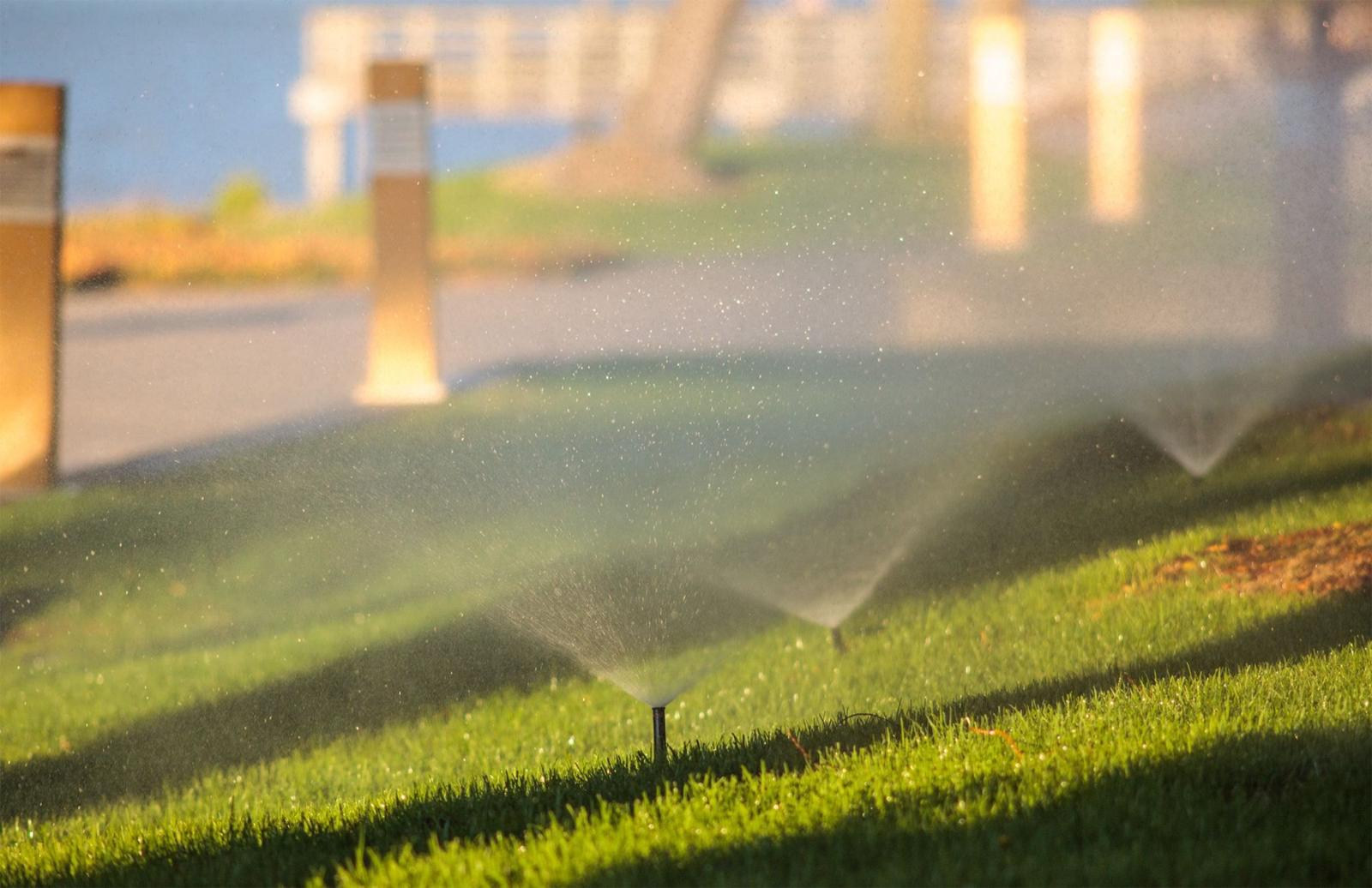
Colorado State University Extension publishes seasonal water requirements for Front Range turf. In its turf selection guide, turf-quality Kentucky bluegrass needs 34 inches of rain plus irrigation per season. Tall fescue needs 31 inches, and buffalograss needs 17 inches. That's half the bluegrass figure, and CSU says so directly.
To turn inches into gallons, multiply by 0.62: one inch of water over one square foot is about 0.62 gallons. SNWA's report uses the same conversion, pairing 73.0 gallons per square foot with 117.2 inches. So:
| Turf (CSU, Front Range) | Seasonal need | Gallons per sq ft per season | Gallons for 1,000 sq ft |
|---|---|---|---|
| Kentucky bluegrass, full quality | 34 in | ≈ 21.1 | ≈ 21,100 |
| Tall fescue, full quality | 31 in | ≈ 19.2 | ≈ 19,200 |
| Kentucky bluegrass, "limited irrigation" | 20 in | ≈ 12.4 | ≈ 12,400 |
| Buffalograss, turf quality | 17 in | ≈ 10.5 | ≈ 10,500 |
These totals include rainfall. The difference between two rows is all irrigation, because rain falls equally on both. Swapping 1,000 square feet of full-quality bluegrass for buffalograss cuts irrigation by roughly 10,500 gallons a season. If you're weighing a softer lawn alternative, see buffalograss and blue grama lawns.
In desert cities the gap is far wider, partly because lawns there get watered far past their needs.
The best measured data: SNWA's Xeriscape Conversion Study
Most "xeriscaping saves X%" claims trace back to one of a handful of real studies. The strongest is the SNWA Xeriscape Conversion Study, a Bureau of Reclamation–funded project that tracked hundreds of Las Vegas–area homes and installed submeters on both lawn and xeric areas.
What it found:
- Turf received an average of 73.0 gallons per square foot per year (117.2 inches).
- Xeriscape received 17.2 gallons per square foot per year (27.6 inches), just 23.6% of what the turf got.
- The difference was 55.8 gallons per square foot per year.
- Homes that converted cut total water use by about 30%, averaging 96,000 gallons a year. 285 of the 321 homes analyzed saved water.
- The savings were largest in summer, exactly when utilities are most stretched.
- The report notes the roughly one-third reduction closely matches an earlier study of homes in Mesa, Arizona.
SNWA still uses this figure. Its conservation page says converting turf to drip-irrigated desert landscape saves 55 gallons per square foot. The same page reports that 250 million square feet of grass removed through its rebate program has saved 203 billion gallons since 1999.
One caution: 55.8 gallons is a desert number from yards that were heavily watered before conversion. Don't expect the same per-square-foot figure in Denver or Boise. Percentages travel better between climates. Across a whole yard, CSU's 30–50%-or-more cut in outdoor water is the realistic planning figure. On the converted square footage alone, savings are usually larger.
Xeriscape water savings by region
This table collects the most useful published figure for each region. Read the "type of figure" column. Some numbers are measured savings, some are agronomic needs, and some are program claims.
| Region | Published figure | Type of figure | Source |
|---|---|---|---|
| Las Vegas / Mojave | Turf 73.0 vs xeriscape 17.2 gal/sq ft/yr: 55.8 gal/sq ft saved; ~30% lower household use | Measured (submeters, 5 years) | SNWA study |
| Phoenix / Mesa, AZ | About a one-third drop in household use after conversion | Measured (cited in SNWA report) | SNWA study |
| Colorado Front Range | Bluegrass 34 in/season vs buffalograss 17 in: ~50% less | Agronomic need | CSU Extension |
| Colorado Front Range | Garden In A Box beds: 58% less water than lawn, ~5,000 gal/yr per garden | Program estimate | Resource Central |
| Southern California | Up to 85% less outdoor water after converting grass | Program claim | Metropolitan Water District |
| Utah | ~60% of municipal and industrial water used outdoors | Share of use | Utah Division of Water Resources |
| Arizona | Up to 70% of household water used outdoors | Share of use | Water — Use It Wisely |
| National | Outdoor use ~30% of household water, up to 60% in arid regions | Share of use | EPA WaterSense |
The pattern is consistent. The drier and hotter the place, the bigger the share of water that goes outdoors, and the more a conversion saves.
Estimating your own savings
Here's a quick, conservative way to estimate it:
- Measure the lawn you'll convert. Only count turf that's actually irrigated.
- Pick a per-square-foot saving for your climate. Hot desert (Las Vegas, Phoenix, St. George): SNWA's measured 55 gallons is a fair ceiling. Semi-arid high plains (Denver, Salt Lake City, Boise, Albuquerque): the CSU bluegrass-to-buffalograss gap of about 10 gallons per square foot per season is a sound floor. A drip-irrigated bed of xeric perennials usually does better than a buffalograss lawn.
- Multiply. A 1,000-square-foot bluegrass lawn converted in Denver saves at least 10,000 gallons a season. The same conversion in Las Vegas saves around 55,000 gallons a year.
- Check against your bill. Compare your winter (indoor-only) use with summer use. The gap is roughly your outdoor water, and that's the most you can save.
For a faster version with your local rates plugged in, run the water savings calculator. The xeriscape vs. lawn comparison covers the dollar side, and what xeriscaping costs covers payback.
Why some xeriscapes save much less than others
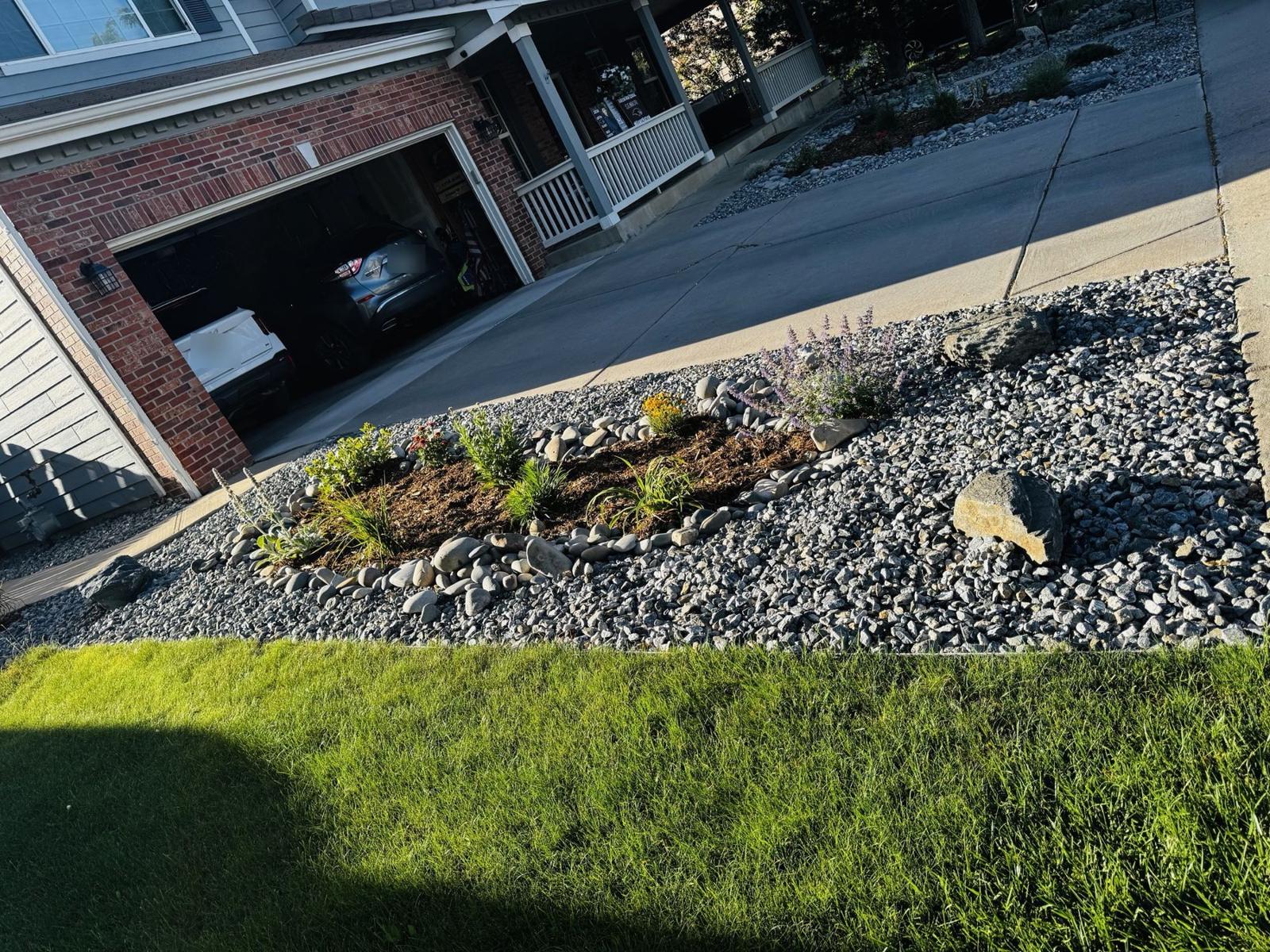
The SNWA data show a wide spread. Some converted yards used almost nothing, and a few used more than before. The gap usually comes down to five things.
- How much you watered before. Savings are measured against your old habits. An overwatered lawn has the most to give back.
- Drip vs. spray. Keeping spray heads to water shrubs and perennials throws away much of the advantage. Converting sprinkler zones to drip is part of the job, not an extra.
- Hydrozoning. Group plants by water need so the thirstiest plant doesn't set the schedule for the whole zone.
- The first year. New plants need regular water until their roots establish. Denver Water notes that even during establishment, a water-wise ColoradoScape needs less water than Kentucky bluegrass. Savings grow in year two and three as you cut back. See first-year xeriscape care.
- Controller habits. EPA says a WaterSense-labeled smart controller can cut an average home's irrigation use by up to 30%, or up to 15,000 gallons a year. Timers left on summer settings through October erase a lot of hard work. Overwatering is also the top killer of xeric plants.
Planting choices matter too. A bed of Rocky Mountain penstemon, blue grama and rabbitbrush can be weaned to very little supplemental water. A "xeriscape" packed with moderate-water perennials on a daily spray schedule can't.
A useful benchmark: Denver Water's water budget
If you want a target rather than a percentage, Denver Water publishes one. Its water use report uses a standard outdoor target of 12 gallons per square foot of landscape per year, tightened to 8 gallons during drought. A 3,000-square-foot landscape gets 24,000 gallons a year under the drought target. Full-quality bluegrass needs about 21 gallons per square foot per season including rain, so it struggles to hit that number. An established xeriscape clears it easily.
From our installs
On Front Range clay, Xeris Landscaping (Xeris Landscaping is owned by Xeriscaping.com's founder.) sees the same thing on almost every conversion. The water savings show up in the second summer, not the first. Year one, new plants get regular deep soakings on drip while roots move into the native soil. After that we cut run times and frequency sharply, and many established beds get watered only in long dry spells. The yards that don't save much are almost always the ones where an old spray zone was left running on the new beds. The fix is capping those heads and running drip on its own schedule.
Rebates make the math better
Water savings are the long-term payoff. Rebates cut the up-front cost. As of September 2026:
- SNWA Water Smart Landscapes pays $5 per square foot for the first 10,000 square feet of grass converted on residential properties, and $2.50 per square foot after that. Pre-approval is required before you remove any grass.
- Utah Water Savers offers up to $3 per square foot for replacing grass with waterwise landscaping.
- Metropolitan Water District (Southern California) turf replacement rebates start at $2 per square foot, plus a tree incentive. Funding is first-come, first-served.
Colorado programs vary by utility. See Colorado lawn replacement rebates and the national lawn removal rebate directory. Nearly every program requires approval before the grass comes out.
Frequently asked questions
What percentage of water does xeriscaping save?
CSU Extension estimates xeriscaping lowers outdoor water use by 30–50% or more, depending on how much you water now. On the converted area itself the cut is often bigger. Utility-measured data from Southern Nevada showed xeric areas using 23.6% of the water turf used, a 76% reduction. For the whole household, SNWA measured about a 30% drop after conversion.
How many gallons does xeriscaping save per square foot?
In the Las Vegas study, 55.8 gallons per square foot per year. In semi-arid cold-winter climates like Denver, figure at least 10 gallons per square foot per season when replacing bluegrass. Drip-irrigated xeric beds usually save more than that.
Does xeriscaping save water in the first year?
Usually some, but less than later. New plants need regular watering until established, typically through the first growing season. Savings climb in the second and third years as you reduce watering.
Is artificial turf a water-saving alternative?
It needs no irrigation, but it isn't xeriscaping. Many rebate programs limit or exclude it. SNWA, for example, accepts only permeable artificial turf, and only as a mulch substitute. Living, drip-irrigated plantings save water and keep the soil and yard cooler.
How do I find out how much water my lawn uses now?
Compare your winter water use (mostly indoor) to your summer use. The difference is roughly your outdoor watering. Divide by the square footage of irrigated lawn to get gallons per square foot, then compare with the figures above.