
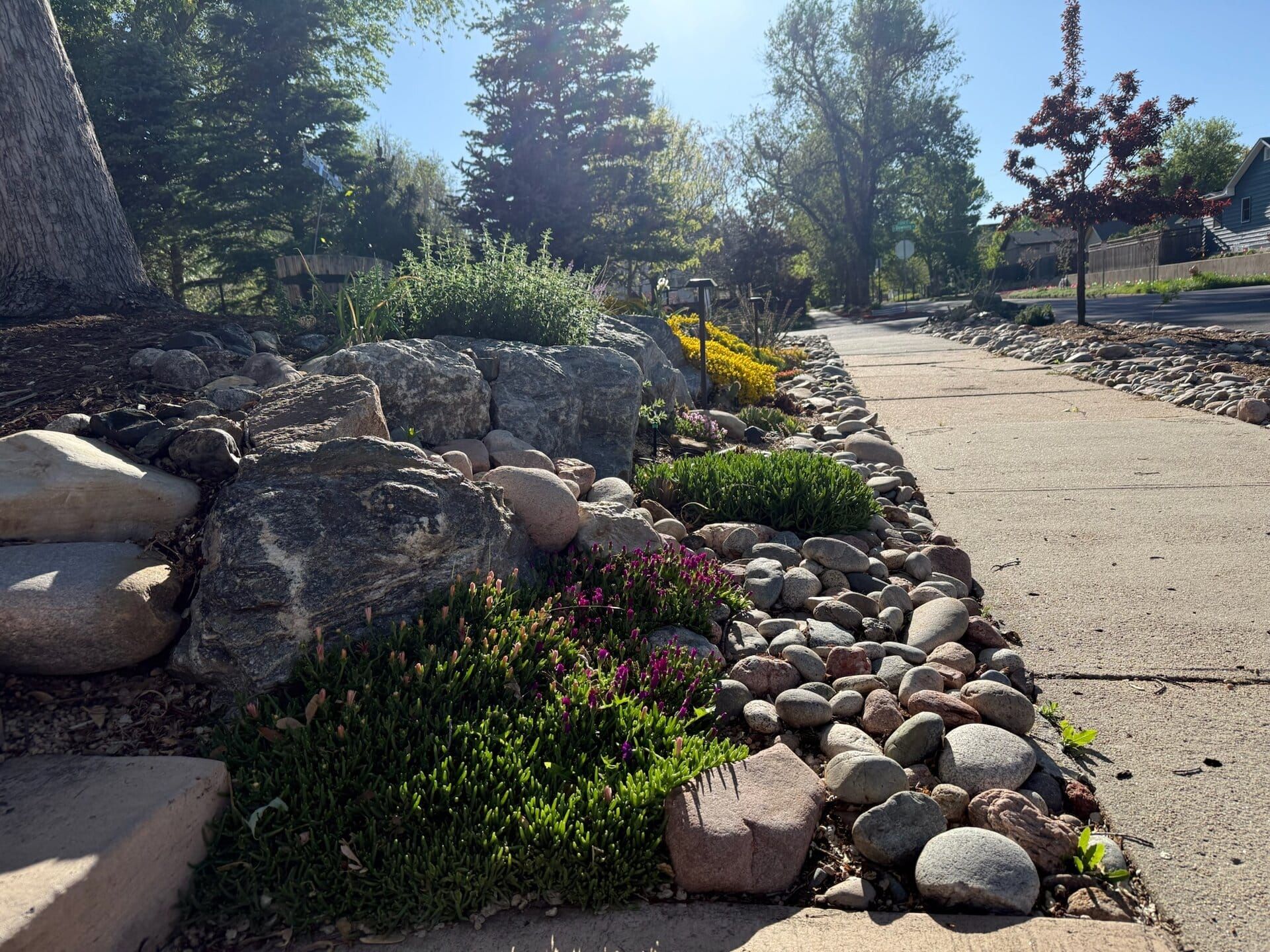
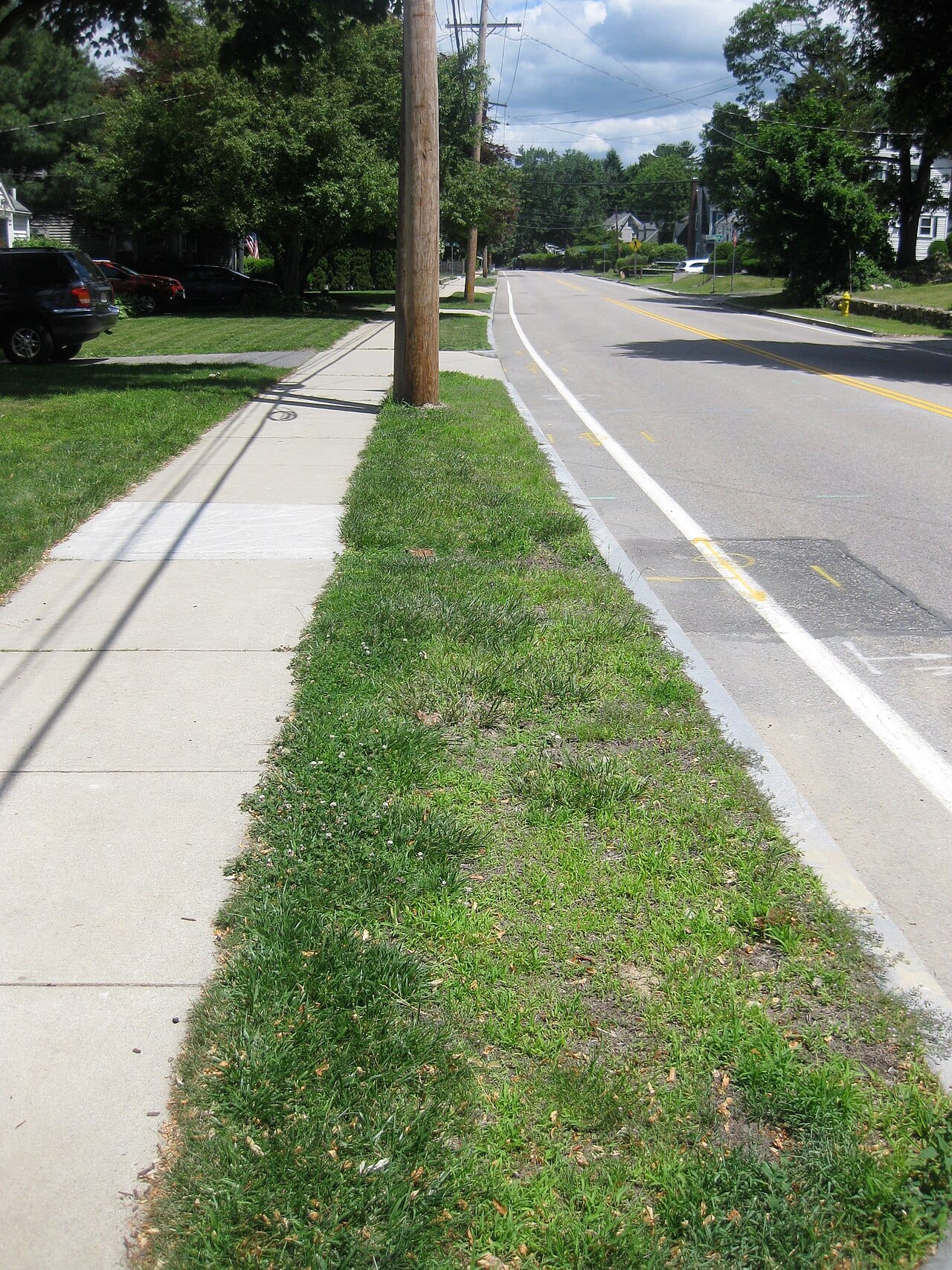
Hell strip landscaping exists because the strip between the sidewalk and the street is the worst growing environment on your property, and we keep trying to grow the thirstiest plant we own there. It's baked by pavement on both sides, compacted by feet and car doors, salted in winter, peed on by every dog in the neighborhood, and usually out of reach of the sprinklers. Grass never had a chance. The fix is to stop planting grass and start planting things that treat those conditions as normal.
Why the hell strip earns its name
Add up what this little rectangle endures: reflected heat from two slabs of pavement, shallow compacted soil (often construction fill), road salt, no shade, foot traffic, and drought — because even people who water their lawn religiously forget the strip. It's the yard's version of a highway median. Which is useful information, because a whole category of plants comes from places just like it: rocky slopes, prairie edges, and roadsides. Plant those and the hell strip becomes the easiest bed you own.
Check the rules before you dig
The strip is usually city-owned right-of-way that you're required to maintain — landscaping it is typically allowed, with conditions. Ten minutes of homework saves a citation:
- Call 811 before digging. Utilities love shallow runs under hell strips.
- Height limits. Most cities cap plantings around 12–36 inches for driver sight lines, especially near corners and driveways.
- Access. People need to step from parked cars to the sidewalk without bushwhacking. Leave a few stepping-stone gaps or a flagstone landing at the curb.
- HOA and street-tree rules, if either applies to you.
The conversion, condensed
- Kill the grass. The strip is small enough that a flat spade or rented sod cutter handles it in an hour or two — all three removal methods here. If your utility offers a turf rebate, strips usually qualify — apply before you dig.
- De-compact and amend lightly. Fork the soil open. Most hell-strip plants prefer lean soil, so skip heavy compost — details on prep.
- Plant small. Small plants establish faster in compacted strips, and they're cheaper to replace when a car door claims one.
- Mulch with gravel or rock, not wood — wood mulch washes into the gutter and blows onto the sidewalk. Gravel stays put and shrugs off foot traffic. River cobble bands, like the strip pictured above, add structure and give dogs and feet somewhere harmless to land.
- Water to establish, then back off. A simple drip line on a battery timer for the first season or two; many strip plantings need little to no supplemental water after.
Plants that thrive on abuse
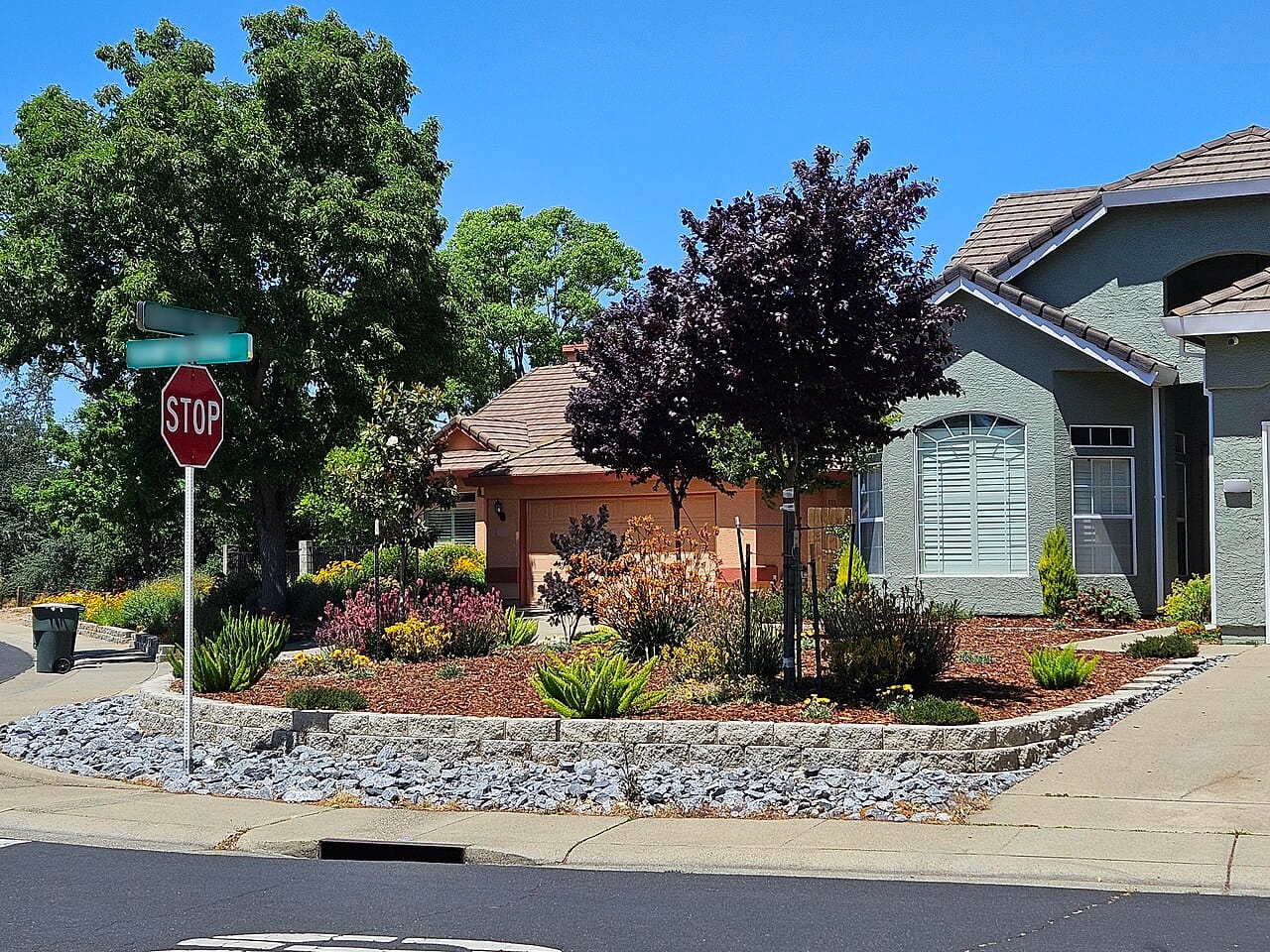
The shortlist, all low, tough, and heat-proof:
- Groundcovers: creeping thyme, ice plant, sedums, prairie zinnia — more options here.
- Low perennials: catmint, penstemon, blanket flower, winecups, hummingbird mint — the full-sun drought crowd.
- Grasses: blue grama and buffalograss if you still want a green ribbon (the low-water lawn option), or clumps of ornamental grasses kept under height limits.
- Structure: a few half-buried boulders. They're permanent, legal at any height below sight lines, and they take a car door better than any shrub.
Salt-heavy streets? Favor the salt-tolerant end of the list — ice plant, sea thrift, blue grama — and keep the most delicate plants toward the sidewalk side.
Bonus: a flowering strip is pollinator habitat in a spot that was feeding no one — good company for it here.
Design notes for a strip 3 feet wide
- Repeat, don't collect. Three to five species repeated down the strip reads as intentional; fifteen species reads as a plant rescue.
- Mass in drifts of odd numbers, and let groundcovers run between them.
- Keep everything off the curb line by 6–12 inches for door swing.
- Think in seasons: grasses and seedheads carry the strip through winter after the flowers finish.
Why this is the best first xeriscape project
The hell strip is small, cheap, self-contained, and already dead — the risk of ruining something good is zero. It's the perfect trial run before converting a whole front yard, and because it's the most public square footage you own, it's also where neighbors stop and ask questions. Fix the hardest part of your yard first, and the rest of the conversion will feel easy.