
The hardest question after removing a lawn is what fills all that space. The answer, most of the time, is drought tolerant ground cover — low, spreading plants that knit together, shade out weeds, and give a xeriscape that finished, carpeted look without a sprinkler system. These twelve are the proven performers.
One honest note up front: no groundcover takes the abuse a lawn does. A few here handle light foot traffic; none handle daily soccer games. And "drought-tolerant" kicks in after the first season — water everything regularly through year one so roots go deep.
The list
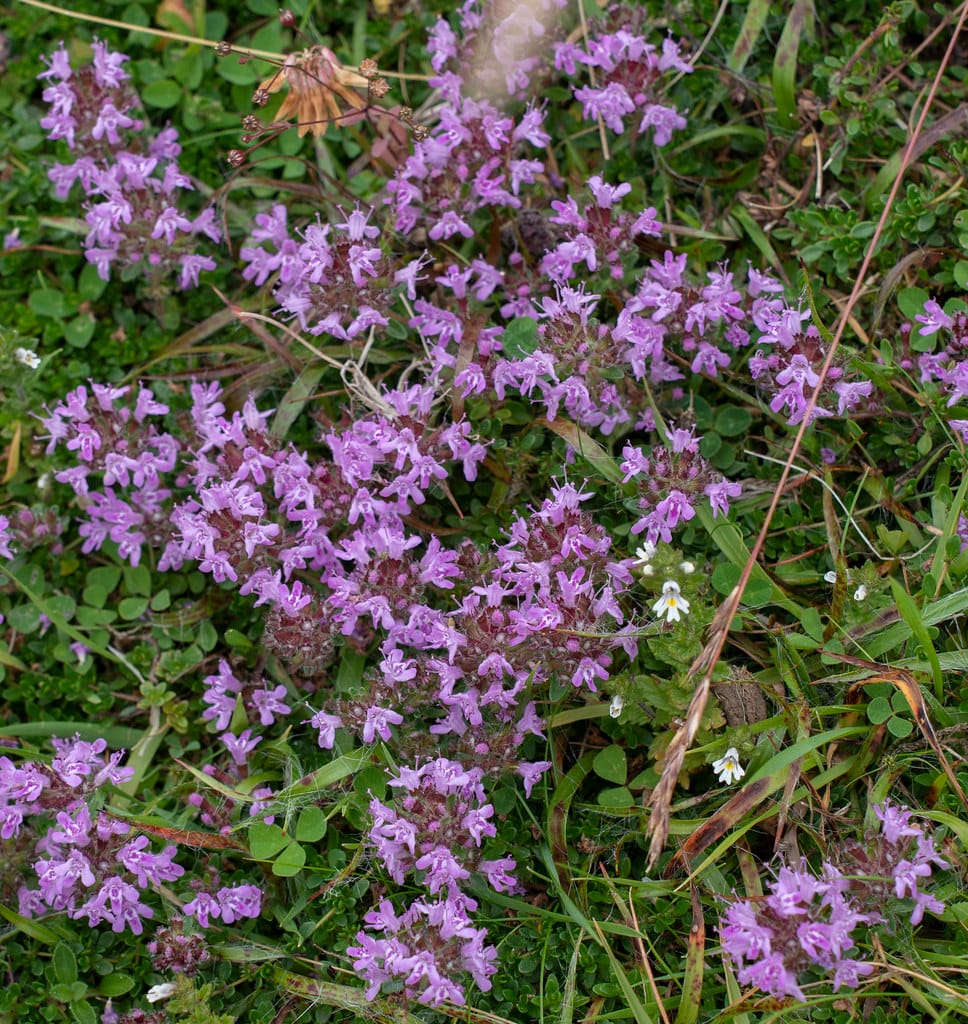
1. Creeping Thyme (Thymus praecox, T. serpyllum) — Zones 4–8. The lawn-replacement poster child. An inch-tall fragrant mat, pink or purple flowers in early summer, and it takes light foot traffic between stepping stones. Wants full sun and drainage.
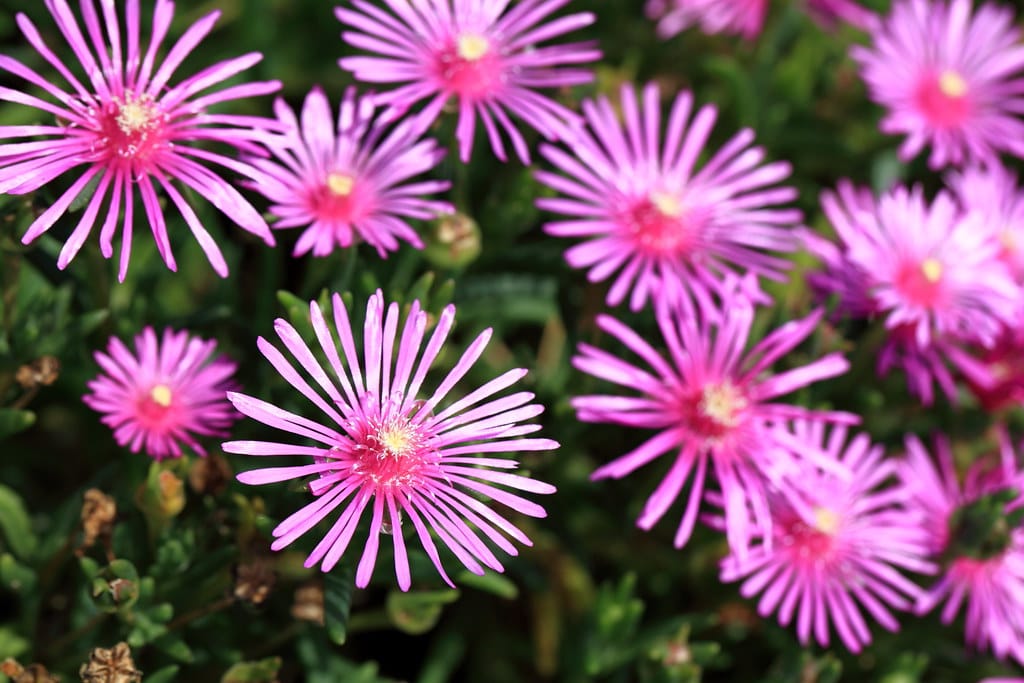
2. Ice Plant (Delosperma) — Zones 4–9 by variety. A succulent carpet buried in neon daisies for months. 'Fire Spinner' and the Wheels of Wonder series are showstoppers; hardy types like D. nubigenum survive Zone 4. No foot traffic, blazing color.
3. 'Dragon's Blood' Sedum (Phedimus spurius) — Zones 3–9. Red-tinged succulent foliage, pink summer flowers, and it roots wherever a stem touches soil. Nearly impossible to kill; perfect for hot edges and rock work.
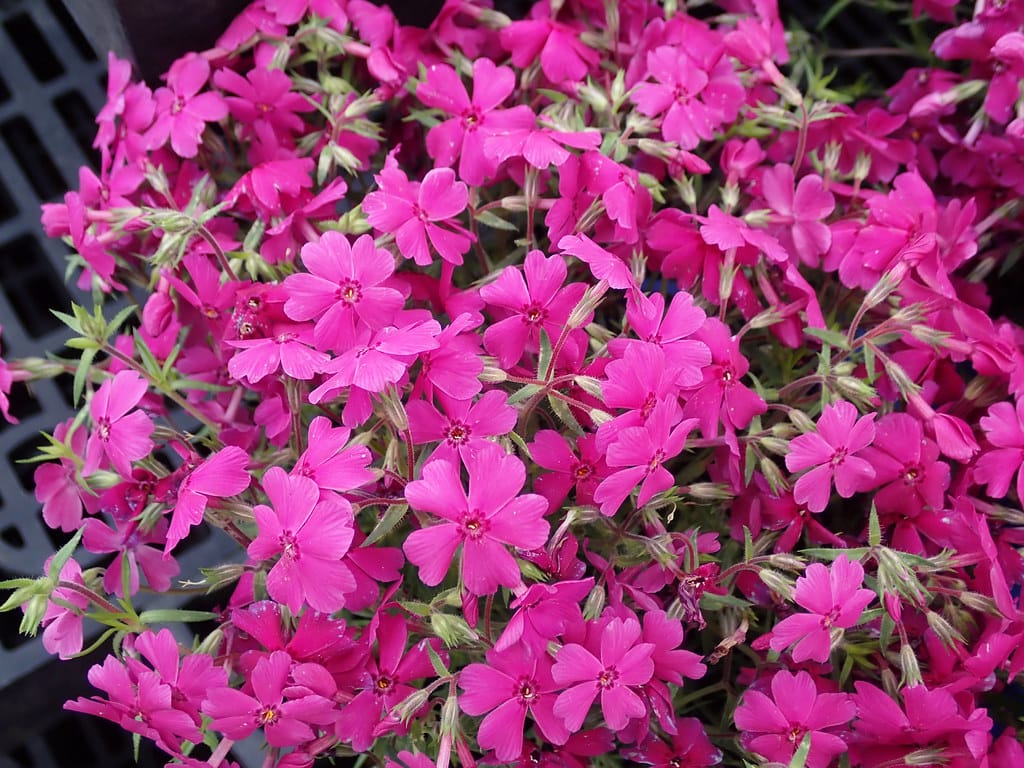
4. Creeping Phlox (Phlox subulata) — Zones 3–9. The spring headliner — a solid sheet of pink, purple, or white in April, then a tidy evergreen mat the rest of the year. Great spilling over walls and slopes.
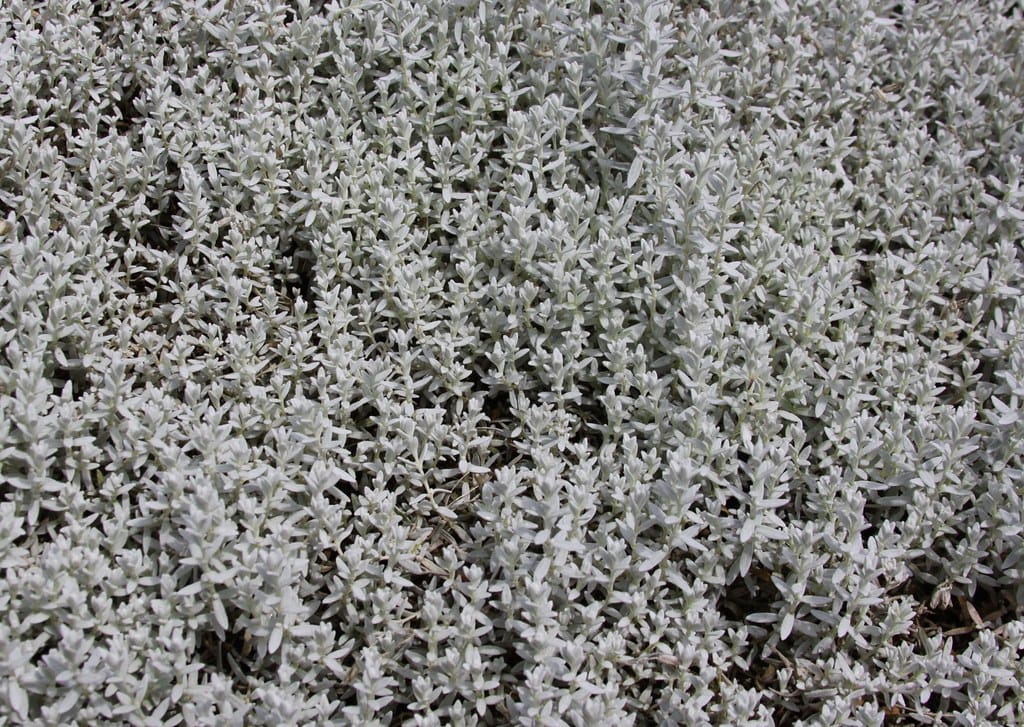
5. Snow-in-Summer (Cerastium tomentosum) — Zones 3–7. Silver woolly foliage under white June flowers. Fast, tough, and happiest in cooler zones — it can melt out in humid summer heat.
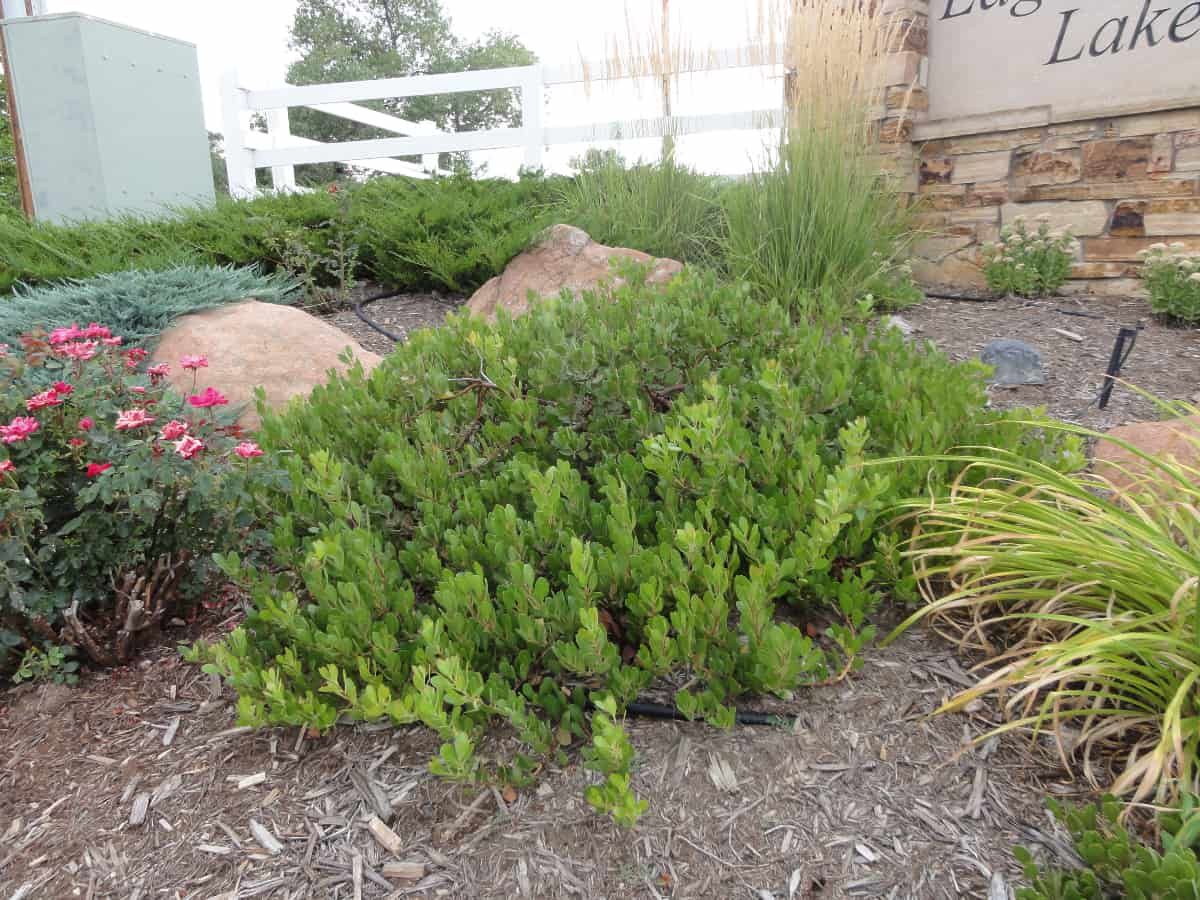
6. Panchito Manzanita (Arctostaphylos × coloradensis) — Zones 4b–8. A broadleaf evergreen groundcover for the interior West: glossy leaves, red stems, tiny pink urn flowers in spring. Slower to establish than the herbaceous crowd, then handsome year-round with almost no water.
7. Creeping Oregon Grape (Mahonia repens) — Zones 4–8. One of the few here that wants some shade. Holly-like evergreen leaves that bronze in winter, yellow spring flowers, blue berries for birds. Native across the West.
8. Turkish Veronica (Veronica liwanensis) — Zones 4–9. A glossy green mat barely an inch tall, covered in cobalt-blue flowers in late spring. Takes light foot traffic and looks tidy all season — an underused gem.
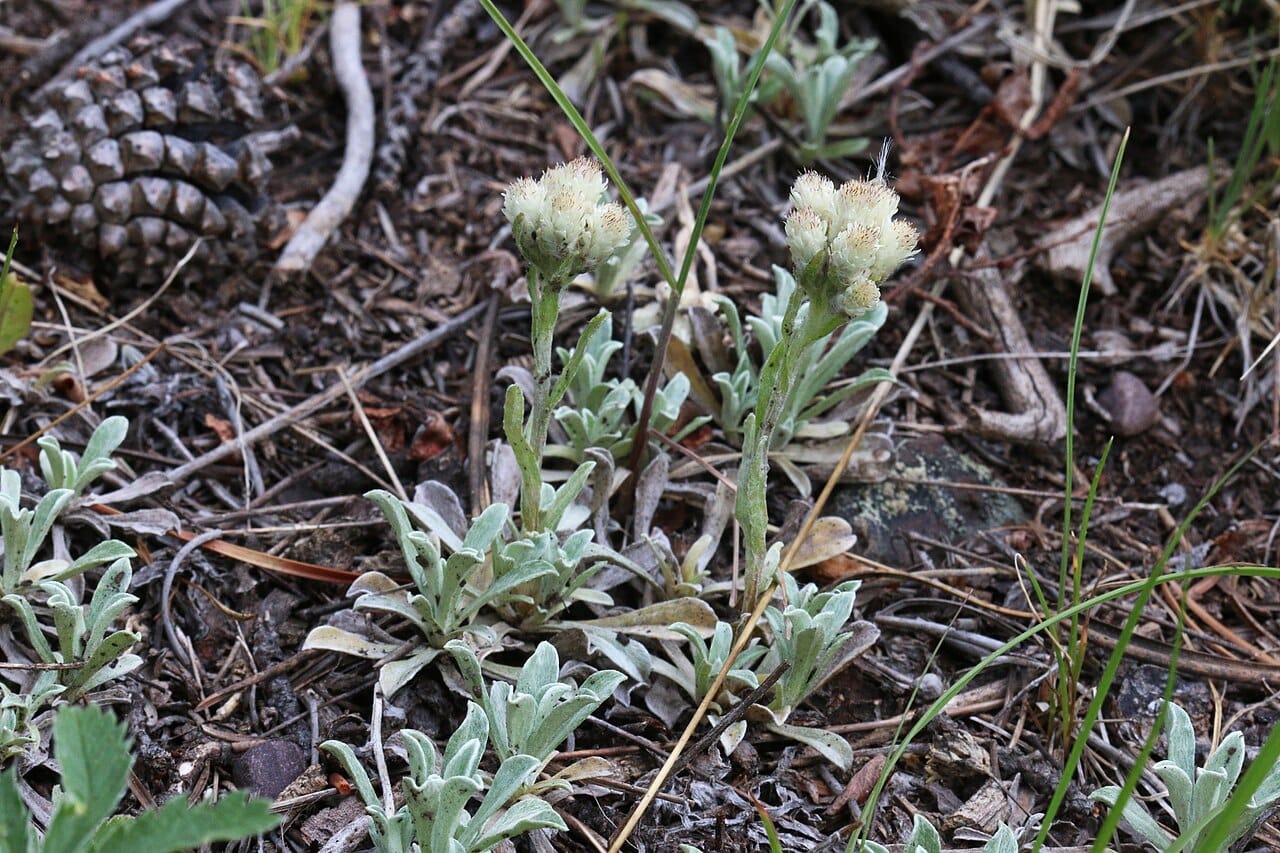
9. Pussytoes (Antennaria parvifolia) — Zones 3–9. A native silver mat just a couple inches tall with fuzzy pink-white blooms. Thrives in the lean, gravelly spots where nothing else will, including hell strips.
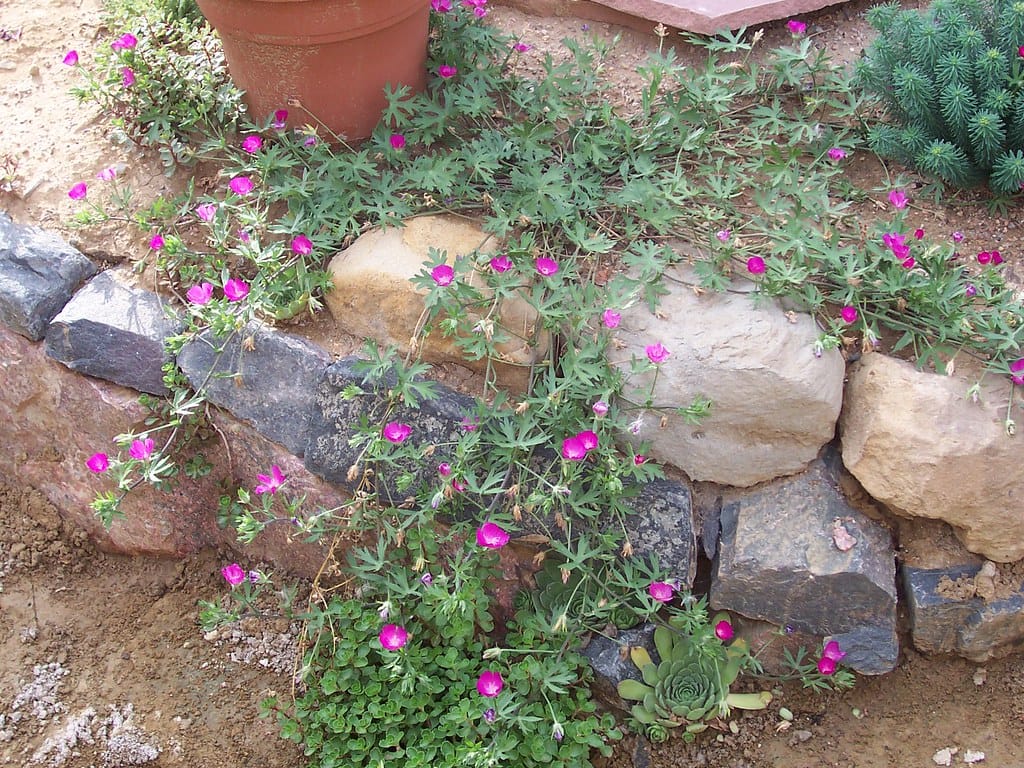
10. Winecups (Callirhoe involucrata) — Zones 4–9. Magenta chalice-shaped flowers on trailing stems from late spring to fall, from a deep taproot that laughs at drought. Dies to the ground in winter — pair it with evergreen neighbors.
11. Prairie Zinnia (Zinnia grandiflora) — Zones 4–8. A shortgrass-prairie native that slowly forms a golden-flowered mat blooming all summer on nearly zero water. Slow to start, then permanent.
12. Woolly Thyme (Thymus pseudolanuginosus) — Zones 4–8. Creeping thyme's fuzzy gray cousin — flatter, softer, fewer flowers, and the single best plant for filling gaps between flagstones.
Matching groundcover to job
- Between stepping stones: creeping thyme, woolly thyme, Turkish veronica.
- Hot slopes and banks: ice plant, creeping phlox, sedum — roots hold soil and they love the drainage.
- Dry shade: creeping Oregon grape, with pussytoes at the sunnier edges.
- Big open sweeps: mix two or three with similar water needs and let them weave. Odd-numbered drifts read as intentional — the same rule as perennial design.
Planting and establishment
Space plants closer than the tag suggests — 12–18 inches — if you want coverage in one season instead of three. Weed thoroughly before planting, because weeding inside an establishing mat is miserable; a gravel mulch between young plants helps (gravel vs. wood mulch here). Water deeply once or twice a week the first season, then taper hard — most of these plants rot from overwatering far more often than they die of thirst.
Replacing a whole lawn? Read the lawn removal guide first, and consider whether a buffalograss lawn fits the spots where you still want to walk barefoot.