
Perennials give a xeriscape color; shrubs give it bones. Without them, a low-water bed reads as a flat sea of small plants that disappears entirely in winter. The right drought tolerant shrubs fix that — they add height, screen the neighbor's trampoline, feed pollinators and birds, and do it all on a fraction of the water a hedge of arborvitae demands.
As always: drought tolerance starts after establishment. Water every shrub here deeply through its first full season — shrubs take longer to root in than perennials, and a second summer of backup watering doesn't hurt.
Mid-size shrubs for structure
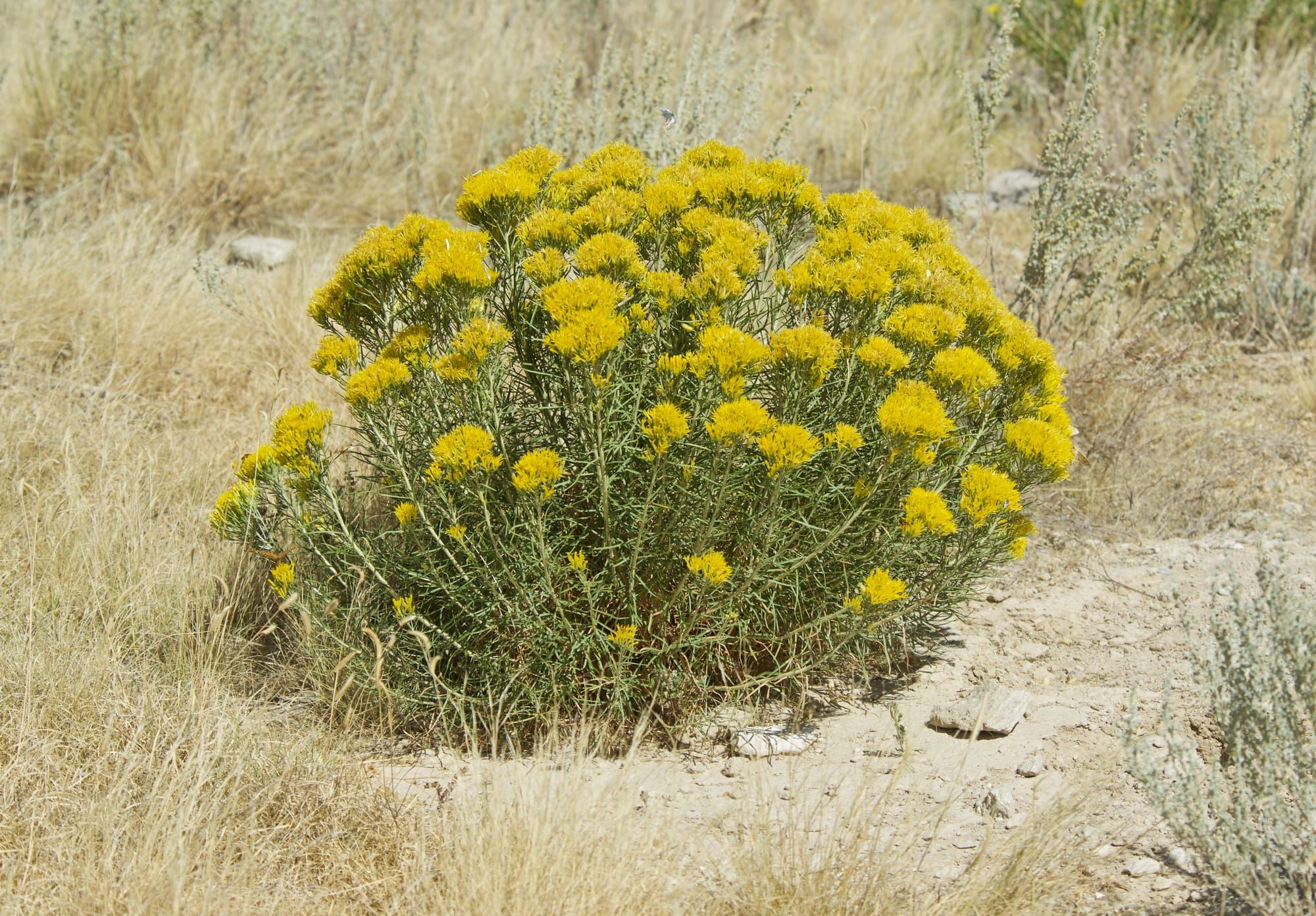
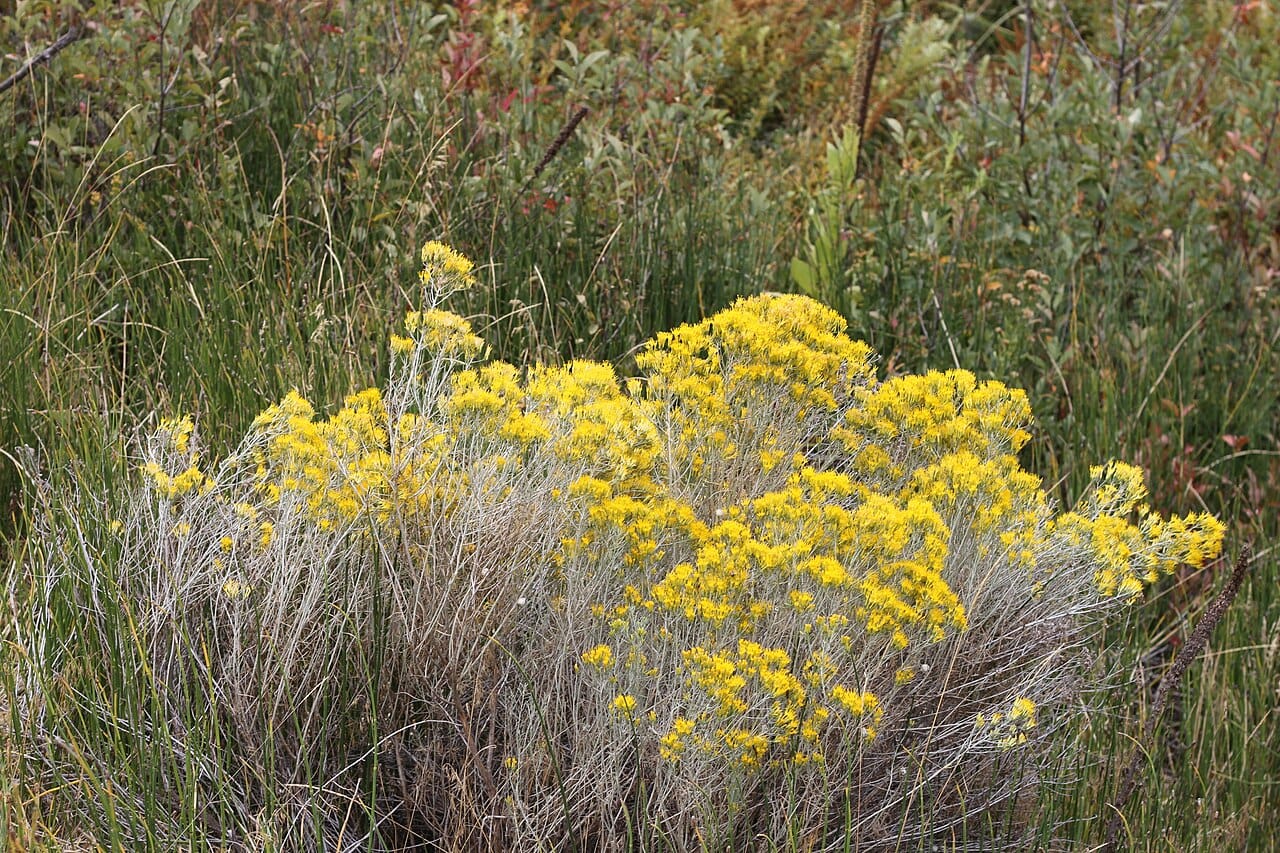
Rabbitbrush (Ericameria nauseosa) — Zones 4–9. Silver-blue foliage all season, then an explosion of gold in September when little else blooms. Native across the West, loved by late-season pollinators, and genuinely zero-water once rooted. Shear it hard in early spring to keep it dense.
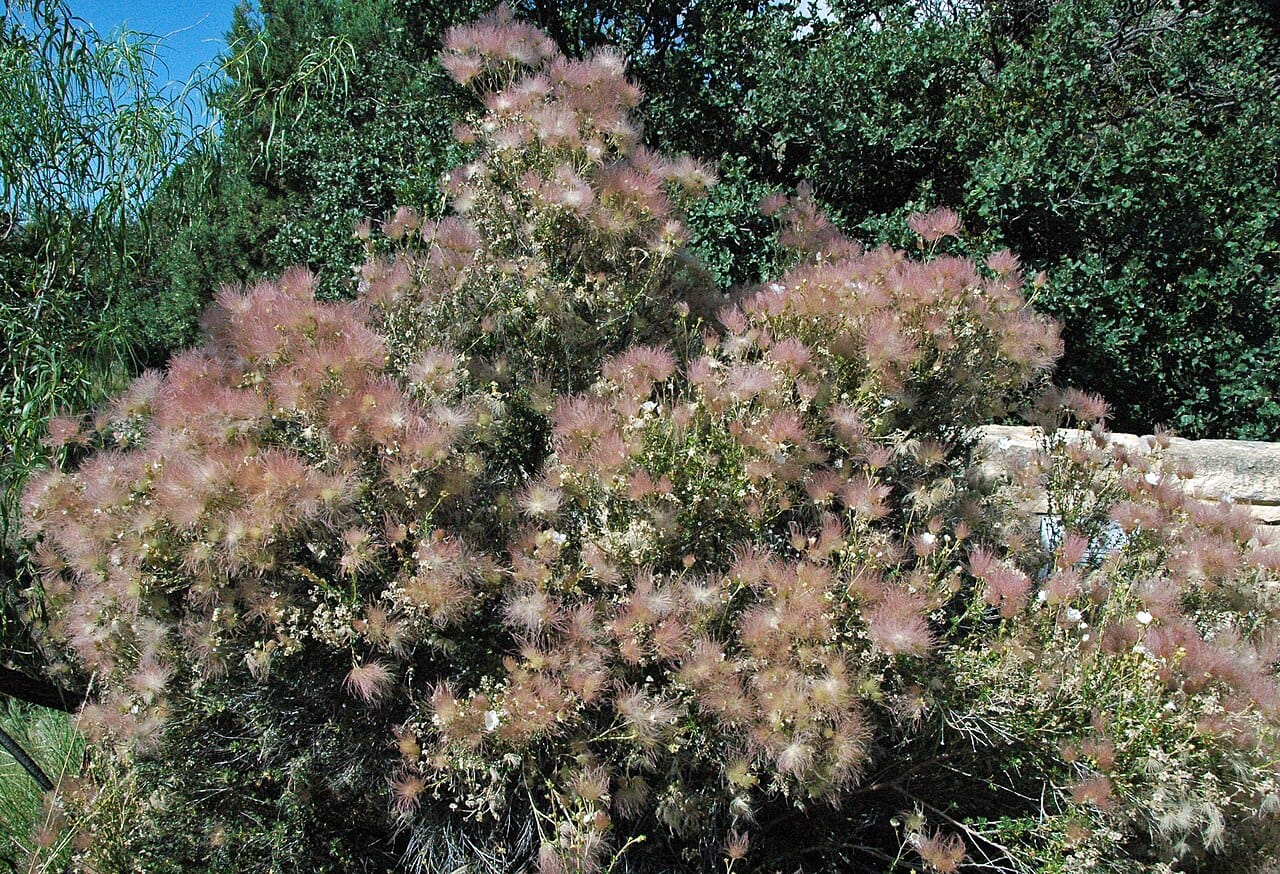
Apache Plume (Fallugia paradoxa) — Zones 4–9. White roselike flowers and pink, feathery seed plumes on the plant at the same time, from late spring into fall. Airy, semi-evergreen, and tough enough for a hell strip.
Fernbush (Chamaebatiaria millefolium) — Zones 4–8. Fragrant, ferny foliage and white July flower spikes that hum with bees. Tidy, rounded, five feet tall, and one of the best pollinator shrubs for cold-winter xeriscapes.
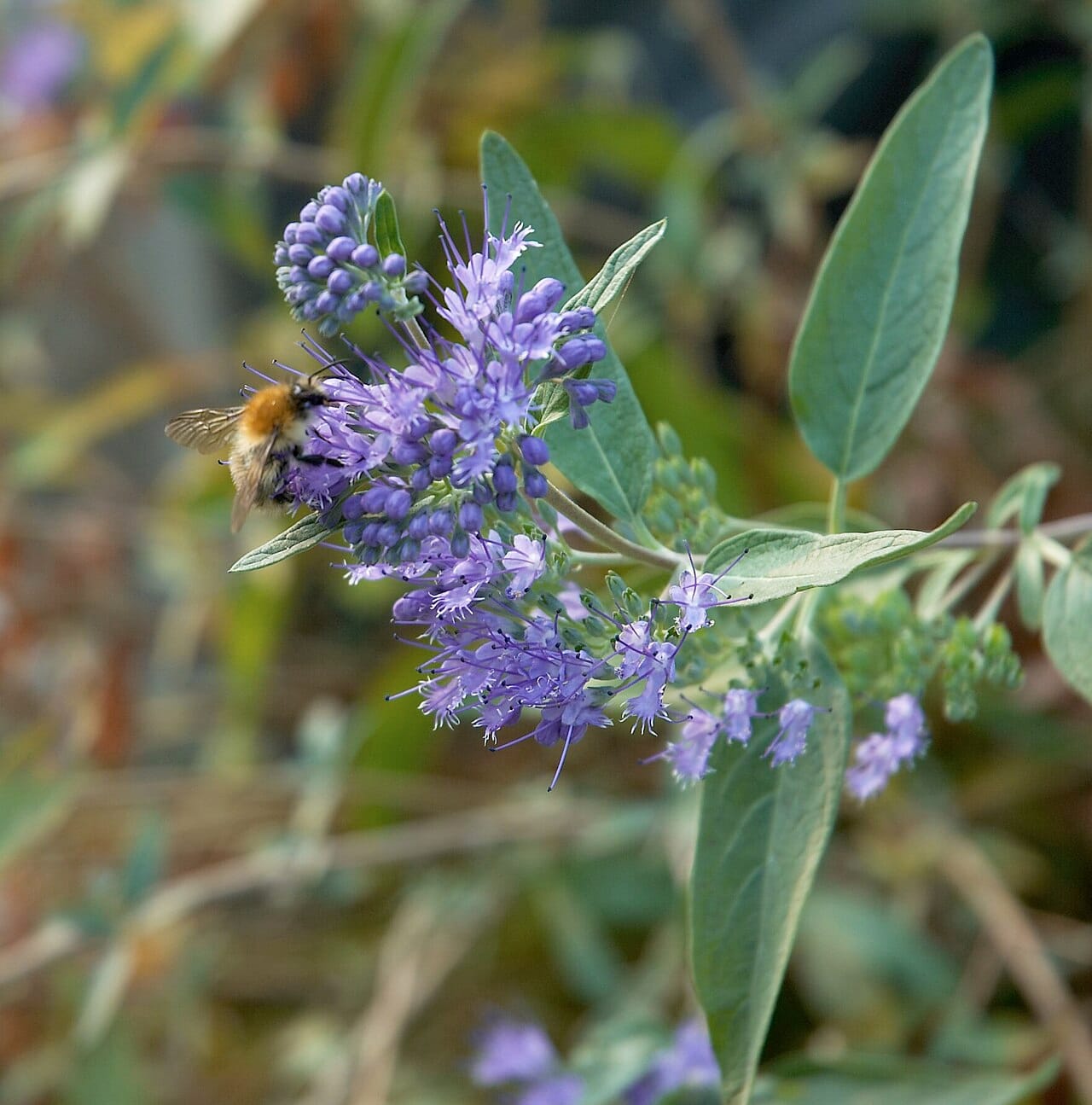
Blue Mist Spirea (Caryopteris × clandonensis) — Zones 5–9. A three-foot mound of true-blue flowers from late summer to frost. Cut it nearly to the ground each spring; it blooms on new wood.
Big Sagebrush (Artemisia tridentata) — Zones 4–9. The scent of the West after rain. Evergreen silver structure, four to eight feet, and a keystone native. Give it full sun, lean soil, and no irrigation at all once established — water is the only thing that kills it.
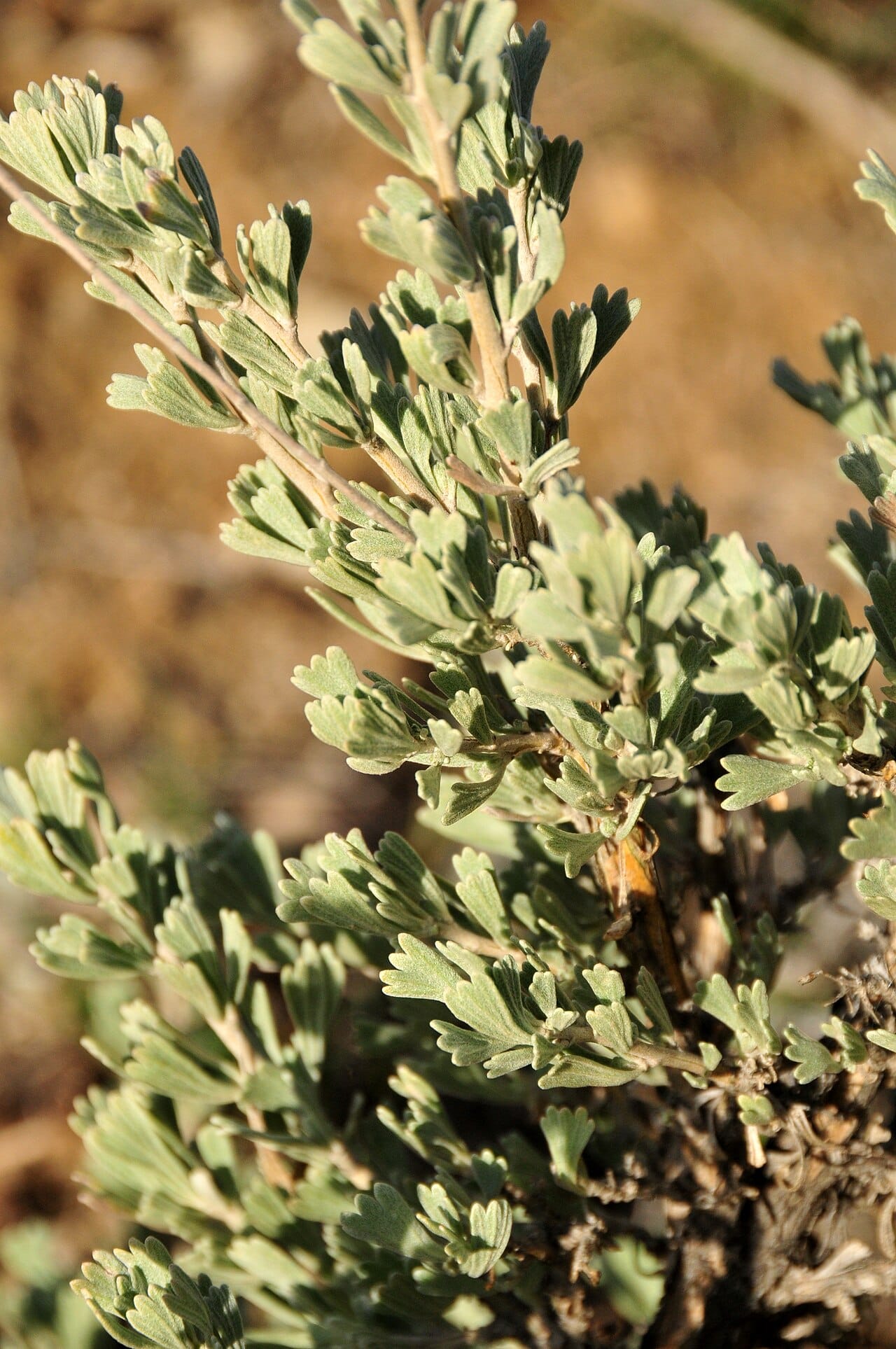
Three-Leaf Sumac (Rhus trilobata) — Zones 4–8. Glossy green summer foliage, serious orange-red fall color, and tart red berries that birds and humans both use. The compact form 'Autumn Amber' doubles as a tall groundcover.
Taller shrubs for privacy
New Mexico Privet (Forestiera neomexicana) — Zones 5–9. The workhorse xeric screen: fast to 8–12 feet, fine-textured, yellow fall color, takes shearing or grows naturally. Plant a staggered row four to six feet apart for privacy in three seasons.
Curl-Leaf Mountain Mahogany (Cercocarpus ledifolius) — Zones 4–8. A broadleaf evergreen to 10–15 feet — rare and valuable in cold, dry climates. Slow, dense, architectural, with feathery silver seed tails backlit by fall sun.
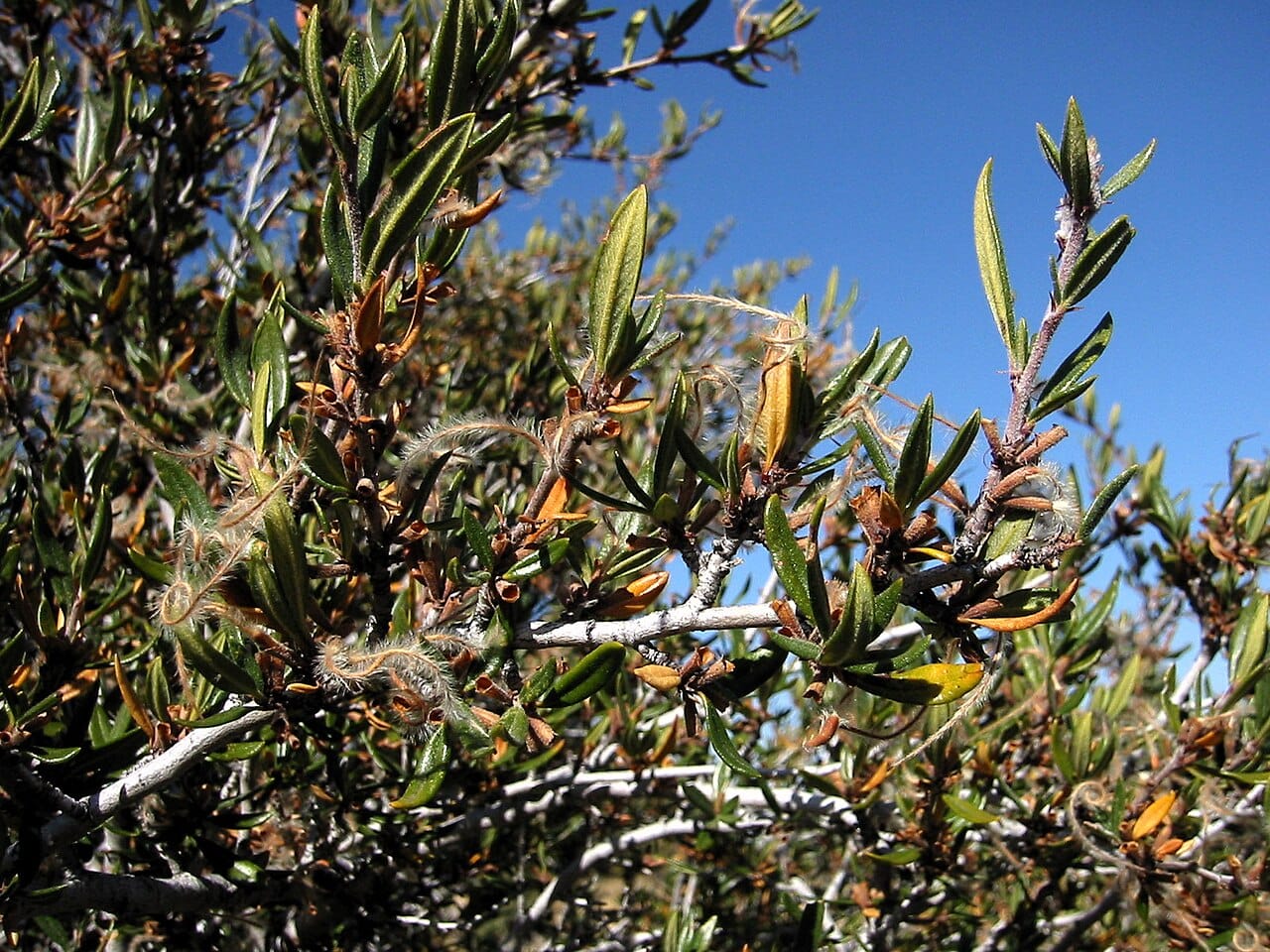
Silver Buffaloberry (Shepherdia argentea) — Zones 3–7. Silver leaves, orange-red berries, thorny enough to be a genuine barrier, and hardy into the coldest zones. A windbreak-grade plant for tough sites.
Fourwing Saltbush (Atriplex canescens) — Zones 4–9. Not glamorous, but evergreen-ish gray foliage, extreme drought and salt tolerance, and quick screening where nothing else survives — roadsides, alkaline soil, reflected heat.
Warm-climate additions (Zones 7+)
Gardeners in the low-elevation Southwest and Texas can add Texas sage (Leucophyllum frutescens, Zones 8–10) — silver foliage and purple blooms triggered by humidity — plus rosemary 'Arp' (Zone 6b–10) and pomegranate (Zones 7–10). See the Phoenix and Austin guides for regional palettes.
Designing with xeric shrubs
- Place shrubs first, perennials after. Structure sets the frame; color fills it. The sequence matters — it's step four in the 10 Steps to Xeriscaping.
- Mix evergreen and deciduous roughly 1:2 so winter isn't empty but summer isn't heavy.
- For privacy, plant in staggered double rows rather than a single line — fuller screening, faster, and one dead plant doesn't leave a gap.
- Don't shear natives into meatballs. Most shrubs here look best (and bloom best) in their natural form with one corrective pruning a year.
The establishment rule
Dig the hole twice as wide as the pot and no deeper, skip the fertilizer, mulch, and water deeply once or twice a week the first season — then taper hard. More xeric shrubs die of kindness than neglect; sagebrush, rabbitbrush, and Texas sage in particular will rot in irrigated beds. Hydrozone them away from thirstier plants (why that matters), and by year three most of this list needs nothing from you at all.
Filling in around the shrubs? Pair them with drought-tolerant perennials and ornamental grasses for a layered, year-round landscape.