
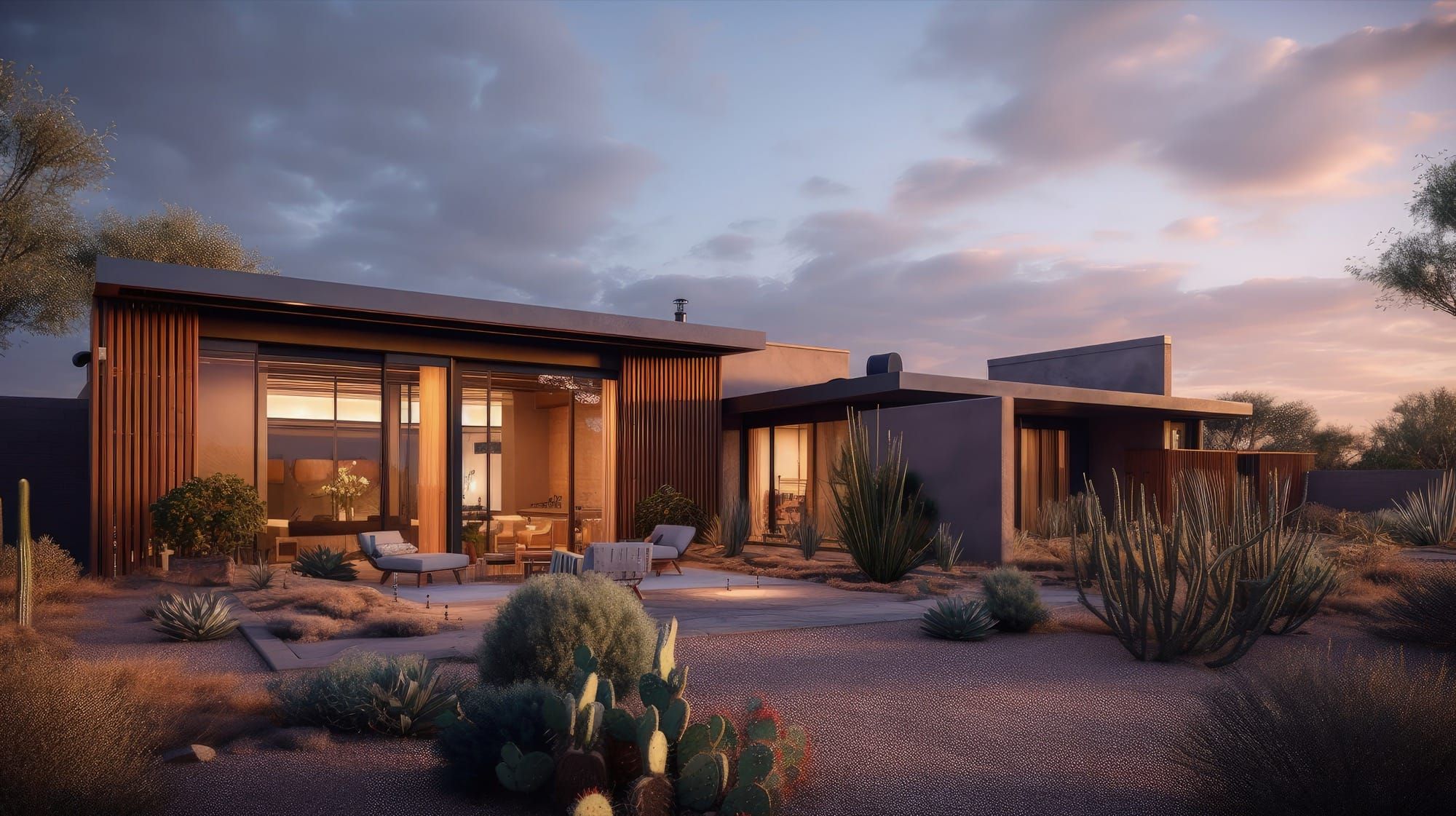
Backyard xeriscape ideas should start from a different question than front yard ones. The front yard performs for the street; the backyard is where you actually live. So the goal isn't just "less water" — it's converting the hours you spent mowing into hours spent out there. Here's how to design a low-water backyard around living.
Start with the rooms, not the plants
The classic backyard mistake is designing planting beds first and squeezing life in after. Reverse it:
- Map your "rooms" first — where you'll eat, where you'll sit around a fire, where kids or dogs run, where the hammock goes.
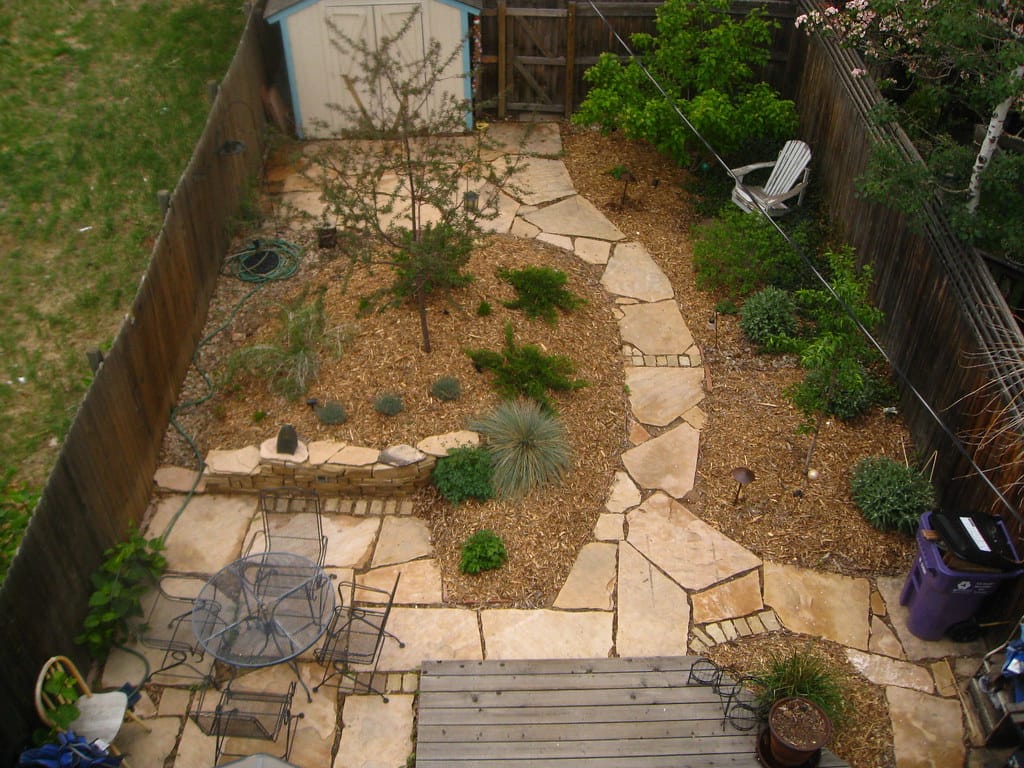
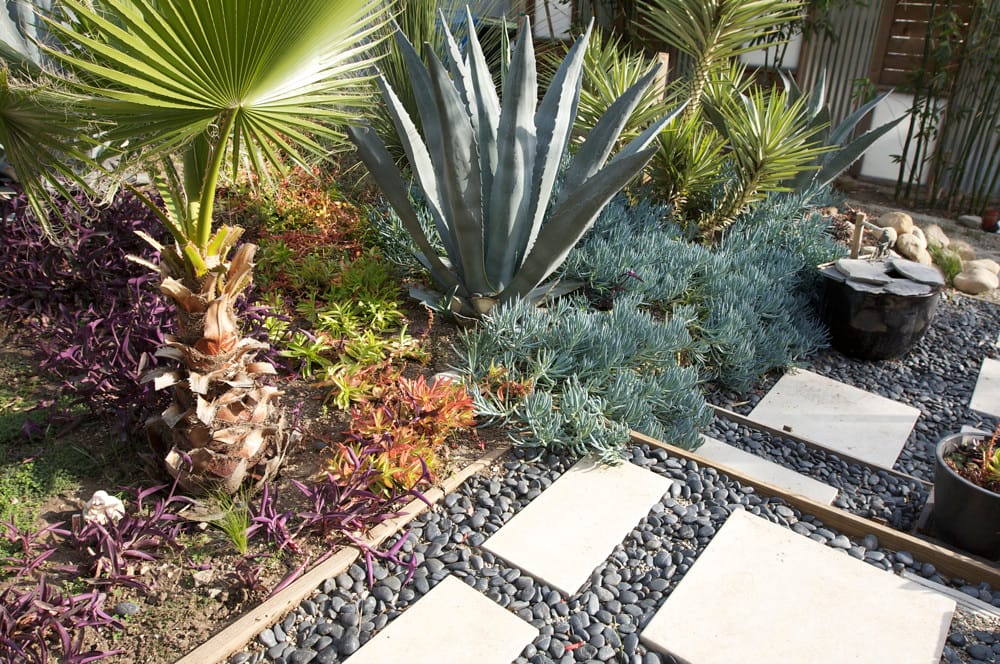
- Connect them with paths of flagstone, crushed gravel, or steppers.
- Then plant everything else. The plants become the walls and ceilings of the rooms — which is exactly what makes a backyard feel like a retreat instead of a lot.
This is zoning by use, straight out of the classic playbook — it also means your limited water goes only where it earns its keep.
The living spaces
A real patio, generously sized. Gravel or decomposed granite patios cost a fraction of concrete, drain rain into the ground, and read beautifully against xeric planting. Size it for a table plus pulled-out chairs — the most common regret is going too small.
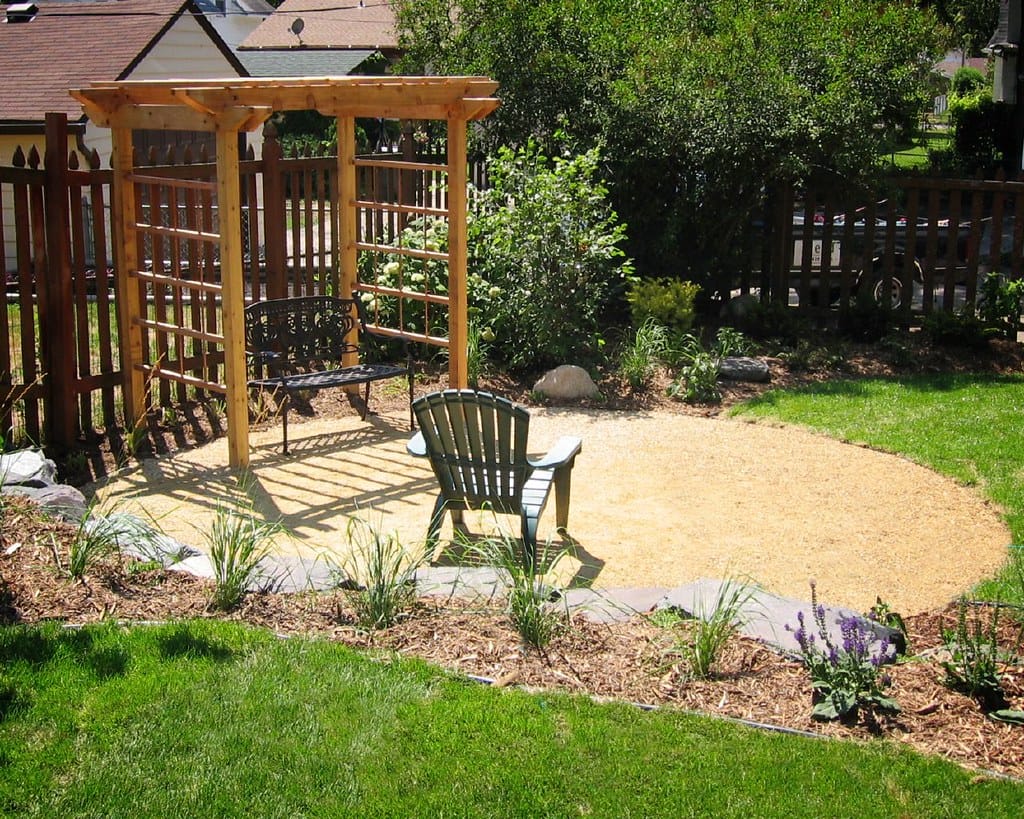
A fire pit room. A simple gravel circle, four chairs, and a steel bowl turns fall and spring evenings into the backyard's best season.
Shade you can count on. Desert-adapted doesn't mean shadeless: a pergola, shade sail, or fast-growing low-water tree makes summer afternoons usable. Shade also cuts water demand for everything planted under it.
An outdoor cooking corner — even just a grill on a gravel pad with a prep table. The closer it is to the kitchen door, the more you'll use it.
Play space that isn't thirsty. Kids and dogs need soft ground, not Kentucky bluegrass specifically. A compact panel of buffalograss or blue grama stays green on a fraction of the water — or use certified playground mulch under a play set.
The garden that surrounds it
- Plant the perimeter tall, with drought-tolerant shrubs and grasses for privacy — a living fence that never needs painting.
- Ring the patio with fragrance and pollinators: lavender, agastache, salvia — the pollinator palette puts the show two feet from your chair.
- A dry creek bed can carry roof runoff across the yard and double as the best-looking landscape feature you own.
- Containers do the color. A few big pots of succulents and annuals near seating concentrate impact — and they're the one place drip-irrigated splurge watering makes sense.
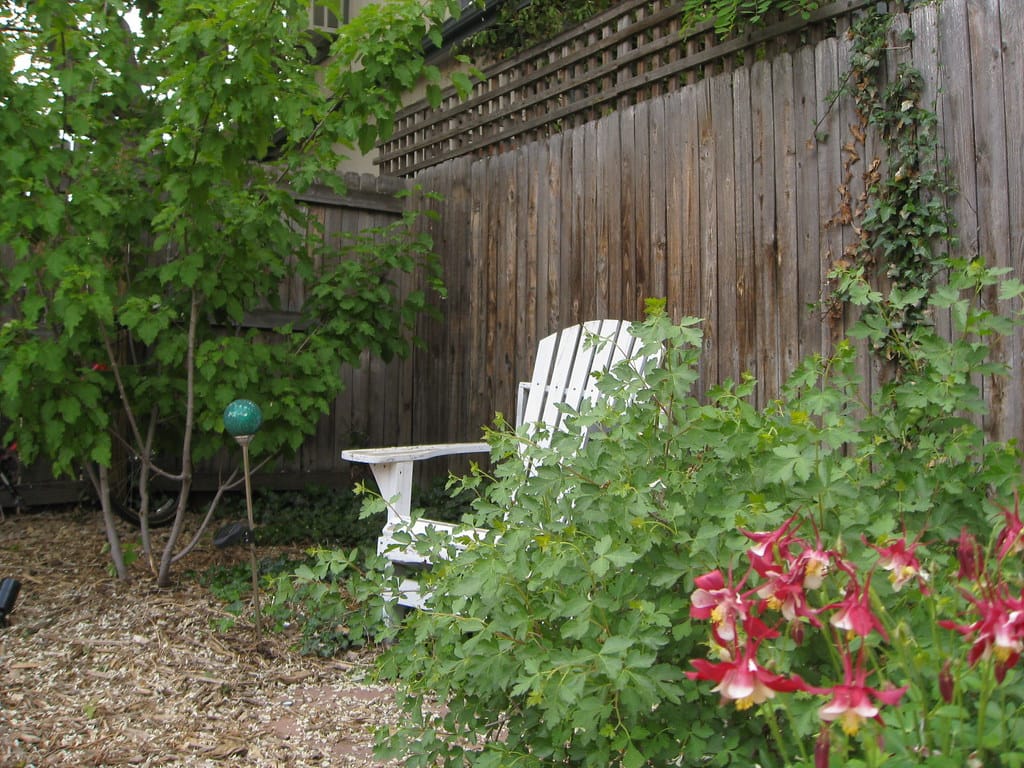
- Leave a wild corner. A brush pile, a boulder, native bunchgrasses — habitat turns a backyard into a place with birds and fireflies in it.
The practical layer
- Drip everything on a timer. (Install guide here.) A backyard you don't have to hand-water is a backyard you only visit for pleasure.
- Light the paths and one focal plant. Low-voltage kits are a weekend project and make the backyard usable — and beautiful — after dark.
- Mulch by zone: gravel around sun-lovers and hardscape, wood mulch in shrub borders (the breakdown).
- Mind the first year. New plantings need establishment care before they go hands-off.
The payoff
A conventional lawn-centered backyard demands 60+ hours a year of maintenance and gives back a place to mow. A xeriscaped one flips the ratio — the honest labor math is here. Start with the 10 Steps, and if the lawn's still in the way, here's how it goes.
And if the front yard is next on the list, the curb-appeal version of this thinking lives in our front yard xeriscape ideas — same water math, different audience.
The best review a backyard can get isn't "it looks great." It's "we're out here every night."