
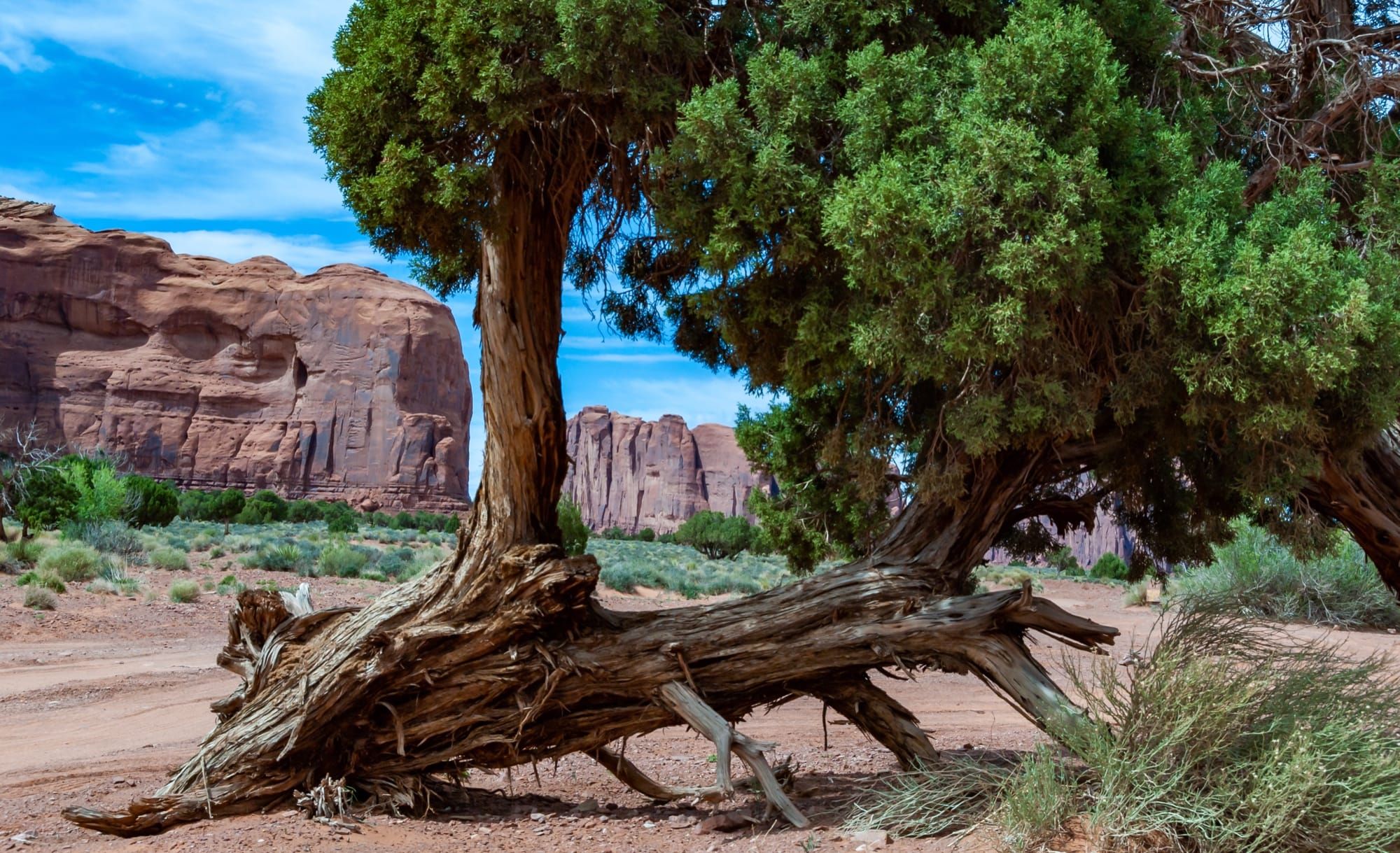
A tree is the single hardest thing to replace in a landscape — and shade is the cheapest water-saver there is, cooling soil and cutting evaporation for everything beneath it. So choosing drought tolerant trees is the highest-stakes plant decision in any xeriscape. Get it right and you water a tree for two or three establishment years, then rarely again. Get it wrong and you're hand-watering a dying maple for a decade.
One rule before the list: every tree here needs regular deep watering for its first two to three years. There is no such thing as a drought-tolerant sapling — only drought-tolerant root systems, and those take time to build.
Cold and dry: Mountain West and Plains (Zones 3–6)
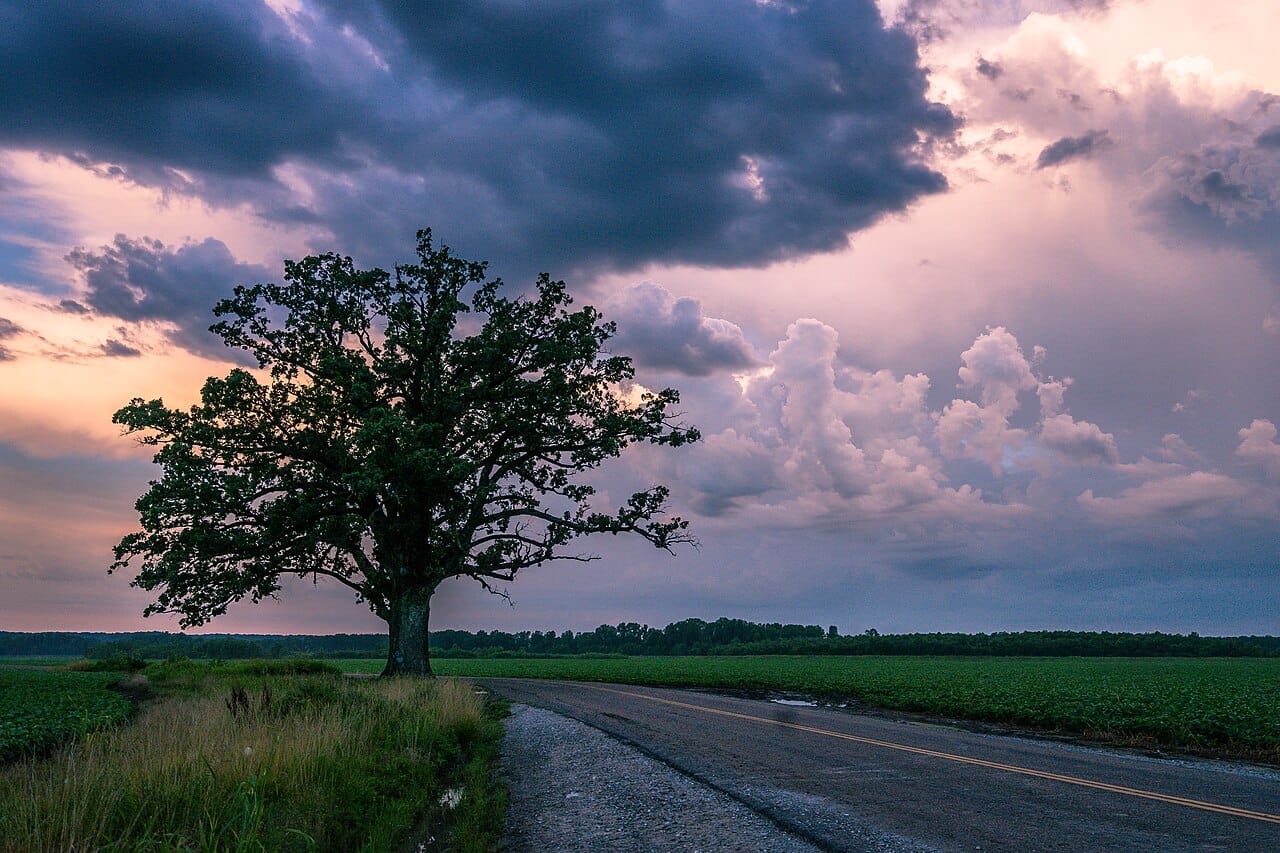
Bur Oak (Quercus macrocarpa) — Zones 3–8. Slow, massive, and nearly indestructible — the prairie oak that shrugs off drought, cold, and alkaline soil. Plant it for the next century.
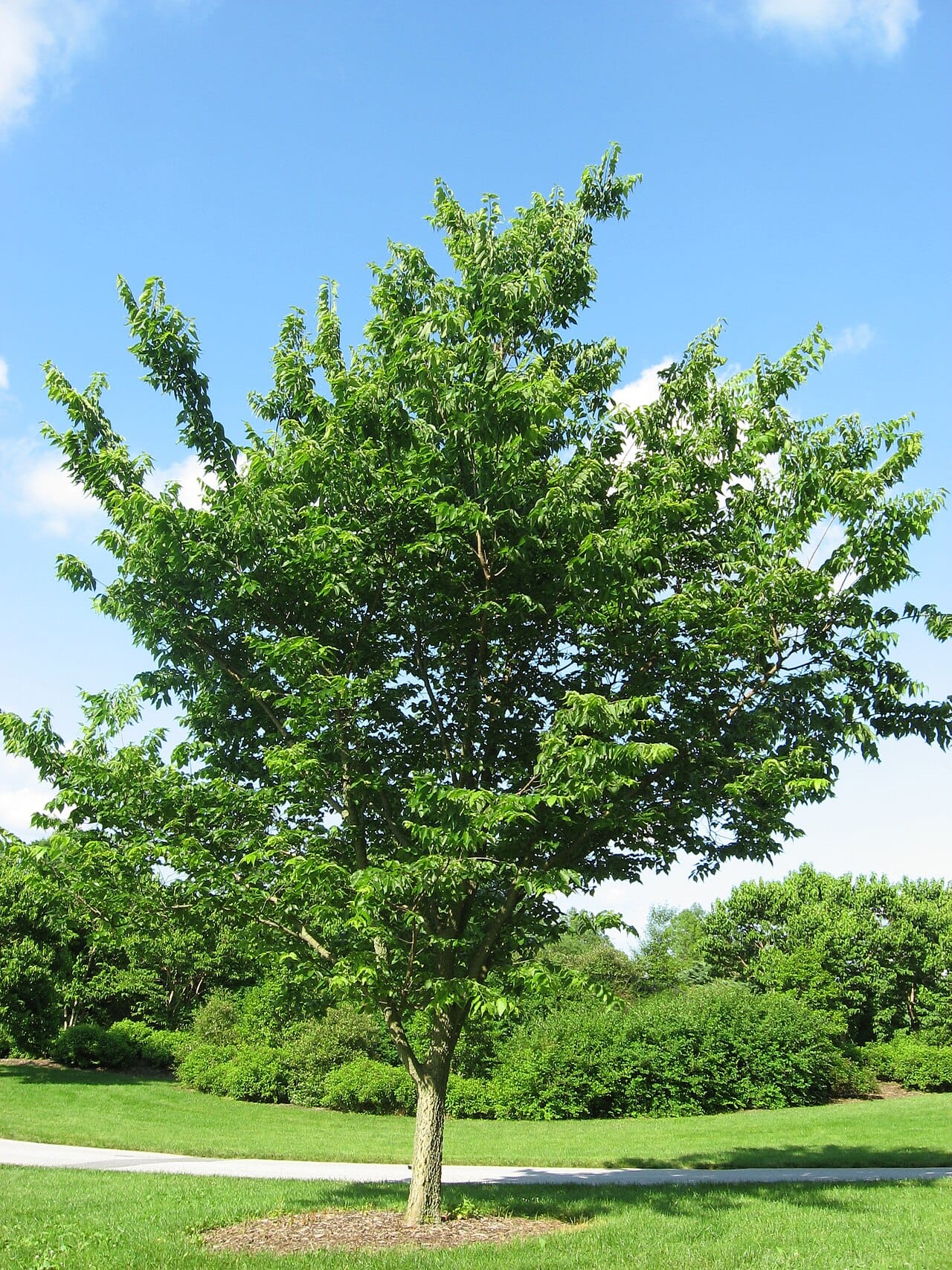
Hackberry (Celtis occidentalis) — Zones 3–9. The tough, fast shade tree of the plains. Not glamorous, but it takes wind, drought, bad soil, and city life without complaint.
Kentucky Coffeetree (Gymnocladus dioicus) — Zones 3–8. Bold, sculptural winter silhouette and airy summer shade that lets grass and perennials grow beneath it.
Honey Locust (Gleditsia triacanthos var. inermis) — Zones 4–9. Fast, filtered shade and tiny leaflets that disappear into the lawn in fall — no raking. Choose thornless, seedless cultivars like 'Shademaster'.
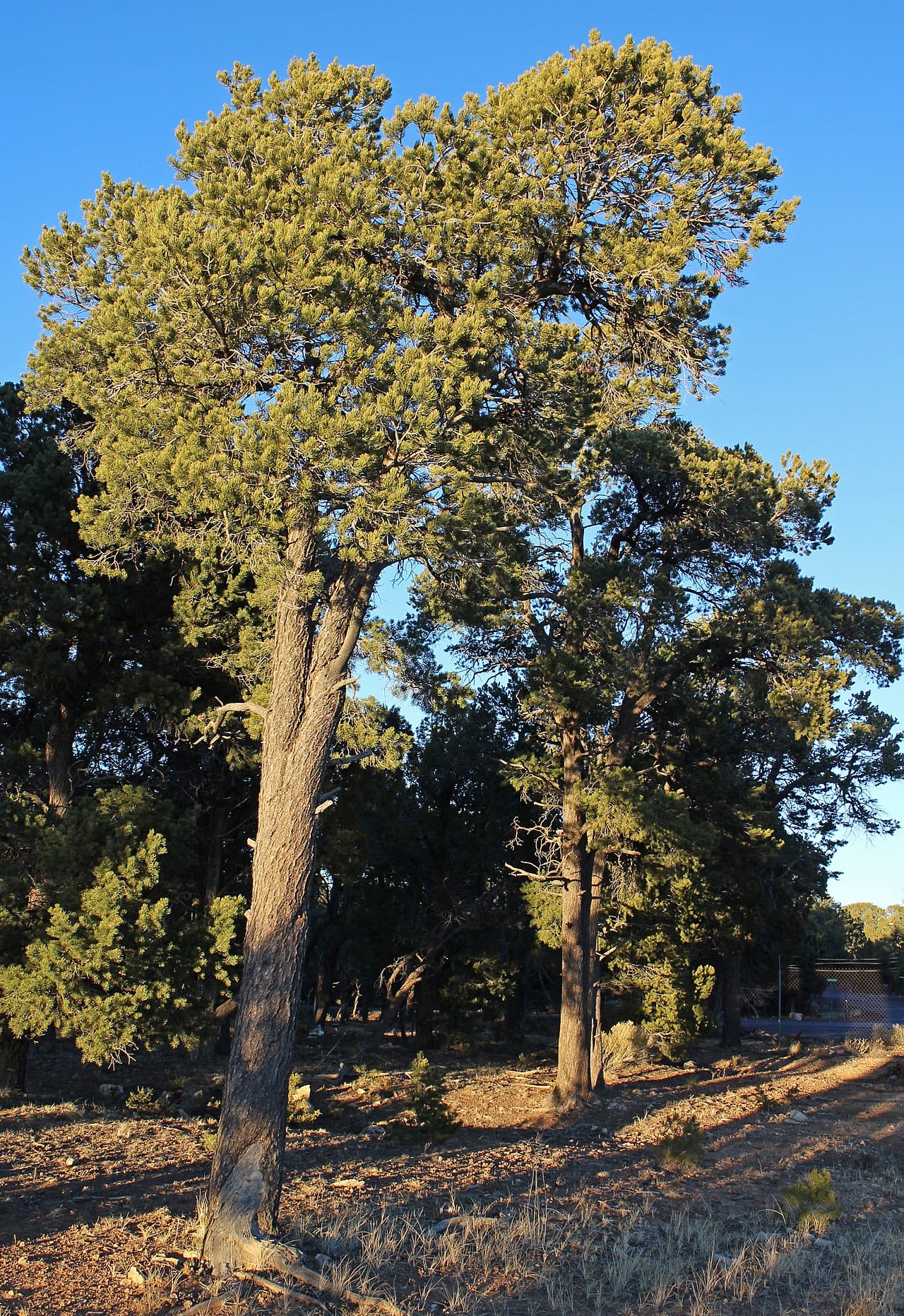
Pinyon Pine (Pinus edulis) — Zones 5–8. Compact native evergreen, 15–30 feet, extremely thrifty once established. The winter backbone of Front Range and Great Basin xeriscapes — see the Denver guide.
Gambel Oak (Quercus gambelii) — Zones 4–8. The scrub oak of the foothills — often multi-trunked, 15–25 feet, with russet fall color and serious wildlife value.
Hot and dry: the Desert Southwest (Zones 7–10)
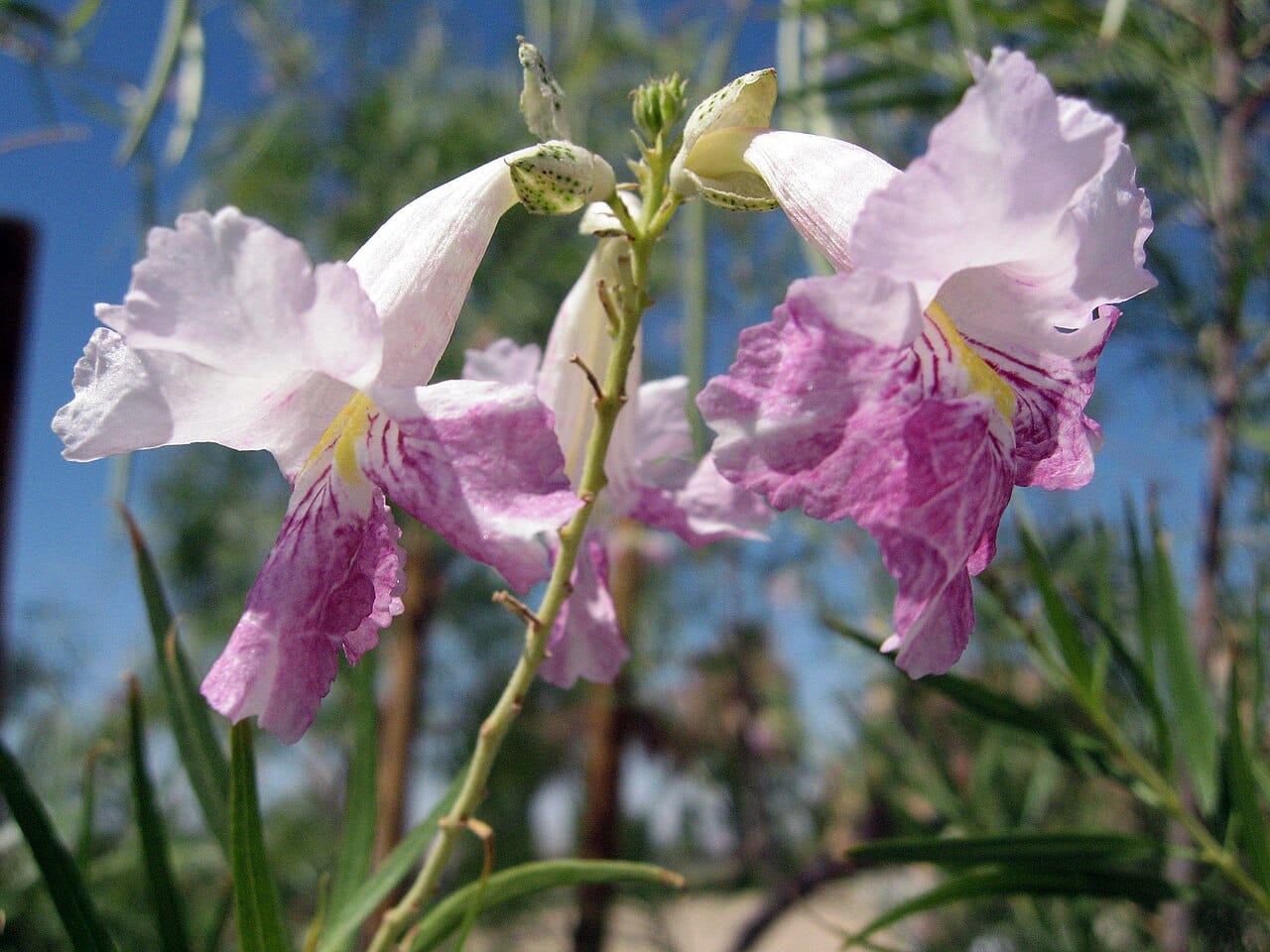
Desert Willow (Chilopsis linearis) — Zones 7b–9. Orchid-like pink blooms all summer on a fast, airy, 20-foot native that hummingbirds patrol daily. The signature small tree of Albuquerque and Las Vegas xeriscapes. Its hybrid chitalpa stretches hardiness to Zone 6.
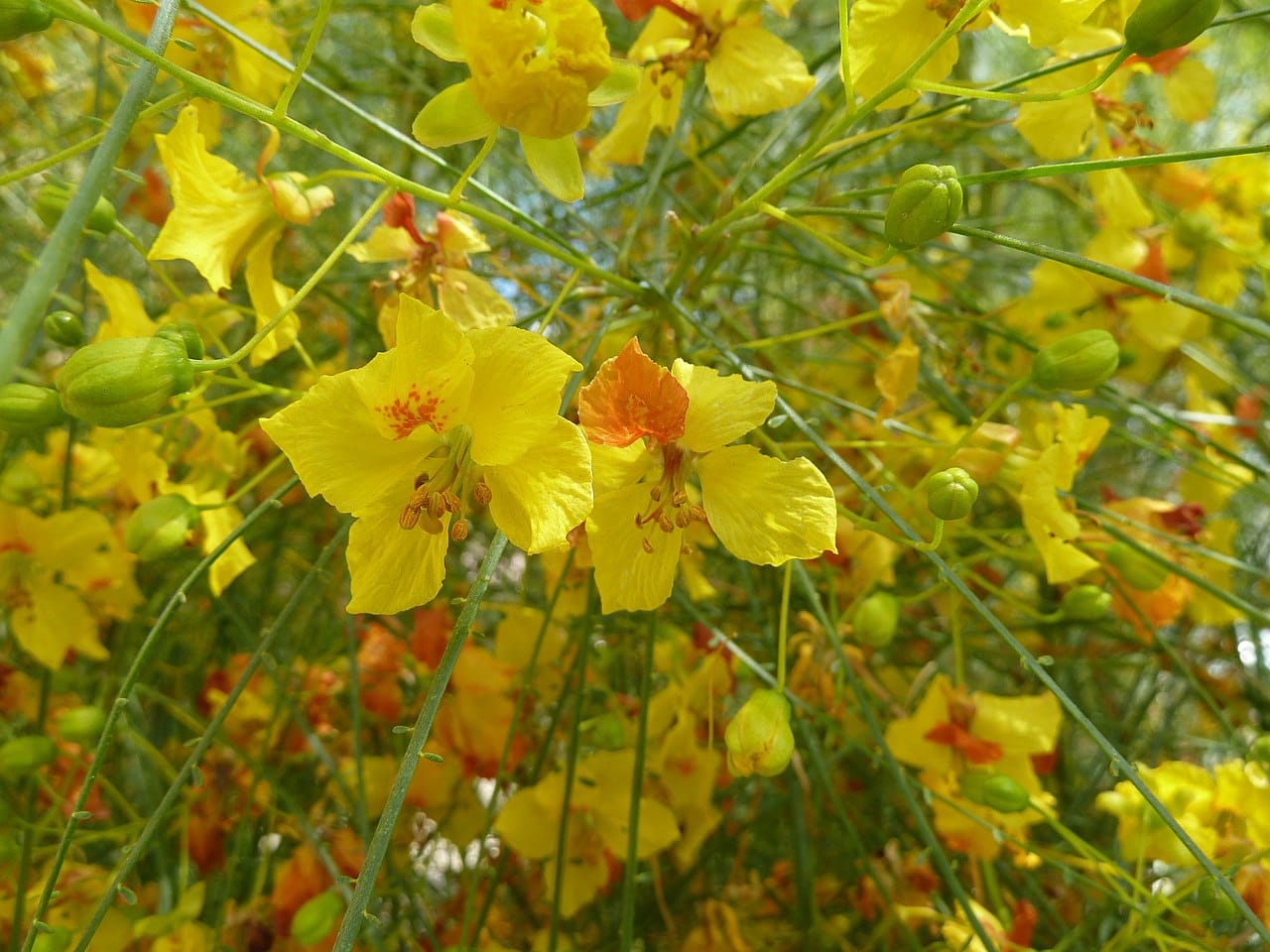
Palo Verde (Parkinsonia 'Desert Museum') — Zones 8b–10. Green bark, yellow spring bloom, filtered shade, thornless. The default — for good reason — in Phoenix.
Velvet Mesquite (Prosopis velutina) — Zones 8–11. Deep-rooted native shade with a graceful, twisted habit. Water deeply and infrequently to force roots down; shallow watering makes a shallow-rooted, wind-thrown tree.
Arizona Cypress (Cupressus arizonica) — Zones 7–9. Fast, blue-gray, evergreen — the low-water screen and windbreak tree for the high desert.
Texas and the southern plains (Zones 6–9)
Texas Red Oak (Quercus buckleyi) — Zones 6–9, brilliant fall color on limestone soils; Cedar Elm (Ulmus crassifolia) — Zones 6–9, the tough native shade standard; Lacey Oak, Mexican Plum, and Anacacho Orchid Tree round out an Austin-area palette. Crape Myrtle (Zones 7–9) earns its spot too — long summer bloom on modest water once established.
Small ornamental trees for any dry garden (Zones 4–8)
- Western Redbud / Eastern Redbud (Cercis) — spring magenta on 15–20 feet; the western species is the drier of the two.
- Amur Maple (Acer ginnala) — Zones 3–8 — one of the few maples that tolerates dry, alkaline sites; flame-red fall color.
- Hawthorn (Crataegus, 'Winter King' or native species) — flowers, persistent fruit, and grit.
- Serviceberry (Amelanchier alnifolia) — flowers, edible fruit, fall color; best with a little supplemental water in the driest climates.
Planting for drought from day one
- Plant small. A 15-gallon tree routinely overtakes a boxed specimen within five years, because young roots establish faster. Save the money for good soil prep.
- Water deep, wide, and infrequently — a slow soak at the drip line, weekly the first season, tapering through year three. Frequent shallow sips build the shallow roots that fail in drought.
- Mulch to the drip line, not the trunk. A 3-inch ring, pulled back from the bark.
- Skip staking unless it's windy, and remove stakes after one year — trunks strengthen by flexing.
- Water monthly in dry winters for the first few years, especially evergreens. It's the most-skipped task in cold-winter xeriscaping.
Choosing trees by zone first? Start with the hardiness zone guide, then build the layers beneath with drought-tolerant shrubs.