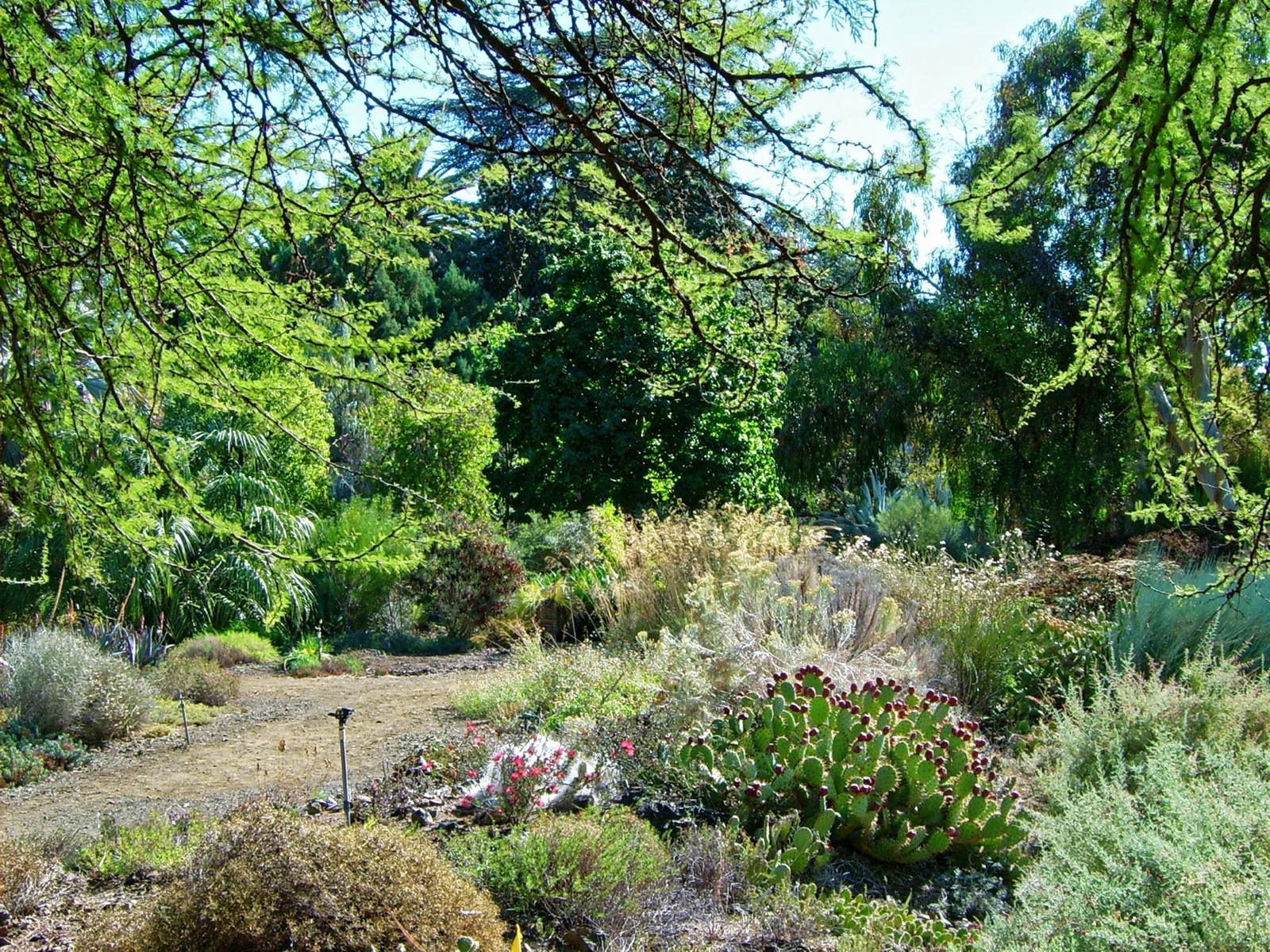
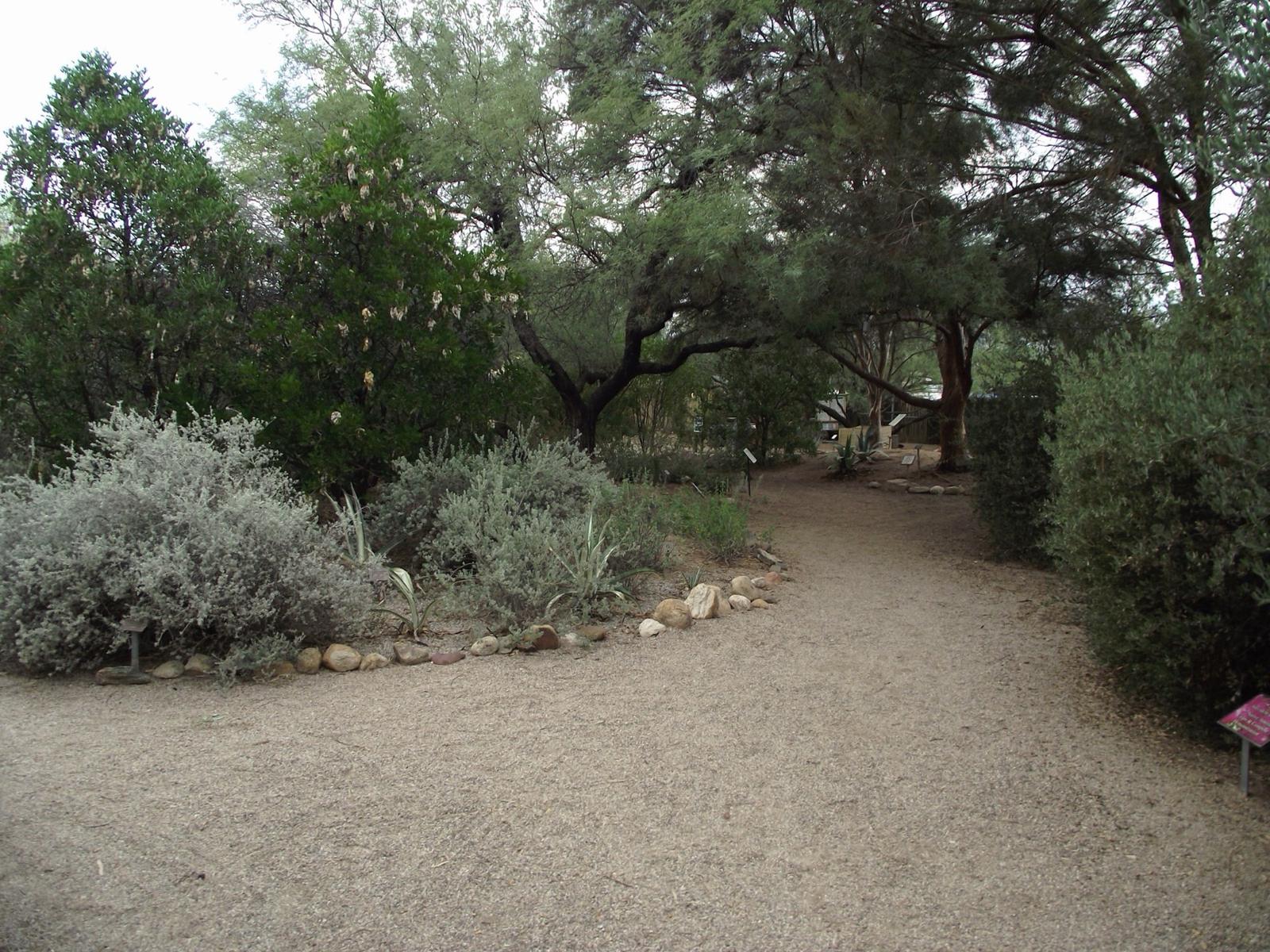
Xeriscaping in Tucson works with a desert that already knows how to live on very little water. The city averages 10.61 inches of precipitation a year at the airport, according to NOAA's 1991–2020 normals, and much of that comes in two short seasons: gentle winter storms and violent summer monsoon cells. A Tucson yard built on native trees, rain-fed basins and drip-irrigated shrubs can look lush on a fraction of what a lawn drinks, and Tucson Water will help pay for the rain-catching part.
This guide covers Tucson's growing conditions, the plants that earn their place here, how to design for heat and monsoon runoff, current watering rules, and the rebates that are open to homeowners as of September 2026.
Tucson growing conditions
- USDA zone 9a to 9b. On the 2023 USDA hardiness map, central and west Tucson ZIPs such as 85701 and 85745 map to 9b, while the Foothills (85718), the east side (85730) and Vail (85641) sit in 9a. Check your address on our Tucson zone page.
- Rainfall comes twice. Tucson International Airport averages 2.21 inches in July and 1.98 inches in August, nearly 40% of the annual total in two months (NOAA monthly normals). May and June are the driest, hottest stretch of the year.
- Heat. The June mean daily high at the airport is 101.2°F. South and west walls add reflected heat on top of that.
- Frost is short but real. NOAA's median last spring freeze at the airport is February 5 and the median first fall freeze is December 9 (annual normals). Washes and low spots collect cold air and freeze more often than the airport does.
- Elevation. The airport station sits at about 2,550 feet. Foothills neighborhoods run higher and cooler at night.
- Caliche and alkaline soil. University of Arizona Extension notes that most desert soils run pH 8.0 to 8.5 and that calcium carbonate can harden into solid layers called caliche (AZ1415). Punch through caliche at every tree hole, or water will pool around the roots.
The best xeriscape plants for Tucson
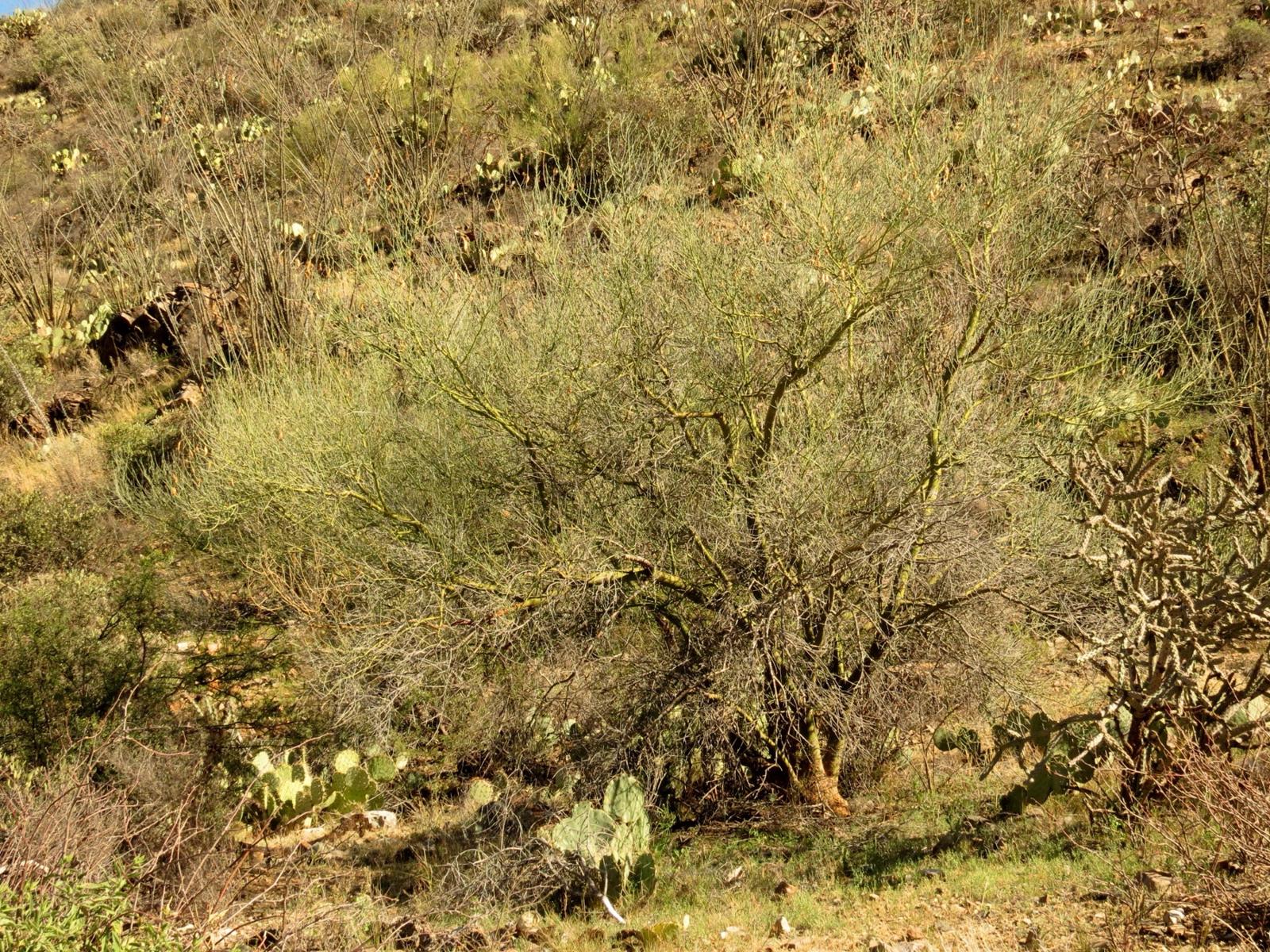
Start with the plants that grow wild in the Tucson basin and the surrounding bajadas. Foothill and blue palo verde, velvet mesquite, desert ironwood, ocotillo, desert spoon, brittlebush, globe mallow, desert marigold and Parry's penstemon are all native here, and nurseries around town stock them. Mix in proven adapted plants from Texas and the Chihuahuan Desert that handle Tucson's heat and alkaline soil.
Before you buy, check the AMWUA Landscape Plants for the Arizona Desert list. Tucson Water uses it and the ADWR Tucson AMA low-water-use list for its commercial turf program, and it's a useful filter for homeowners too.
| Plant | Type | Zones | Water | Why it works here |
|---|---|---|---|---|
| Blue palo verde (Parkinsonia florida) | Tree | 8–11 | Very low | Native to Tucson washes. Green bark photosynthesizes, and it covers itself in yellow bloom in spring |
| 'Desert Museum' palo verde | Tree | 8–11 | Very low | Thornless hybrid bred in Tucson. Fast filtered shade for patios |
| Desert willow | Tree | 7–11 | Low | Native along desert washes. Orchid-like summer flowers for hummingbirds |
| Honey mesquite | Tree | 6–9 | Very low | Wide canopy for summer shade. Its cousin, the native velvet mesquite, fills the same role |
| Texas sage (Leucophyllum frutescens) | Shrub | 8–11 | Very low | Silver foliage that flushes purple after monsoon rains |
| Autumn sage (Salvia greggii) | Shrub | 6–9 | Low | Long hummingbird bloom. Give it afternoon shade on the hottest walls |
| Red yucca | Succulent | 5–10 | Very low | Coral bloom spikes spring to fall. Takes reflected heat from pavement |
| Firecracker penstemon (P. eatonii) | Perennial | 4–9 | Very low | Red tubular flowers in spring. Short-lived, but reseeds in gravel |
| Desert four o'clock (Mirabilis multiflora) | Perennial | 5–10 | Very low | Magenta flowers open at dusk. Dies back to a deep root each winter |
| Damianita (Chrysactinia mexicana) | Groundcover | 7–10 | Very low | Fragrant, evergreen yellow mounds for hot, rocky edges |
| Trailing rosemary | Groundcover | 8–10 | Low | Spills over walls and basin edges, and bees work the winter flowers |
A few notes from the table. Autumn sage and firecracker penstemon want more water than the palo verdes during their first summer. Put them in the same drip zone as other "low" plants rather than out with the trees. Prickly pear, agaves and hedgehog cactus can go in the driest, sunniest spots with almost no supplemental water once rooted. For more tree options, see our low-water trees guide.
Design notes for the Sonoran Desert
Shade first, then plants. In Tucson, a tree on the west side of the house does more for comfort and water use than anything else you plant. Palo verdes and mesquites give filtered shade that lets understory shrubs grow beneath them. Ramadas and shade sails do the same job on patios while young trees fill in.
Design for the monsoon. A single July storm can drop more water than all of May and June combined. Shape the yard so roof and patio runoff flows into shallow planted basins instead of the street. Put trees at the edges of basins rather than in the bottom, so their root crowns stay dry. A rock-lined swale does the same work on a slope; our dry creek bed guide covers construction.
Group plants by water need. Put the thirstier plants (autumn sage, trailing rosemary) near the house and harvested water. Let the cactus, agave and native trees farther out live mostly on rain. Run them on separate drip valves so the palo verde isn't watered on the autumn sage schedule. If you're converting spray heads, see how to install drip irrigation.
Pick a light gravel. Tan and buff decomposed granite reflects less heat into plants than dark rock and looks like the local desert floor. Keep gravel away from tree trunks and leave room for leaf litter under canopy trees. That litter feeds the soil and shades roots.
Don't overwater on alkaline soil. UA Extension warns that overwatering plants in calcareous soils can induce iron chlorosis, the yellowing between leaf veins. Most "sick" desert shrubs in Tucson yards are drowning, not starving. See overwatering a xeriscape for the warning signs.
Watering rules in Tucson
Tucson's current drought measures don't hand homeowners a watering-day schedule. As of September 2026, the city's drought preparedness page says Tucson is in Tier 2 of its Colorado River shortage plan. At Tier 2, customers whose use exceeds the city's water-use guidelines must go through a water audit, and the Mayor and Council may add a drought surcharge. Tiers can change quickly with Lake Mead levels, so check that page before you plan a big planting.
Established native trees and cactus in Tucson need deep, infrequent watering, not daily sips. Water to the edge of the canopy, not at the trunk, and move emitters outward as trees grow. In summer, water early in the morning.
Tucson rebates (as of September 2026)
Tucson Water doesn't offer a turf-removal rebate for single-family homes. Its grass removal program is limited to commercial, industrial, institutional and multifamily customers. For homeowners, the money is in capturing water: rainwater harvesting and gray water.
| Program | Amount | Cap | Key requirement | Link |
|---|---|---|---|---|
| Tucson Water Rainwater Harvesting Rebate | $1.00/gallon of storage that meets the 1-inch rainfall storage requirement; $0.50/gallon for systems that don't, and for indirect-flow basins | $1,900 for the system, plus up to $99 Treebate ($50 for one new drought-tolerant tree, $99 for two), so $1,999 per property | Take the Watershed Management Group workshop (after July 2023), get the system design approved before installing, and finish within one year | Tucson Water |
| Tucson Water Gray Water System Rebate | 50% of qualifying costs | $1,000 | Attend the free Gray Water Rebate Workshop before installation. Apply within one year of buying materials | Tucson Water |
| Tucson Water Turf Removal Rebate (commercial and multifamily only) | $2.50/sq ft of ornamental turf removed | $30,000 per project | Not open to single-family homes. Plan approval and a Notice to Proceed before work starts, plus 50% canopy or vegetative cover at maturity | Tucson Water |
Get approval before you build. The rainwater rebate requires design pre-approval, and Tucson Water says funding is limited and that submitting a form doesn't guarantee payment. Book the workshop through Watershed Management Group first. Tucson Water cut the system cap from $2,000 to $1,900 in its July 2026 update, so confirm the current rules on the program page before you buy a tank. If your water comes from Oro Valley, Marana or another provider, Tucson Water's programs don't apply; check with your own utility.
HOA rules in Arizona
Arizona law protects some yard choices from HOA bans. Under A.R.S. §33-1819, a planned community that allows natural grass can't prohibit artificial turf on a member's property once the declarant-control period ends. The HOA can still set reasonable rules on its location, coverage and quality. For desert plantings and gravel, your CC&Rs and design review committee control what you can do. Submit a drawing and plant list before you dig, and cite the AMWUA list when a reviewer asks whether a plant is appropriate.
Hire it out
Rainwater basins, caliche excavation and drip systems are all doable DIY, but a crew with a trencher and a rock saw can save you a brutal summer weekend. Look for installers who have done Tucson Water rebate projects and can draw the pre-approval design for you. Get line-item quotes that separate demolition, grading, irrigation and plants. Our xeriscaping cost guide shows what each piece typically runs. Browse listed pros for the Tucson area:
For inspiration from the other side of the state, our Phoenix xeriscaping guide covers the hotter, lower-elevation version of the Sonoran palette.
Frequently asked questions
Does Tucson Water pay homeowners to remove grass?
Not as of September 2026. Tucson Water's turf removal rebate ($2.50 per square foot, up to $30,000) is open only to commercial, industrial, institutional and multifamily customers. Homeowners can use the rainwater harvesting rebate (up to $1,999 with Treebate) and the gray water rebate (up to $1,000) on a yard conversion.
When is the best time to plant in Tucson?
Fall is best for most desert trees, shrubs and perennials. Roots grow through the mild winter and are established before the May–June heat. Cactus and agaves are the exception: they root best in warm soil, so late spring or early summer works. Avoid planting frost-tender species in low spots where cold air settles.
What USDA zone is Tucson?
Tucson falls in zones 9a and 9b on the 2023 USDA map. Central and west-side ZIPs such as 85701 and 85745 are 9b, while the Catalina Foothills, the east side and Vail are 9a. Enter your ZIP on our Tucson zone page for your exact zone.
Do I need a permit for a gray water system in Tucson?
According to Tucson Water, you don't need a permit to connect to an existing gravity stub-out from a washing machine. You do need one to modify drain plumbing from any fixture. Either way, the rebate requires the free workshop before you install anything.