Xeriscaping in Houston doesn't mean cactus and gravel. Houston Intercontinental Airport averages 51.84 inches of rain a year, according to NOAA's 1991–2020 normals, and storms can drop inches in a day. But August still brings mean highs near 95°F, and lawns here drink heavily through every hot, dry spell. A Houston xeriscape uses Gulf Coast natives that survive both extremes: soaking wet in a tropical storm and bone-dry in a September drought.
Classic desert xeriscape plants struggle here. Agaves, cactus and silver-leaved Western shrubs need sharp drainage, and in Houston's flat, slow-draining ground they rot unless you build them a raised, gritty bed. This guide covers local conditions, plants that actually thrive, design for heavy rain, Houston's watering rules and the programs available as of September 2026.
Houston growing conditions
- USDA zones 9a and 9b. On the 2023 USDA map, most Houston ZIPs, from downtown (77002) and West University (77005) to Memorial (77024), Westchase (77042), Clear Lake (77058) and Humble (77346), are 9b. Cypress (77433) is 9a. Check your ZIP on our Houston zone page.
- Lots of rain, unevenly spread. NOAA puts Houston Intercontinental at 51.84 inches a year and Hobby Airport at 55.62 inches (NOAA annual normals). June is the wettest month at Intercontinental, with 6.00 inches on average, and February is the driest at 2.97 (NOAA monthly normals).
- Long, hot summers. Mean daily highs at Intercontinental are 94.5°F in July and 94.9°F in August. High humidity adds stress for plants from dry climates.
- Occasional freezes. The median last spring freeze at Intercontinental is February 13 and the median first fall freeze is December 9. Hobby, closer to the Gulf, has medians of January 30 and December 28. Hard freezes are rare but do happen, so zone-10 tropicals are a gamble.
- Flat, low ground. The Intercontinental station sits at about 90 feet above sea level.
- Test your drainage. Dig a hole about a foot deep and fill it with water. If water is still standing the next day, choose plants that tolerate wet feet, or build raised beds before planting anything from a dry climate. Harris County's AgriLife Extension horticulture office offers soil testing guidance and raised-bed publications.
The best water-wise plants for Houston
Start with plants native to the Gulf Coast prairies and woodlands. They handle humidity, soggy winters and summer drought, and once established they need far less irrigation than St. Augustine grass. Zones below are from the NC State Extension Plant Toolbox or our own plant data, and water ratings are from the Lady Bird Johnson Wildflower Center or our data.
| Plant | Type | Zones | Water | Why it works here |
|---|---|---|---|---|
| Live oak (Quercus virginiana) | Tree | 8–10 | Moderate | Long-lived native shade tree for the Gulf Coast |
| Bald cypress (Taxodium distichum) | Tree | 4–9 | Moderate | Native tree for low, wet spots that flood after storms |
| Yaupon holly (Ilex vomitoria) | Shrub | 7–9 | Low | Native evergreen hedge. Handles wet and dry soil |
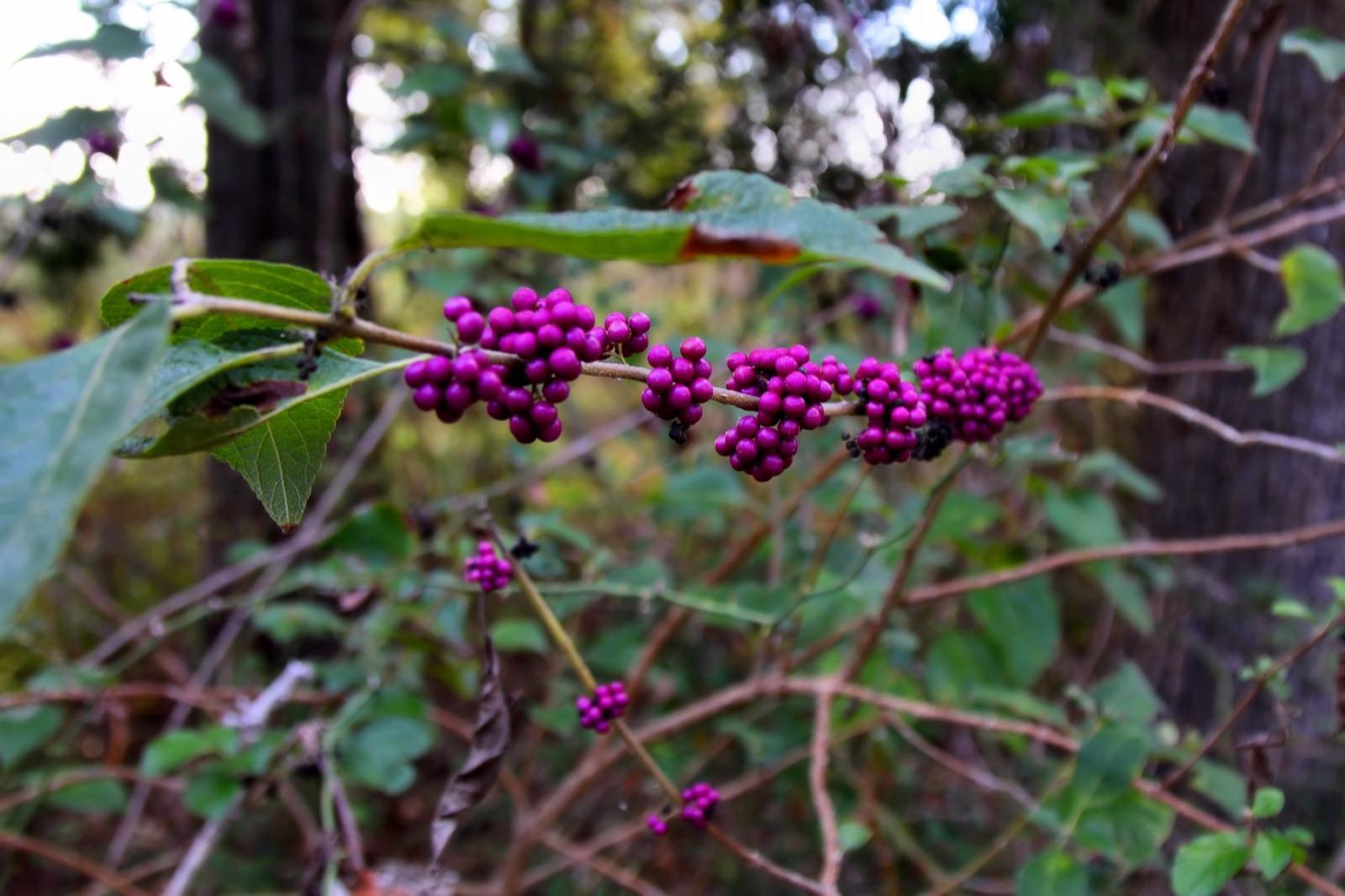
| American beautyberry (Callicarpa americana) | Shrub | 6–10 | Low | Native understory shrub with purple fall berries for birds |
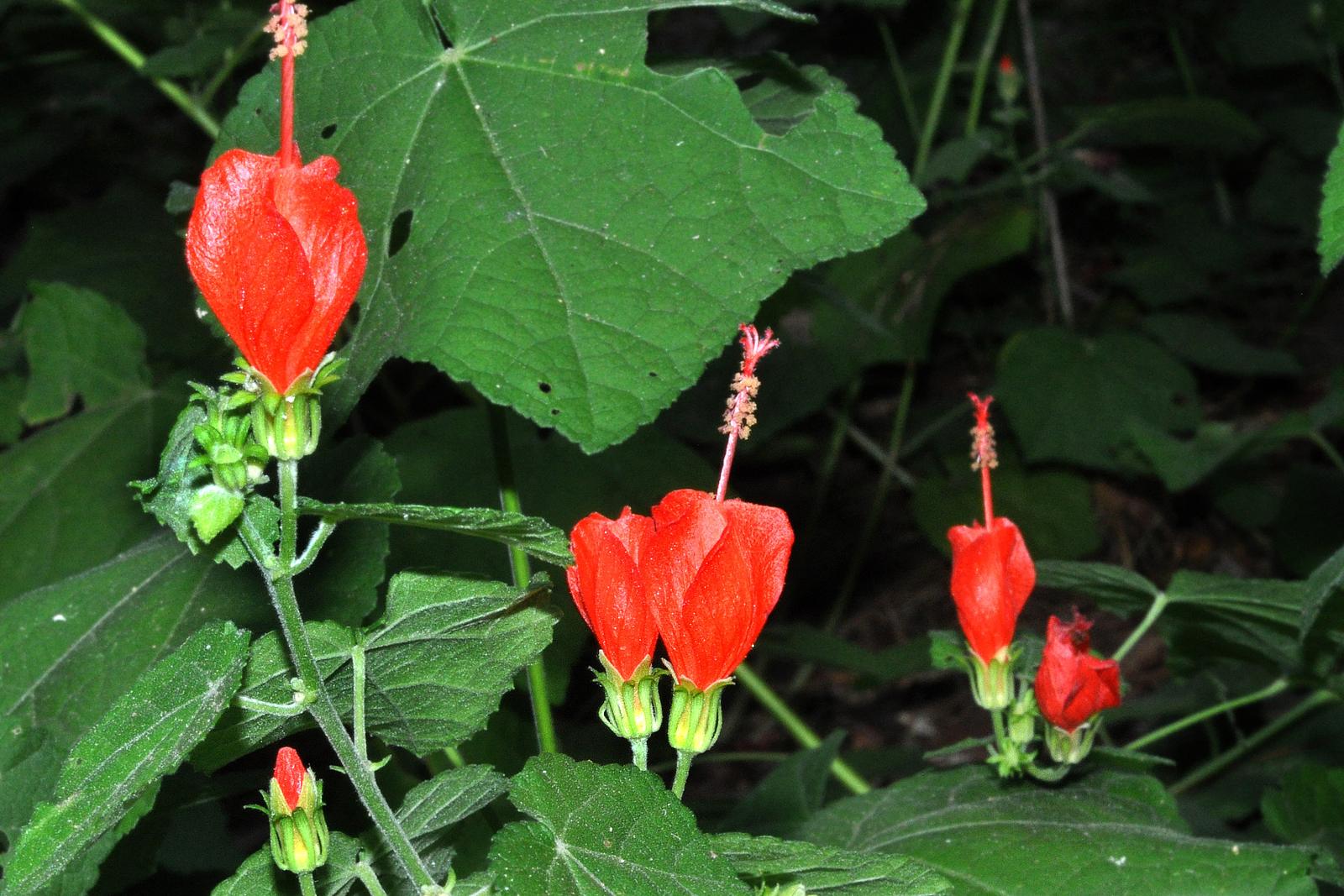
| Turk's cap (Malvaviscus arboreus var. drummondii) | Shrub | 7–10 | Moderate | Native, drought-tolerant once established, and blooms in shade for hummingbirds |
| Autumn sage (Salvia greggii) | Shrub | 6–9 | Low | Texas native with a long bloom. Give it a raised, well-drained spot |
| Texas sage (Leucophyllum frutescens) | Shrub | 8–11 | Very low | Silver Texas native. Only in raised, fast-draining beds here |
| Coral honeysuckle (Lonicera sempervirens) | Vine | 4–9 | Moderate | Native, non-invasive honeysuckle for fences and hummingbirds |
| Gulf muhly (Muhlenbergia capillaris) | Grass | 5–9 | Low | Native bunchgrass with pink fall plumes |
| Inland sea oats (Chasmanthium latifolium) | Grass | 5–9 | Moderate | Native grass for shade under oaks |
| Gaura | Perennial | 5–9 | Low | Texas native with airy white flowers from summer to fall |
| Red yucca | Succulent | 5–10 | Very low | Texas native. Plant it on a berm or in a raised bed |
Leave agaves, cactus, Texas sage and red yucca for the driest, sunniest, best-drained spots, ideally raised 8 inches or more above grade with gritty soil. In a flat, slow-draining bed after a wet spring, they tend to rot. For more native shrub ideas, see our drought-tolerant shrubs guide.
Design for heavy rain and summer drought
Raise the dry-climate plants. Build berms or raised beds for anything that needs sharp drainage. Mix in expanded shale or gravel so water drains away from roots after a downpour.
Let low spots stay wet. Instead of fighting a soggy corner, plant it. Bald cypress, inland sea oats and other plants that handle wet soil can turn a problem area into a rain garden that soaks up roof runoff. A rock-lined dry creek bed can move storm water from downspouts to those planted areas instead of across your patio.
Keep water moving away from the house. Grade beds so water flows away from the foundation. Use permeable paths and gravel instead of solid concrete where you can, so rain soaks in instead of running into the street.
Shade is a water-saving tool. A live oak on the south or west side of the house cools the yard and lets you grow shade-tolerant natives like beautyberry, Turk's cap and inland sea oats underneath with little watering.
Put mulch everywhere. Shredded hardwood mulch keeps soil cooler in August and breaks down to improve clay over time. Keep it a few inches back from stems. Our gravel vs. wood mulch guide explains where rock works better.
Houston watering rules
As of September 2026, Houston Public Works lists no current watering restrictions (Houston Public Works). The city rescinded its last Stage One drought restrictions effective May 29, 2024.
When the city's Drought Contingency Plan is in effect, outdoor watering is limited to assigned days:
- Single-family homes, odd-numbered addresses: Sundays and Thursdays.
- Single-family homes, even-numbered addresses: Saturdays and Wednesdays.
- All other customers: Tuesdays and Fridays.
Even without restrictions, most established natives in Houston need supplemental water only during long dry spells. A smart controller that skips watering after rain saves the most. Houston Public Works notes that improper irrigation can waste up to 50% of the water used in residential landscapes. Customers outside the city limits should check with their own municipal utility district.
Houston programs and rebates (as of September 2026)
Houston Public Works doesn't offer a turf-replacement or landscape-conversion rebate. Its programs focus on irrigation efficiency and rainwater.
| Program | Amount | Cap | Key requirement | Link |
|---|---|---|---|---|
| Smart Irrigation Controller Program (Rachio discount) | Everyday price $169.99 for the 8-zone controller ($30 off) or $212.49 for the 16-zone ($37.50 off) | Check program terms; the 2026 promo weeks have passed | Residential Houston Public Works customers replacing an existing controller. Wi-Fi required | Houston Public Works |
| Rain Barrel Program | 50-gallon rain barrels at a municipal discounted price | Check current sale terms | Sales twice a year with the Green Building Resource Center. Fall 2026 sale listed as coming soon, with a waitlist | Houston Public Works |
| Irrigation Efficiency Check | Free online survey | n/a | Answer questions about your system and get personalized recommendations by email | Houston Public Works |
| Turf replacement rebate | None listed | n/a | Houston Public Works lists no lawn-conversion rebate | Houston Public Works |
Check the terms before you buy. The controller discount is applied at purchase through the city's partner, not paid as a rebate later. If you're outside Houston's water system, your MUD or city may run different programs.
Texas HOA rights
Texas Property Code Sec. 202.007 bars HOAs from prohibiting or restricting drought-resistant landscaping, water-conserving natural turf, drip irrigation, rain barrels and rainwater harvesting systems, or composting. HOAs keep some control. They can regulate the use of gravel, rocks or cacti, set visibility limits for irrigation equipment, and restrict rain barrels in the area between the front of your home and the street. A tidy, clearly designed native-plant bed is usually an easier sell to an architectural committee than a gravel-and-cactus yard.
Hire it out
Houston conversions often involve grading, drainage work and raised beds as well as planting, which is where a landscaper earns their fee. Look for someone who works with native plants and can explain how the design will handle a heavy storm. Get itemized quotes and compare them with our xeriscaping cost guide. Browse listed pros in the Houston area:
For the drier side of Texas, see our guides to Austin and San Antonio.
Frequently asked questions
Can you xeriscape in Houston with all the rain?
Yes, as long as you pick the right plants. Houston xeriscaping means using Gulf Coast natives like yaupon, beautyberry, Turk's cap and Gulf muhly that handle both wet winters and summer drought. Desert plants like agave and cactus need raised, fast-draining beds or they rot after heavy rain.
Are there watering restrictions in Houston right now?
Not as of September 2026. Houston Public Works lists no current watering restrictions. If the Drought Contingency Plan is activated, single-family homes with odd-numbered addresses water on Sundays and Thursdays and even-numbered addresses on Saturdays and Wednesdays.
Does Houston offer a rebate for removing grass?
No. Houston Public Works doesn't offer a turf-replacement rebate. It does offer a discount on Rachio smart irrigation controllers, discounted rain barrel sales and a free online irrigation efficiency check.
Can my HOA make me keep St. Augustine grass?
No. Texas Property Code Sec. 202.007 voids HOA rules that prohibit or restrict drought-resistant landscaping or water-conserving turf. Your HOA can still review your design and regulate gravel, rock and cactus.