A nonfunctional turf ban stops water from going to grass that nobody uses: the strip along a parking lot, the lawn in a median, the green apron in front of an office building. Three Western states now have one. Nevada's AB 356 (2021) bars Colorado River water from irrigating nonfunctional turf on any property not zoned exclusively for single-family homes, starting January 1, 2027. California's AB 1572 (2023) phases out potable water on nonfunctional turf at commercial, industrial, institutional and HOA properties between 2027 and 2031. Colorado's SB24-005 (2024) bars local governments from allowing new nonfunctional turf, artificial turf or invasive plants on commercial and HOA common property from January 1, 2026. Utah has taken a different route, with incentives and limits on turf requirements rather than a ban. None of these laws make you tear out your own front lawn. Several of them do reach your HOA's common areas.
Here's what each law says (we read the bill text on each legislature's site), who it covers, and what homeowners should do.
Nonfunctional turf laws at a glance
| State | Law | Applies to | Key dates | Single-family yards? |
|---|---|---|---|---|
| Nevada | AB 356 (2021) | Colorado River water from SNWA and member agencies; any property not zoned exclusively single-family, including HOA common areas | No irrigation of nonfunctional turf from Jan. 1, 2027 | Not covered by the 2027 ban. New homes face separate local limits on new grass |
| California | AB 1572 (2023), Water Code §10608.14 | Potable water on nonfunctional turf at commercial, industrial, institutional (except cemeteries), HOA/common-interest and similar properties | State properties 2027; local government 2027; other CII 2028; HOA common areas 2029; disadvantaged-community public properties 2031 or later | Not covered |
| Colorado | SB24-005 (2024) | New installation of nonfunctional turf, artificial turf or invasive plants on commercial, institutional, industrial and HOA common property, plus rights-of-way, parking lots and medians | Local governments may not allow it from Jan. 1, 2026. State facility projects from 2025 | Not covered |
| Utah | Several laws since 2022 (see below) | Incentives, limits on HOA and local turf requirements, state-agency rules | Ongoing | HOAs can't require turf |
Functional vs. nonfunctional turf
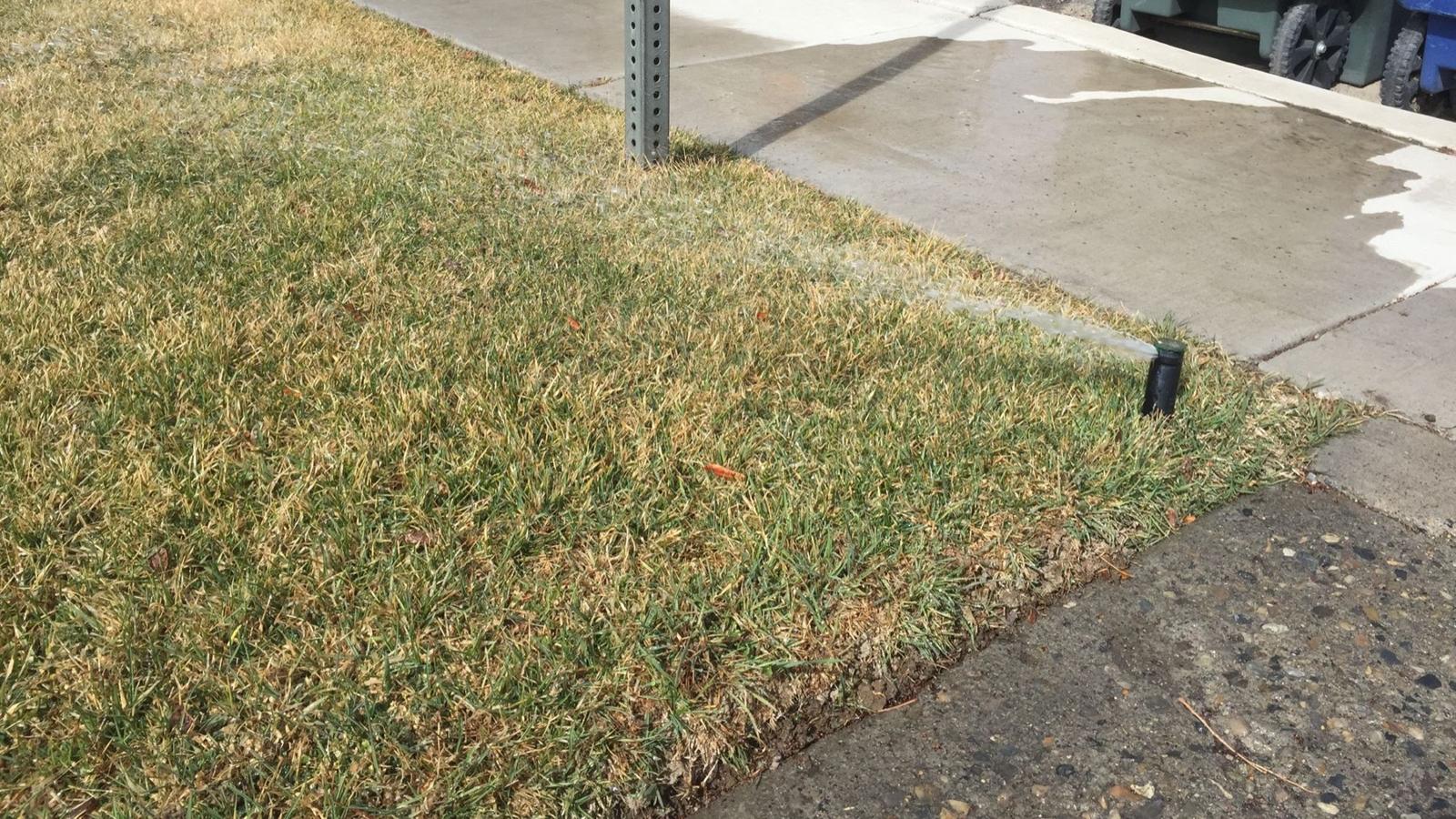
Each law turns on the same distinction. Grass that people use (sports fields, parks, playgrounds, pet areas) is functional. Grass that's just there to look green is not.
- California defines functional turf as turf "located in a recreational use area or community space". Nonfunctional turf is everything else, and it explicitly includes turf in street rights-of-way and parking lots. Turf fenced off to prevent people from using it isn't functional.
- Nevada's law told SNWA's board to write the definitions. SNWA's published criteria require functional turf to be at least 10 feet from a street, on slopes under 25%, and not in medians, streetscapes or at the front of entryways. It must also serve a use such as athletic fields, playgrounds, golf play areas, some pet-relief turf or resident-area turf. HOA grass that provides no recreational benefit counts as nonfunctional regardless of zoning.
- Colorado's SB24-005 bill summary doesn't spell out the definition. Check the act and your local government's implementing ordinance for the exact line.
Nevada: AB 356 and the 2027 deadline
AB 356 is the law that started this trend. Its core sentence: on and after January 1, 2027, Colorado River water distributed by the Southern Nevada Water Authority or its member agencies "may not be used to irrigate nonfunctional turf on any property that is not zoned exclusively for a single-family residence." The bill also:
- required SNWA's board to define functional and nonfunctional turf and write them into member agencies' service rules;
- required a plan to identify and remove nonfunctional turf on non-single-family property before December 31, 2026, in phases by type of water user;
- created the Nonfunctional Turf Removal Advisory Committee, which SNWA says delivered its recommendations in January 2022; and
- allowed the board to grant extensions or waivers.
Who's affected: commercial properties, multifamily, government property, and HOA-managed turf that doesn't qualify as functional. SNWA says the ban does not apply to grass in single-family front and back yards.
Related local rules: SNWA reports that local jurisdictions have also adopted code changes restricting new grass in new development, including front and backyards of new residential developments and custom homes. SNWA supported a 600-square-foot surface-area limit on new residential pools in July 2022.
The money: SNWA's Water Smart Landscapes rebate pays $5 per square foot for the first 10,000 square feet converted and $1.50 per square foot after that for business and HOA properties. Residential properties get $2.50 per square foot after the first 10,000. Rates are as of September 2026, and pre-approval is required before any grass is removed. Local detail is in xeriscaping in Las Vegas.
California: AB 1572's phased ban
AB 1572 was approved October 13, 2023, as Chapter 849. It added Water Code section 10608.14, which prohibits using potable water to irrigate nonfunctional turf on:
| Property type | Prohibition begins |
|---|---|
| Department of General Services (state) properties | January 1, 2027 |
| Local governments, public agencies and public water systems | January 1, 2027 |
| All other institutional, commercial and industrial properties | January 1, 2028 |
| Common areas of HOAs, common interest developments and community service organizations | January 1, 2029 |
| Public properties in disadvantaged communities | January 1, 2031, or when state funding is available, whichever is later |
Key details from the bill text:
- Trees and other perennial non-turf plants can still get potable water as needed to keep them healthy, as can immediate health and safety needs.
- Cemeteries are excluded from the CII category.
- The State Water Resources Control Board may postpone a deadline by up to three years for good cause, including economic hardship.
- Public water systems must add the requirements to their rules and notify customers by January 1, 2027.
- Large CII properties must certify compliance starting in 2030, and HOA common areas over 5,000 square feet starting in 2031.
Single-family yards aren't on the list. If you're in an HOA, though, the common-area lawns you pay dues for are, and conversion costs may show up in your assessments. Rebates help. Metropolitan Water District's SoCal Water$mart program pays $2.00 per square foot up to 5,000 square feet a year as of September 2026, and it doesn't accept synthetic turf as a conversion. See California turf rebates by district.
Colorado: SB24-005 stops new installations
Colorado's approach doesn't order anyone to remove existing grass. It stops new installations. Under SB24-005, on and after January 1, 2026, local governments may not allow the installation, planting or placement of nonfunctional turf, artificial turf or invasive plant species on:
- commercial, institutional or industrial property;
- common interest community (HOA) property; and
- street rights-of-way, parking lots, medians and transportation corridors.
State facility construction and renovation projects starting design after January 1, 2025, face the same limits. Artificial turf on athletic fields is exempt. The governor signed the act in March 2024, and it took effect August 7, 2024.
What that means in practice: new commercial buildings and new HOA common areas in Colorado won't be getting decorative bluegrass or plastic grass. Existing lawns aren't affected by this law, and single-family yards aren't covered. Colorado homeowners in HOAs also have strong rights to xeriscape their own lots, covered in HOA xeriscaping rules. For money to convert, see Colorado lawn replacement rebates.
Utah: incentives and limits on turf requirements
Utah hasn't passed a Nevada-style ban. According to the Utah Division of Water Resources' legislative summaries:
- HB 121 (2022) prohibited certain lawn or turf requirements, imposed conservation requirements on state agencies, and funded a $5 million statewide turf buyback program.
- HB 282 (2022) prohibited certain public or private entities from banning water-wise landscaping.
- SB 118 (2023) created an ongoing landscape conversion incentive program ($3 million a year from the general fund), with eligibility tied to local water-efficiency ordinances. The division reports that 4 million square feet of grass was replaced with water-wise landscaping in 2023.
- HB 450 (2023) authorized certain HOA landscaping requirements, including water-wise plant materials, and barred HOAs from requiring more than 50% plant coverage.
- HB 275 (2024) prohibits HOAs from requiring turfgrass.
Current HOA rules sit in Utah Code 57-8a-231, which also bars HOAs from requiring lawn in areas under 8 feet wide. Utah Water Savers pays up to $3 per square foot to replace lawn in qualifying cities, as of September 2026. More in Salt Lake City xeriscaping.
What these laws mean for homeowners
- Your own yard: none of these laws require single-family homeowners to remove existing lawn. New homes in Southern Nevada face local limits on new grass.
- Your HOA: if you're in Nevada or California, your association's decorative lawns are likely on a removal clock. Ask your board for its plan, its rebate applications and its budget. In Colorado, new HOA common-area landscaping can't include nonfunctional or artificial turf.
- Your water bill: these laws point where water policy is heading in the West. Converting on your own schedule, with rebates, beats converting under a deadline. Start with lawn removal rebates and how to remove a lawn.
From our installs
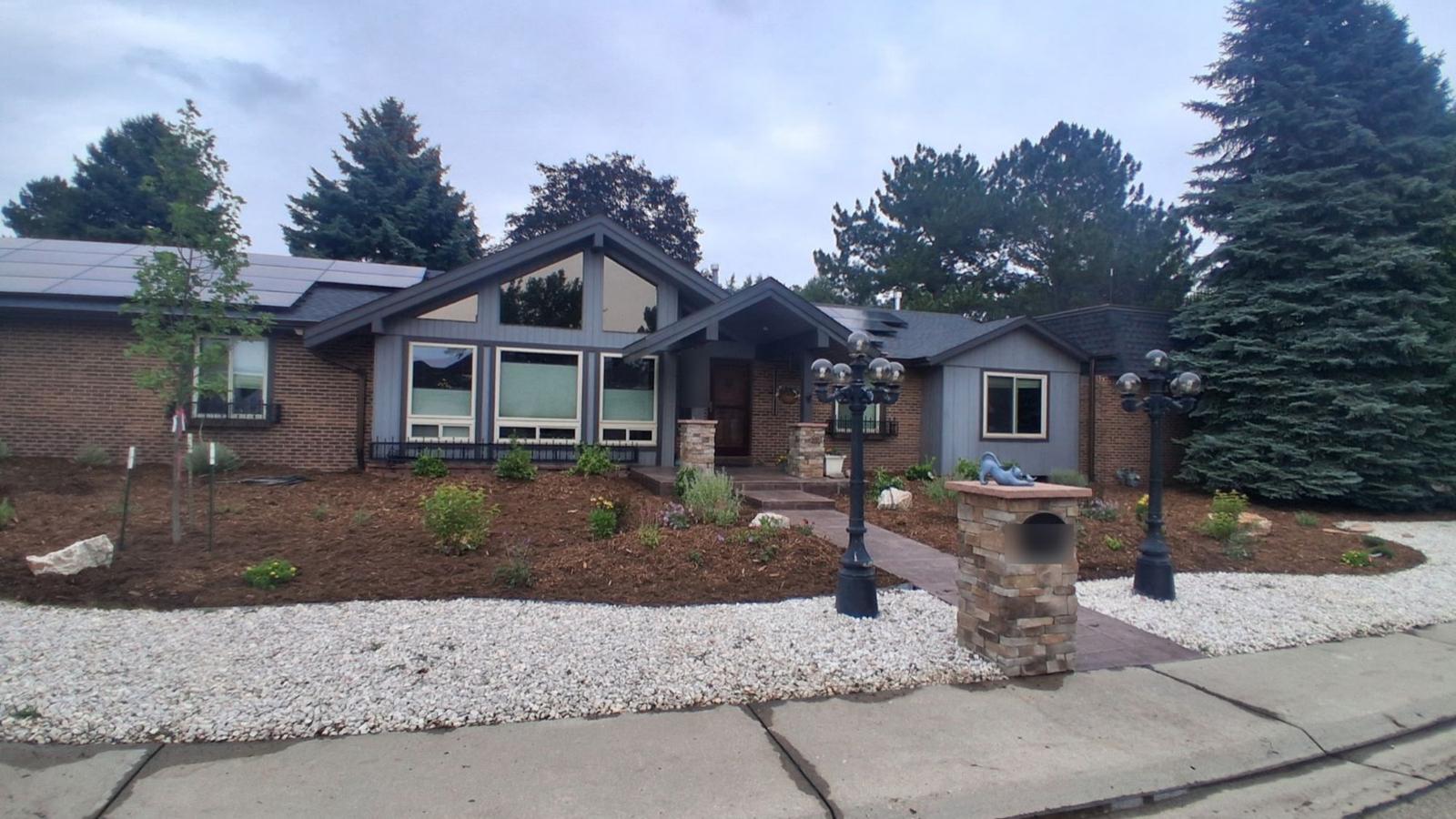
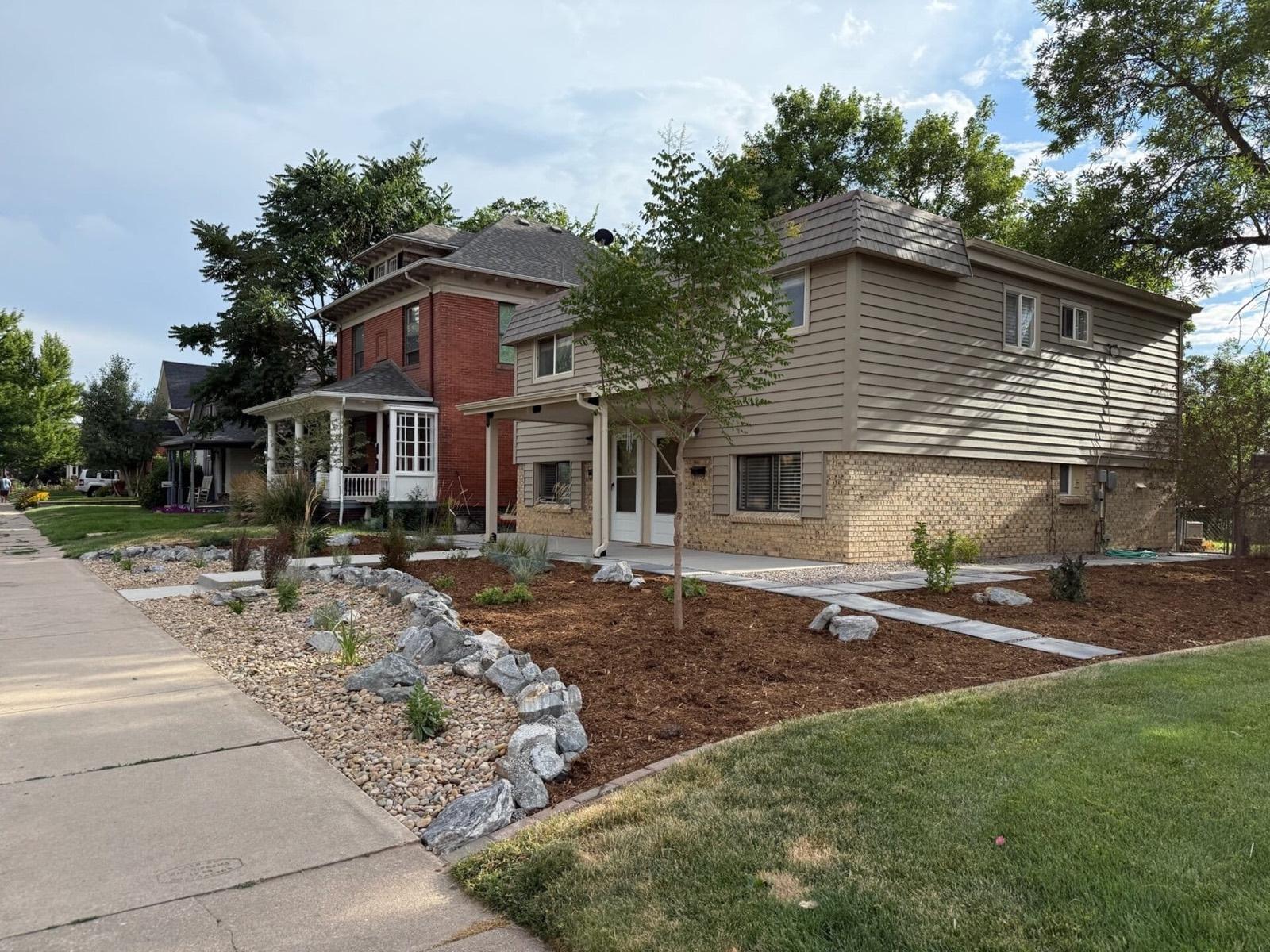
Colorado's rules apply mostly to commercial and HOA landscapes, but the same conversion logic works at home. When Xeris Landscaping (Xeris Landscaping is affiliated with Xeriscaping.com.) looks at a Front Range property, the lawn that's easiest to give up is the lawn nobody walks on: the strip between sidewalk and curb, the slope that's hard to mow, the side yard. Converting those first saves the most water per dollar and keeps the usable lawn for kids and dogs. That's the same functional-vs-nonfunctional logic the laws use.
Frequently asked questions
Do nonfunctional turf bans apply to my front yard?
Not in Nevada, California or Colorado for existing single-family homes. Nevada's AB 356 excludes property zoned exclusively for single-family residences, California's AB 1572 covers commercial, industrial, institutional and HOA properties, and Colorado's SB24-005 covers new installations on commercial and HOA property. New homes in Southern Nevada face separate local limits on new grass.
When does Nevada's nonfunctional turf ban take effect?
January 1, 2027. From that date, Colorado River water from SNWA and its member agencies can't be used to irrigate nonfunctional turf on property that isn't zoned exclusively for a single-family residence.
What counts as functional turf?
Grass in areas people actually use for recreation or gathering: sports fields, parks, playgrounds, some pet areas and similar spaces. Grass in street medians, parking lots and streetscapes is nonfunctional under both California's law and SNWA's definitions.
Does California's AB 1572 affect HOAs?
Yes. Potable water can't be used on nonfunctional turf in HOA and common-interest-development common areas starting January 1, 2029. Individual homeowners' private yards aren't covered.
Can artificial turf replace nonfunctional grass?
It depends. Colorado's SB24-005 bars new artificial turf on the same commercial and HOA properties as nonfunctional turf, except athletic fields. California's SoCal Water$mart rebate doesn't accept synthetic turf. Our artificial turf pros and cons covers the trade-offs.