In most Western states, your HOA can regulate how a xeriscape looks, but it can't ban one outright. Colorado, Texas, Nevada, California and Utah all have statutes that void HOA rules prohibiting drought-tolerant or water-wise landscaping. Almost all of them still let the association require a plan, review it for design compatibility, and set reasonable standards for plants, mulch and hardscape. So HOA xeriscaping rules usually come down to this: you have the right to xeriscape, and the HOA has the right to approve how. A clear, complete application is what gets you from one to the other.
Below: what each state's law actually says (we read every one on the official legislature site), what your HOA can still require, and how to put together an application that gets a yes the first time.
This is general information, not legal advice. Statutes change and your CC&Rs matter. Read the statute and your governing documents, and talk to an attorney if you're in a dispute.
HOA xeriscaping rights by state
| State | Statute | What it protects | What the HOA can still require |
|---|---|---|---|
| Colorado | C.R.S. 38-33.3-106.5, as amended by SB23-178 (effective Aug. 7, 2023) | HOAs can't prohibit xeriscape, drought-tolerant landscapes or nonvegetative (artificial) turf on property you're responsible for, including a tree lawn you maintain | Design and aesthetic guidelines, with limits (see below) |
| Texas | Property Code §202.007 (added 2003; amended 2011, 2013) | Drought-resistant landscaping, water-conserving natural turf, drip irrigation, rain barrels (with limits) and composting | A plan for review. It may regulate gravel, rocks and cacti and require water-conserving turf. It can't unreasonably deny approval |
| Nevada | NRS 116.330 (added 2005; amended 2009) | Drought-tolerant landscaping in the front or back yard you exclusively use | A detailed description or plans for architectural review, and design compatible "to the maximum extent practicable" with the community's style |
| California | Civil Code §4735 (amended 2015) | Low water-using plants, including as a lawn replacement, and artificial turf. No fines for cutting watering during a declared drought emergency | Landscaping rules that fully conform with the statute |
| Utah | Utah Code 57-8a-231 (amended 2025) | Water-wise landscaping on the lot of a detached home | Site plan review, healthy plants, design requirements, and limits on specific mulches or non-water-wise plants |
| Arizona | A.R.S. 33-1819 | Artificial turf, in planned communities that allow natural grass | Reasonable rules on turf location, coverage and quality |
| New Mexico | No statute confirmed | — | Check your CC&Rs and local water utility |
What each law says
Colorado
Colorado's Common Interest Ownership Act says an association shall not prohibit "the use of xeriscape, nonvegetative turf grass, or drought-tolerant vegetative landscapes" on property a unit owner is responsible for. SB23-178 extended that to rights-of-way and tree lawns the owner maintains. For detached single-family homes, it also put hard limits on HOA design rules. Guidelines must:
- not prohibit artificial turf in the backyard;
- not unreasonably require hardscape on more than 20% of the landscaping area;
- allow an option of at least 80% drought-tolerant plantings; and
- not prohibit vegetable gardens in the front, back or side yard.
Each association must also select at least three preplanned water-wise front-yard designs that are preapproved. They can come from Plant Select's downloadable designs, a municipality or a utility. The HOA must allow reasonable substitutes when a plant isn't available. If an association knowingly violates these rules, an affected owner can sue for up to $500 or actual damages, whichever is greater, after giving written notice and 45 days to fix the violation.
The law still lets an HOA enforce bona fide safety requirements, protect fire buffers and defensible space, and restrict changes to grading and drainage. For attached homes and condos, the older provision applies, and it lets an HOA restrict artificial turf to rear yards. Colorado homeowners should also read Colorado lawn replacement rebates. A preapproved design can make both the HOA and the rebate paperwork easier.
Texas
Texas Property Code §202.007 voids any HOA provision that prohibits or restricts an owner from "using drought-resistant landscaping or water-conserving natural turf." It covers drip irrigation, rain barrels and composting too. The association keeps real authority:
- It can require "a detailed description or a plan" for review and approval, to ensure aesthetic compatibility "to the extent practicable."
- It may not unreasonably deny or withhold approval, or unreasonably find the design incompatible.
- It can regulate the installation or use of gravel, rocks or cacti, and require water-conserving turf when you plant new turf.
- Rain barrels can be limited in the front yard and must match the home's color scheme.
A newer section, §202.008 (effective September 1, 2025), bars HOAs from fining owners for brown or discolored turf during a mandated watering restriction and until 60 days after it's lifted. The statute exempts a narrow class of very large mixed-use developments in certain big-city counties. See the text for details.
Nevada
NRS 116.330 says the board and governing documents must not prohibit an owner from installing drought-tolerant landscaping in the yard they exclusively use. Before installing, the owner must submit "a detailed description or plans" for architectural review, and the design must be compatible with the community's style "to the maximum extent practicable." The statute tells everyone to read it "liberally in favor of" drought-tolerant landscaping and bars the board from unreasonably denying approval. It defines drought-tolerant landscaping to include "mulches such as decorative rock and artificial turf." It also says converting turf to drought-tolerant landscaping in common areas isn't a change of use, with exceptions for platted parks and golf courses. For Southern Nevada rebates, see xeriscaping in Las Vegas.
California
Civil Code §4735 makes void any HOA rule that prohibits, or has the effect of prohibiting, "the use of low water-using plants as a group or as a replacement of existing turf," or the use of artificial turf. It also voids rules that block compliance with a local water-efficient landscape ordinance or water-use restrictions. During a declared drought emergency, an HOA can't fine you for cutting back on watering, and you don't have to rip out water-efficient landscaping when the emergency ends. HOAs can still apply landscaping rules that fully conform with the statute. Rebate details are in California turf rebates by district.
Utah
Utah Code 57-8a-231 bars an HOA from enforcing anything that prohibits, or has the effect of prohibiting, water-wise landscaping on the lot of a detached home. The association may require site plan review, healthy plant maintenance and specific water-wise design requirements, including limits on certain mulches and non-water-wise plants. Except where it's reasonably needed for erosion control, it can't require lawn in any area less than 8 feet wide, which covers most park strips. Where owners maintain their own landscaping, 57-8a-218(15) requires the HOA to adopt rules supporting water-wise landscaping. If it doesn't, an owner can sue after a 90-day written notice. Utah's "Flip Your Strip" context is in Salt Lake City xeriscaping.
Arizona
Arizona's Planned Communities Act includes A.R.S. 33-1819. In a community that allows natural grass, the association may not prohibit artificial turf on a member's property after declarant control ends, though it can adopt reasonable rules on location, coverage and quality. Separately, A.R.S. 33-1817 says approval of a construction project's architectural designs and plans "shall not unreasonably be withheld." When we reviewed the Title 33 section list in September 2026, we didn't find a general drought-tolerant-planting right comparable to Texas or Nevada. Arizona homeowners should read their CC&Rs closely.
New Mexico
We couldn't confirm a statewide New Mexico statute that protects xeriscaping in HOAs. Check your CC&Rs, and ask your water utility. Many Southwest utilities publish water-wise design guides an HOA board may accept.
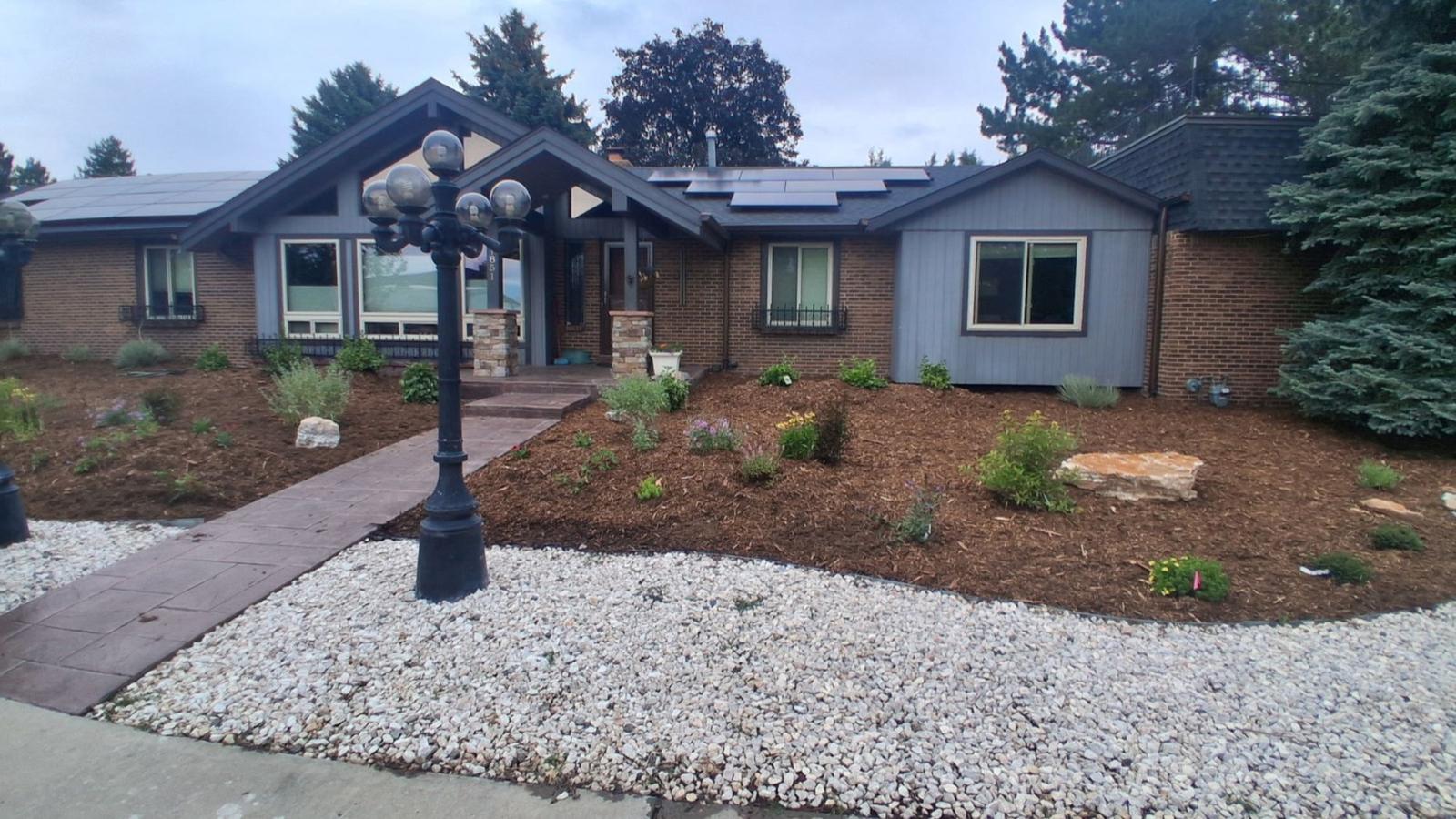
What your HOA can still require (almost everywhere)
Even the strongest statutes leave the HOA with design review. Expect most of these:
- Prior written approval before you remove turf or start work.
- A site plan showing what goes where.
- A plant list, sometimes limited to an approved palette.
- Mulch and rock rules: color, size, and sometimes a cap on how much of the yard is rock. In Colorado, a hardscape requirement over 20% can't be unreasonably imposed on detached homes.
- Plant coverage, so the yard doesn't read as bare gravel. This is where xeriscaping and "zeroscaping" part ways. See xeriscaping vs. zeroscaping.
- Maintenance standards: weeds controlled, dead plants replaced, edges kept.
- Safety, drainage and fire rules: grading changes and defensible space are often off-limits to DIY changes.
How to write an HOA xeriscape application that gets approved
Architectural committees are volunteers reading dozens of requests. Make yours easy to approve.
1. Read the documents first. Get the current CC&Rs, design guidelines and application form. Note any approved plant list, rock colors or coverage rules, and whether your HOA has preapproved designs (required in Colorado for detached homes).
2. Draw a simple site plan. Graph paper or a satellite image with overlays is fine. Show:
- property lines, house, driveway and walks;
- which lawn areas are being converted, with square footage;
- planting beds, paths, boulders and edging;
- the mulch type in each area; and
- the irrigation type (drip for beds).
3. Attach a plant list with mature sizes. List common and botanical names, quantity, mature height and spread, and water need. Committees worry most that a yard will look sparse or messy, so show the grown-in picture. The plant finder gives zone, size and water need for each plant.
4. Show coverage. State the planted percentage at maturity. A plan that reads as "planted garden with gravel paths," not "rock yard with a few plants," is the one that gets approved. For layouts, see front yard xeriscape ideas.
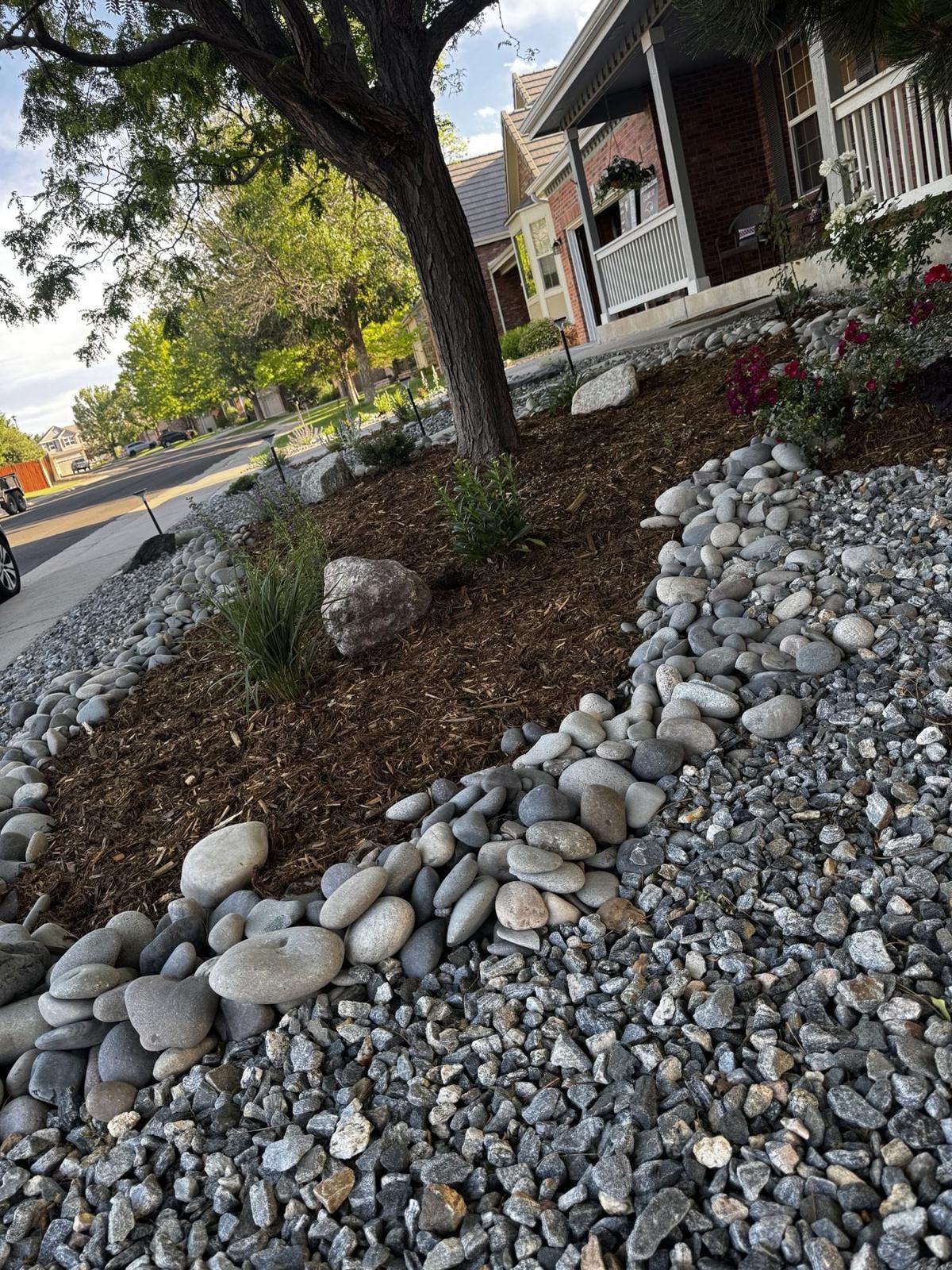
5. Include material samples or photos. Add a photo of the gravel or mulch color, the edging and any boulders.
6. Add a short maintenance plan. Weeding, pruning, mulch top-ups and how new plants will be watered in the first year.
7. Cite the law, politely. One line is enough: "This request is submitted under [statute], which allows the association to review design but not prohibit water-wise landscaping." Save the full argument for later if you need it.
8. Line up rebate paperwork at the same time. Most utility programs also require pre-approval before turf removal. Don't let one approval arrive before the other and push you into starting early. See the lawn removal rebate directory.
Application checklist
| Include | Why the committee wants it |
|---|---|
| Site plan with square footages | Scope and location at a glance |
| Plant list with mature sizes and quantities | Proves the yard will fill in |
| Planted coverage % at maturity | Separates xeriscape from bare rock |
| Mulch, rock, edging samples or photos | Color and texture match |
| Irrigation plan (drip zones) | Plants will survive, and no overspray |
| Maintenance plan | Weeds and dead plants will be handled |
| Timeline, plus rebate approval if applicable | Work won't sit half-finished |
| Statute reference | Signals you know the rules |
If your application is denied
- Ask for written reasons, tied to specific guidelines.
- Revise and resubmit. Most denials are about coverage, rock color or missing details, and they're easy to fix.
- Use a preapproved design if your HOA has them. In Colorado, a detached-home HOA must consider its selected designs preapproved.
- Request a hearing with the board if your documents provide one.
- Put the statute in writing. Texas and Nevada bar unreasonable denials of drought-tolerant landscaping. Colorado and Utah require written notice and a cure period (45 and 90 days) before an owner can sue.
- Get legal advice before you install anything over a denial.
From our installs
On Front Range HOA projects, Xeris Landscaping (Xeris Landscaping is owned by Xeriscaping.com's founder.) has seen the same few things decide approvals. Committees want to see what the yard will look like grown in, so a drawing with mature plant sizes does more than a list of names. They respond well to defined edges and consistent mulch, and they're wary of large expanses of a single rock with sparse plants. Submitting early, before the spring rush, helps too. A complete packet the first time saves a month of back-and-forth.
Frequently asked questions
Can my HOA stop me from xeriscaping?
In Colorado, Texas, Nevada, California and Utah, state law voids HOA rules that prohibit water-wise or drought-tolerant landscaping. The HOA can still require approval and reasonable design standards. In other states, it depends on your CC&Rs.
Can my HOA make me keep a lawn?
Generally not in those five states. Utah goes further and bars HOAs from requiring lawn in any area under 8 feet wide, except where needed for erosion control. Texas bars fines for brown turf during mandated watering restrictions.
Can my HOA ban artificial turf?
It depends on the state. California and Arizona limit HOA bans on artificial turf. Colorado bars HOAs from prohibiting it in the backyard of detached homes. Nevada's statute counts artificial turf as drought-tolerant landscaping mulch. Before choosing turf, read artificial turf pros and cons. Many rebate programs won't pay for it.
Do I still need HOA approval if state law protects xeriscaping?
Yes, in almost every case. The statutes protect your right to xeriscape but keep the HOA's design review. Installing without approval is the fastest way into a dispute you could have avoided.
What if my HOA requires too much rock?
In Colorado, HOA guidelines for detached homes can't unreasonably require hardscape on more than 20% of the landscaping area, and they must allow an option of at least 80% drought-tolerant plantings.