Fall is a good time to plant most xeriscape perennials, shrubs and container-grown grasses. The air is cooler, the sun is gentler, nurseries discount their stock, and new roots get weeks to settle in before summer heat tests them. In the cold-winter West, plant from September into early October and finish by the end of October, as CSU's PlantTalk Colorado advises. Then keep the new roots watered through dry winter spells. Fall planting fails in two ways: planting too late, and letting new plants dry out over winter.
Here's what to plant now, what to hold until spring, and a watering schedule that gets fall-planted xeric beds through their first winter.
Is fall really a good time to plant?
For xeric plants, yes, with one caveat. CSU's PlantTalk calls fall "second best in Colorado, behind spring" for nursery stock. The reason isn't cold. It's the dry, often snowless winter that follows, which can desiccate plants whose roots haven't grown out of the nursery pot yet. Handle that risk and fall has real advantages:
- Less heat stress. A perennial planted in late September doesn't face a 95°F afternoon for eight months.
- Less watering. Cooler days mean new plants lose less water, so you're not hand-watering daily in July heat.
- Better prices. PlantTalk notes that many garden centers discount trees and shrubs in fall.
- A head start. A fall-planted perennial usually blooms fuller next summer than one planted in May.
In the desert Southwest the case is even stronger. The Southern Nevada Water Authority says desert plants can go in any time of year, but fall is the best time to ensure plant health. Spring planting there runs straight into brutal summer heat.
Fall planting windows by region
| Region | Fall planting window | What sets the deadline |
|---|---|---|
| Front Range & high plains (Denver, Colorado Springs, Fort Collins; Zones 5–6) | September to mid-October; finish by end of October | Average first frost around October 15 along the Front Range (PlantTalk) and a dry winter ahead |
| Intermountain West (Salt Lake City, Boise, Albuquerque; Zones 6–7) | September to October | Similar dry-winter risk. Finish early in colder valleys |
| Mountain towns & Zone 4 | Late August to mid-September | Earlier ground freeze. Give roots about six weeks before the soil locks up |
| Mojave & Sonoran deserts (Las Vegas, Phoenix, Tucson, St. George; Zones 8–9) | October to November | Fall is the preferred season (SNWA). Avoid summer heat |
Not sure of your zone? Look it up before you shop. The same plant can be a sure thing in Zone 6 and a gamble in Zone 5.
What to plant in fall (and what to hold until spring)
The best fall candidates are fully hardy in your zone with room to spare, sold in containers, and slow to sulk after transplanting. The plants to hold are the ones at the edge of your zone or the ones that want warm soil to root.
| Plant it this fall | Zones | Hold until spring | Why wait |
|---|---|---|---|
| Catmint | 3–8 | Agastache | Zone 5 at the cold end. Needs a full season to root before winter |
| Yarrow | 3–9 | Lavender | Zone 5 at the cold end. Late plantings heave and dry out |
| Rocky Mountain penstemon | 4–9 | Red yucca | Zone 5 at the cold end. Roots best in warm soil |
| Blanket flower | 3–8 | Claret cup cactus, Havard agave | Cactus and agave root fastest in warm soil. Wet, cold soil around fresh roots invites rot |
| Russian sage | 4–9 | Hardy ice plant | Zone 5 at the cold end. Shallow roots heave in freeze-thaw |
| Salvia 'May Night' | 4–8 | Blue grama or buffalograss from seed | Warm-season grasses won't germinate until soil passes 55°F (CSU) |
| Apache plume, rabbitbrush, three-leaf sumac | 4–8/9 | ||
| Sulphur buckwheat, creeping veronica | 4–8 |
Zone ranges follow our plant database. Where sources differ, we list the more conservative number.
Two notes on grasses. Container-grown blue grama and little bluestem planted in early September usually root in fine. Seeding them is a different job. CSU says buffalograss seed won't germinate until the soil warms above 55°F in late spring. Plugs need to go in at least six weeks before the first fall frost. Save seeded warm-season lawns for late spring. The how-to is in buffalograss and blue grama lawns.
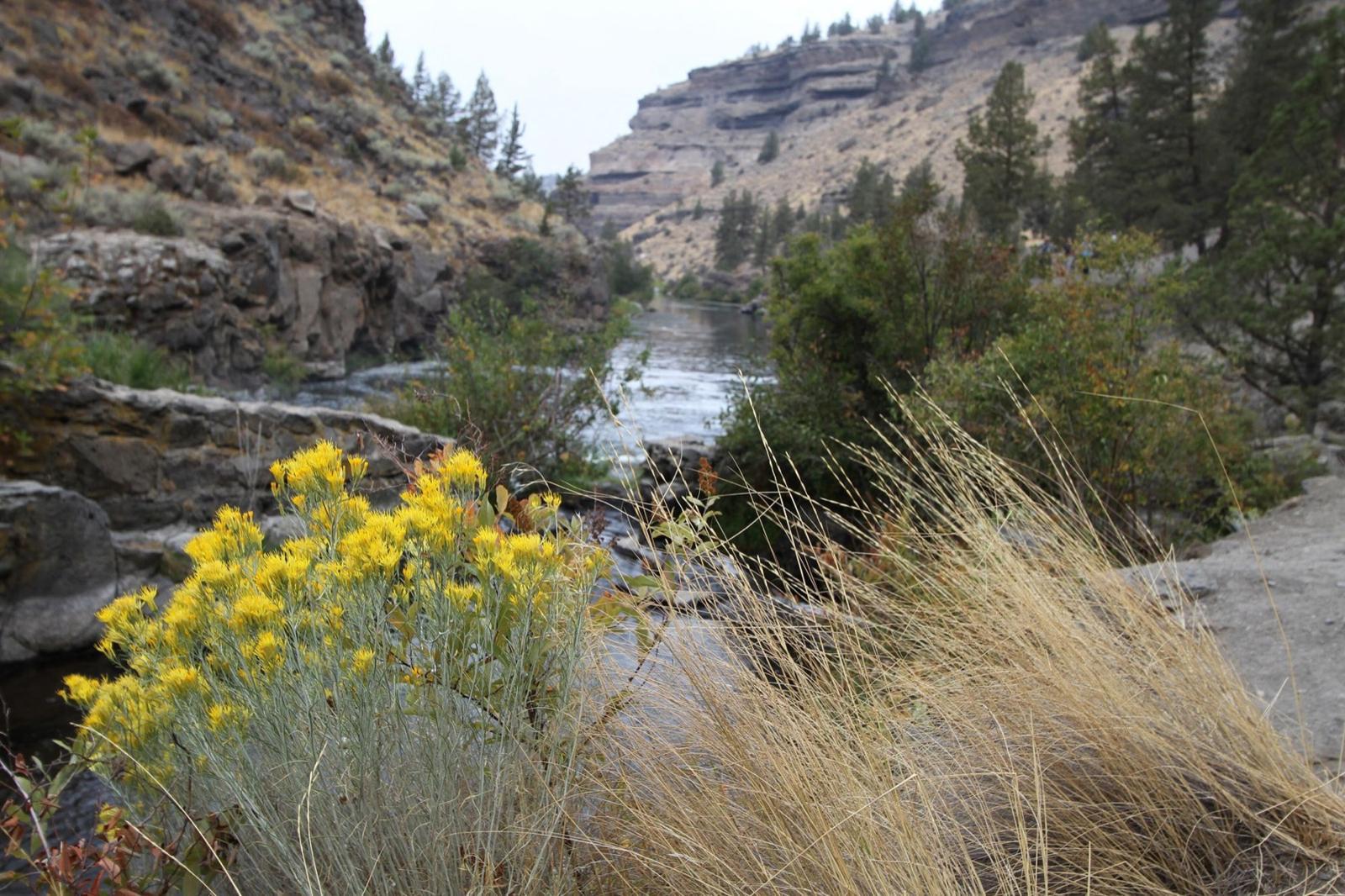
For evergreen trees and bigger evergreen shrubs, PlantTalk warns that evergreens face particular risk in fall because their foliage keeps losing water all winter. If you plant them in fall, commit to winter watering.
For a longer shortlist by zone, see xeriscape plants for Zone 5 and the best drought-tolerant perennials.
How to plant a fall xeriscape bed
The planting steps don't change in fall. The margin for error on watering and mulch just gets smaller.
- Prep lightly. Most xeric plants want lean soil. Loosen compacted clay and add modest compost only where your plant list calls for it. Xeriscape soil prep covers when to amend and when not to.
- Water the pots first. A dry rootball dropped into dry soil stays dry. Soak containers an hour before planting.
- Plant at grade. Set the top of the rootball level with the surrounding soil, never deeper. Crowns buried in fall mulch and wet clay rot by spring.
- Tease circling roots so they head out into native soil instead of spinning in the old pot shape.
- Soak each hole, then the bed. Water until the backfill settles, and top up any low spots.
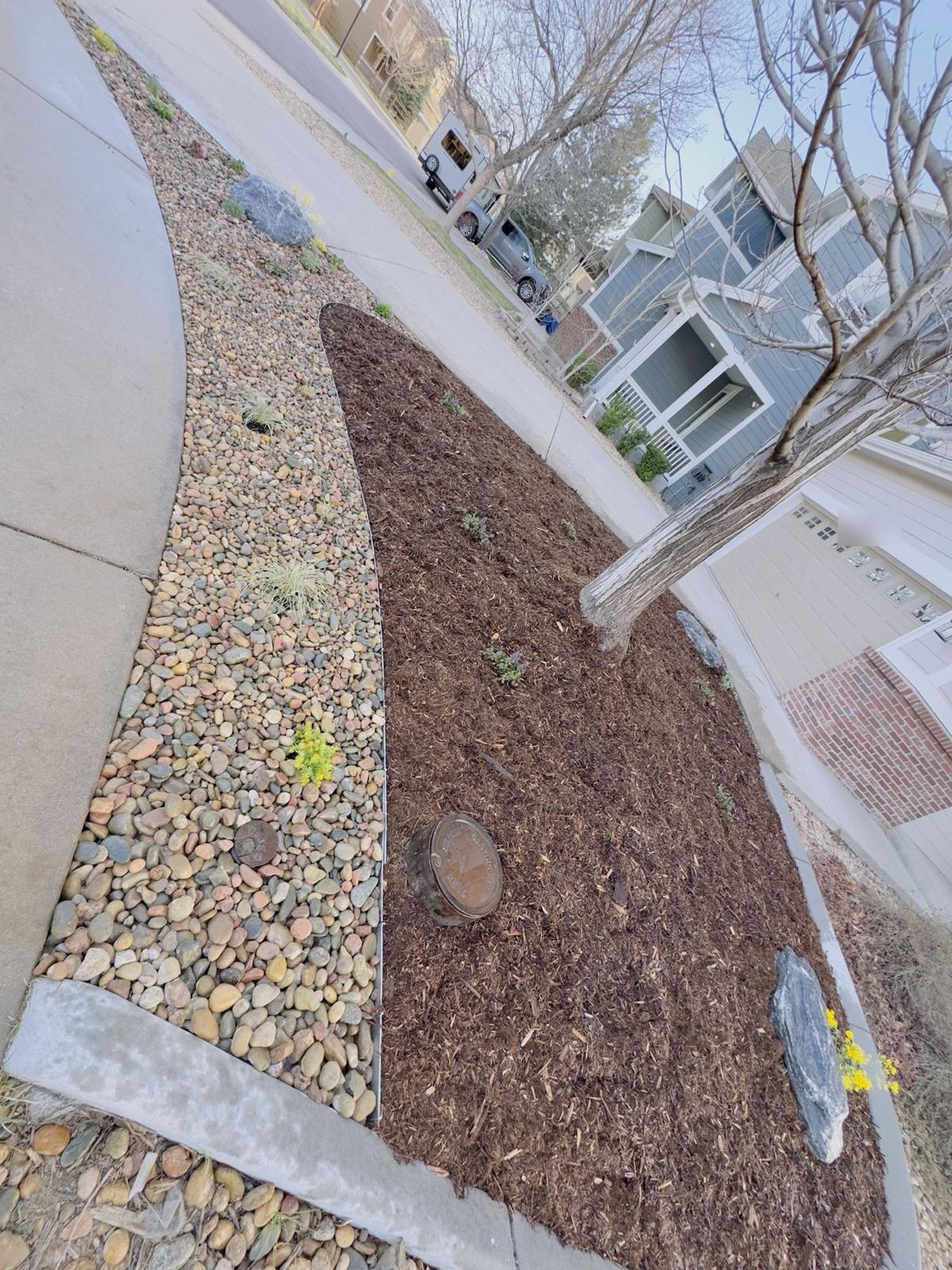
- Mulch right away. CSU Extension recommends about 4 inches of wood chip or gravel mulch, kept at least 6 inches back from trunks. We use 3–4 inches and keep it off crowns. Plant Select lists small wood chips, pine needles, pea gravel or squeegee as good choices around new perennials and notes that mulch reduces winter soil heave, the freeze-thaw push that lifts small plants out of the ground. Match the mulch to the plant: gravel vs. wood mulch explains which goes where.
Watering fall-planted xeric plants
Fall-planted beds need less water than spring plantings, but they need it more reliably. Most fall-planting failures are dry roots, not cold.
| Stage | What to do | Rule of thumb |
|---|---|---|
| Planting day | Soak each plant and the whole bed | Water until the backfill settles |
| First 2–3 weeks | Check every few days and water when the top 2–3 inches are dry | Plant Select's 2–3 inch test |
| Until the ground freezes | Deep, less frequent soakings as days cool | Clay: deep and infrequent. Sandy soil: lighter and more often |
| Irrigation shut off (November–March) | Hand-water on warm days during dry, snowless spells | PlantTalk: after three weeks without snow cover, water on a warmer day. Check soil under the mulch weekly |
| Winter amounts | New shrubs: about 5 gallons, twice a month when dry | CSU Fact Sheet 7.211. Water above 40°F, at midday |
| Spring | Restart drip and follow the first-year schedule | See first-year xeriscape care |
Plant Select's advice for fall-planted waterwise plants is blunt: water your new plants this winter, especially in a mild or dry winter. Snow cover takes care of it for you. Weeks of bare, windblown soil don't. The full winter routine, including irrigation shutdown, is in how to winterize a xeriscape.
In Denver Water's service area, plan around the 2026 drought rules. Under Stage 1 restrictions, spray irrigation and grass watering are prohibited beginning Oct. 1. Trees, shrubs and other plants can still be watered by drip or with a hand-held hose fitted with an automatic shutoff nozzle. If your new bed sits on an old spray zone, water it by hand or put it on drip. Other utilities set their own rules.
Common fall-planting mistakes
- Planting the week before Thanksgiving. A marked-down plant set out after the soil cools has no time to root. It spends winter as a potted plant sitting in the ground.
- Assuming the irrigation will handle it. Once the system is blown out, the new bed is on you and a hose.
- Burying crowns under mulch. Pull wood mulch back an inch or two from each crown, and farther from cactus and agave.
- Pushing zone limits in fall. If a plant is rated to exactly your zone, give it a spring start and a full summer to root.
- Ignoring frost heave. On bare clay, small plugs can lift out of the ground in freeze-thaw cycles. Mulch prevents most of it. Check new plantings after warm spells and press heaved plants back in.
From our installs
Xeris Landscaping (Xeris Landscaping is owned by Xeriscaping.com's founder.) plants a lot of Front Range beds in September and early October, and the fall-planted ones are usually the strongest bloomers the next summer. The failures we see follow a pattern. The plant was borderline hardy and went in late, or it spent a snowless January in dry clay because the hose was already coiled for the season. So our fall rules are simple. Plant the tough, fully hardy stuff first. Hold agastache, lavender, ice plant, cactus and agave for spring. Mulch the day we plant. Set a reminder to check soil moisture every couple of weeks until the snow sticks.
Frequently asked questions
Is it too late to plant perennials in October?
In most of the cold-winter West, early October is still fine for fully hardy perennials. Aim to finish by the end of October, as CSU's PlantTalk recommends. Past that, the soil cools and roots don't have time to grow before winter. In the desert Southwest, October and November are prime planting months.
Can I plant xeriscape plants in fall in Zone 5?
Yes. Stick to plants rated at least to Zone 4, such as catmint, yarrow, Rocky Mountain penstemon, blanket flower, Russian sage and Apache plume. Save plants that are only hardy to Zone 5, like agastache, lavender and hardy ice plant, for spring.
Do fall-planted xeric plants need water in winter?
Yes, whenever you get dry, snowless stretches. Water on a day above 40°F, at midday, about once or twice a month. PlantTalk suggests watering transplants after three weeks without snow cover. Established xeric beds need far less.
Should I plant cactus and agave in fall?
In cold-winter areas, spring is safer. Cactus and agave root fastest in warm soil, and fresh roots sitting in cold, wet soil are prone to rot. In low deserts like Las Vegas or Phoenix, fall planting works well.
Can I start a lawn conversion in fall even if I plant in spring?
Yes, and it's one of the best ways to use fall. Smother the lawn with cardboard and mulch now, and it's ready to plant in spring. See how to remove your lawn.