To winterize a xeriscape in the dry-winter West, do five things. Give it one deep soak before you shut the irrigation off. Water by hand once or twice a month through any dry, snowless stretch when it's above 40°F. Leave grasses and sturdy seedheads standing until spring. Top up mulch after the ground freezes. Drain or blow out the drip and sprinkler lines before a hard freeze. Established xeric plants rarely die of cold. Far more often they die of winter drought: weeks of sun, wind and bare, dry soil with no snow on the ground.
That is the big difference between winterizing a xeriscape in Denver, Salt Lake City or Albuquerque and winterizing a garden back East. The cold is manageable. The dryness is what you manage.
Why winter watering matters in the dry West
Along the Front Range and across the Intermountain West, winter often brings long snowless spells, low humidity and drying chinook or canyon winds. Roots keep losing moisture even while the tops are dormant. Evergreens lose it through their foliage all winter.
Colorado State University Extension's fall and winter watering fact sheet (CSU Fact Sheet 7.211) is the standard reference. Its core guidance:
- Water October through March during extended dry periods without snow cover, about once or twice a month.
- Water only when air temperatures are above 40°F, and at midday, so the water soaks in before it can freeze at night.
- Wet the soil about 12 inches deep around trees and shrubs.
- Newly planted trees and shrubs are the most vulnerable, along with shallow-rooted trees, most evergreens, and late-planted perennials.
Snow cover changes the math. PlantTalk Colorado notes that heavy snowfall provides moisture and reduces the need for winter watering, and it insulates perennials from the coldest temperatures. If the beds have been white for weeks, skip the hose. If they've been bare and windblown since Thanksgiving, get it out.
How much to water in winter
CSU's fact sheet gives specific amounts. They're a good starting point for xeric beds, with the adjustments below.
| Plant | CSU winter guideline | Xeriscape notes |
|---|---|---|
| Trees | 10 gallons per inch of trunk diameter, per watering | Priority for the first 2–3 winters after planting |
| Newly planted shrubs | 5 gallons, twice a month | Includes fall-planted natives like Apache plume and fernbush |
| Small established shrubs (under 3 ft) | 5 gallons monthly | Many established xeric shrubs need less than this |
| Large established shrubs (over 6 ft) | 18 gallons monthly | Evergreens first: pinyon, junipers, manzanita |
| Perennials | At least monthly under dry winter conditions | Newly planted beds matter most. Established very-low-water perennials often need nothing |
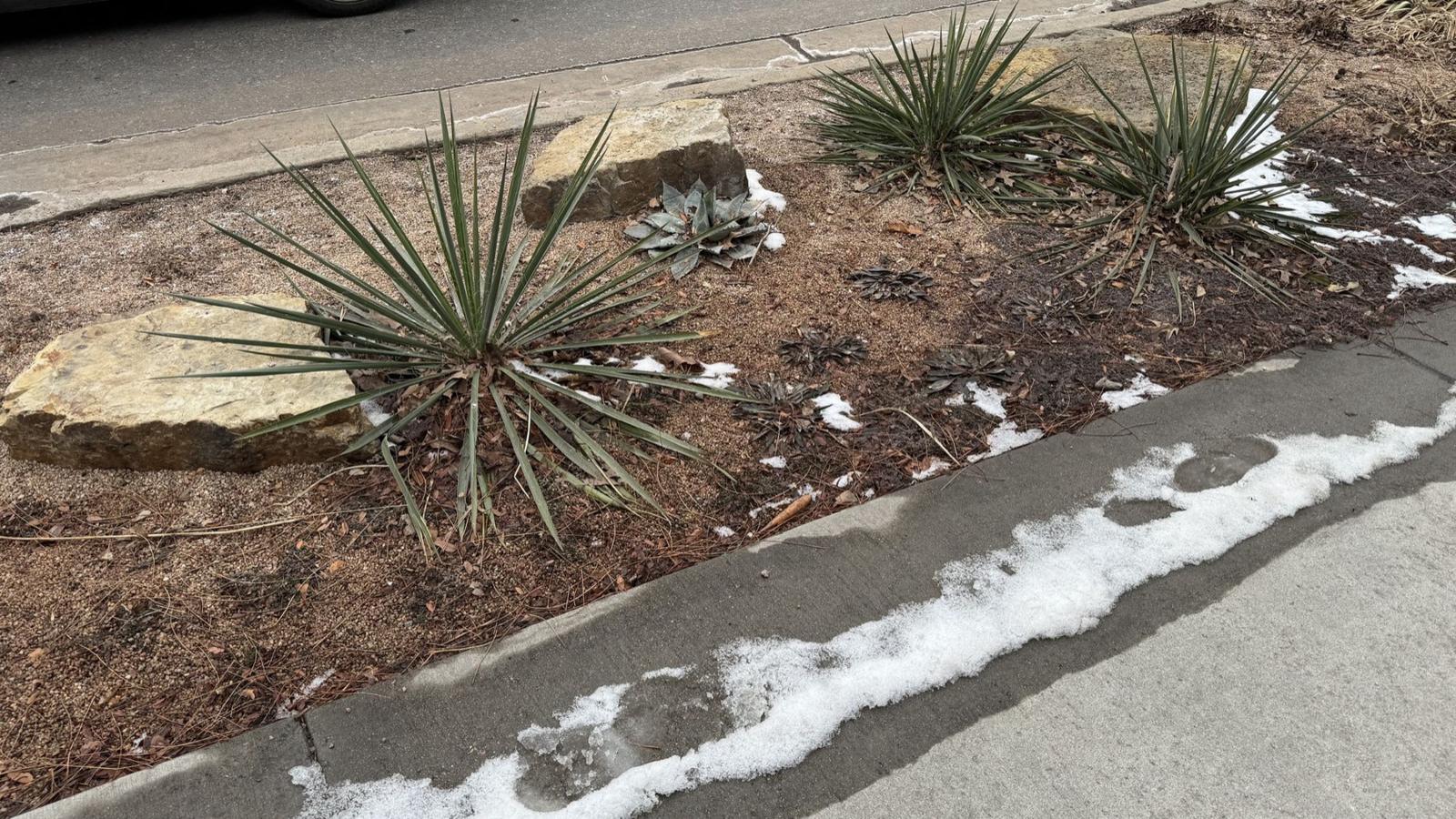
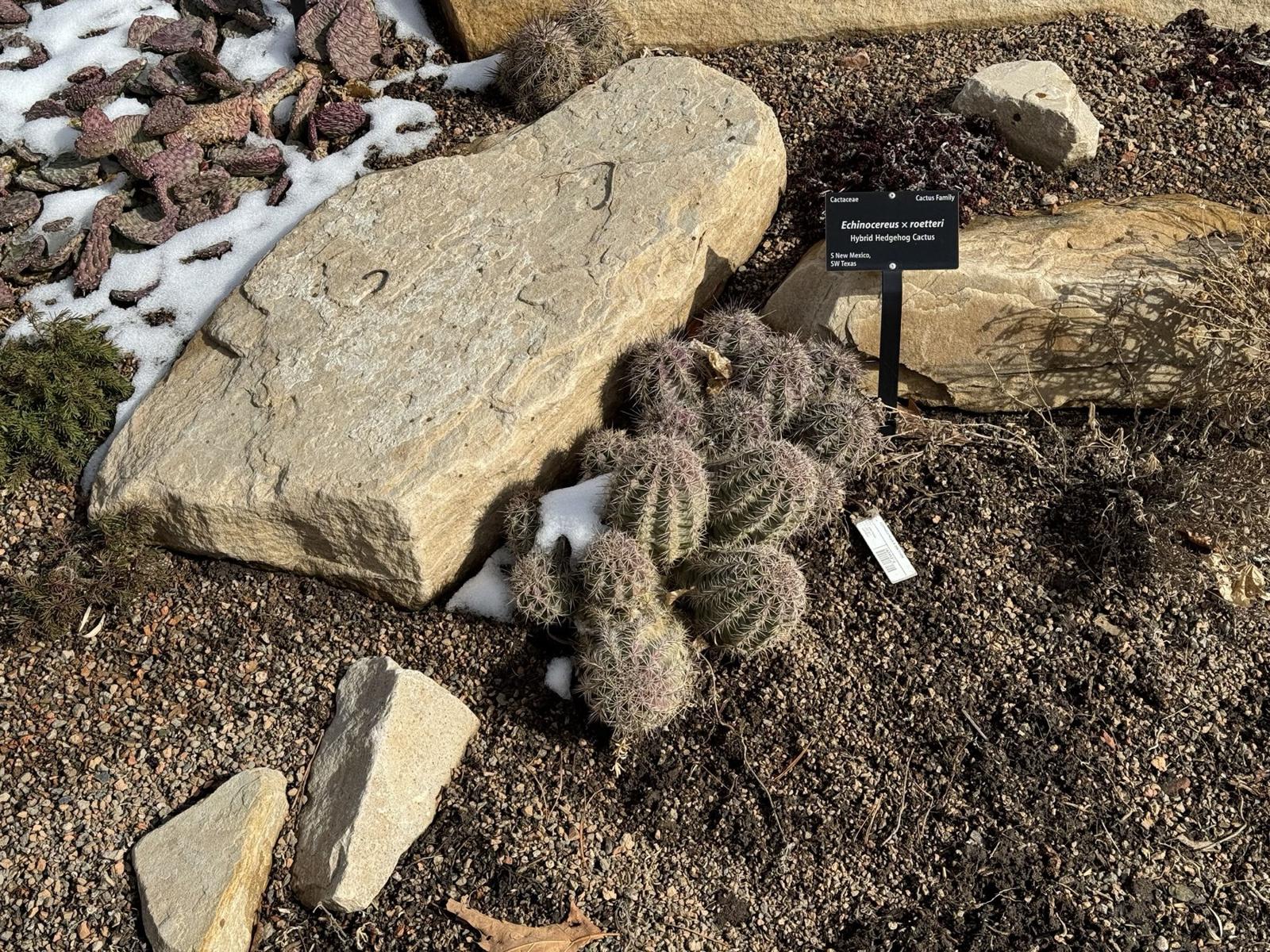
| Cactus, agave, yucca | Not listed | Keep crowns dry. We skip winter water on established plants |
Use a hose with a soft-spray wand, a soaker hose, or a deep-root needle. CSU lists all of these. Don't leave a hose connected to the spigot overnight. A hose full of water can split the faucet in a hard freeze even if the faucet is frost-free.
The plants that actually need winter water are the ones with young roots: anything planted since late summer, trees in their first few years, and evergreens. A mature bed of Rocky Mountain penstemon, blue grama and rabbitbrush on native soil usually rides out a dry winter without help. Fall-planted xeric beds are a different story. See first-year xeriscape care for the full establishment schedule.
Cut back or leave standing?
Most of a xeriscape should stay standing through winter. There are three reasons.
Winter structure. Ornamental grasses and seedheads are the reason a dry garden still looks designed in January. Little bluestem goes copper, feather reed grass holds its wheat-colored plumes, and coneflower heads catch snow. Our ornamental grasses guide covers which ones stand best.
Crown protection. Standing stems trap snow and shade the crown through freeze-thaw swings. We leave the stems on borderline-hardy plants like agastache until spring for exactly this reason.
Wildlife. CSU Extension notes that leaf litter shelters hibernating bumble bees, which typically emerge between mid-April and mid-May depending on weather and elevation. Hollow stems plugged by nesting bees are worth leaving until they emerge. Seedheads feed finches and other birds all winter. More on this in pollinator plants for a low-water garden.
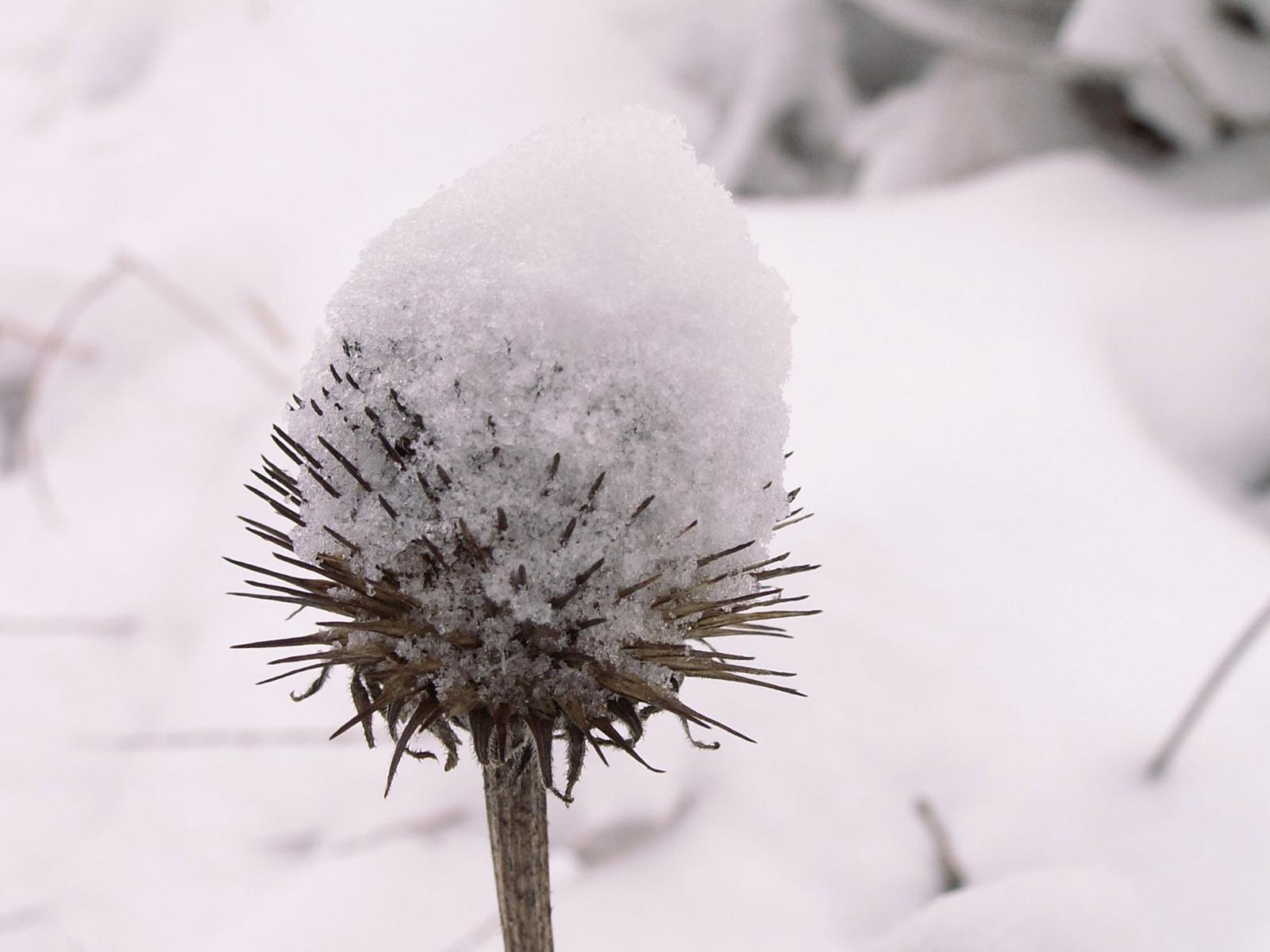
PlantTalk Colorado says either approach can work for perennials: remove dead foliage now or wait until spring. The one firm rule is that diseased foliage comes out promptly. Here's how we split it:
| Leave standing until spring | Tidy in fall |
|---|---|
| Ornamental grasses (cut back in March–April, before new growth) | Diseased or mildewed foliage |
| Coneflower, blanket flower, Russian sage, agastache | Floppy, mushy stems of annuals |
| Sedum 'Autumn Joy' seedheads | Anything smothering a small evergreen groundcover |
| Evergreen basal leaves of penstemon, red yucca, yucca | Leaves piled on cactus or agave crowns (they hold moisture) |
Don't prune lavender or other woody Mediterranean subshrubs hard in fall. Wait until new growth shows in spring so you can see what survived.
Mulch: what to add and when
Mulch works harder in winter than most people realize. It evens out soil temperature swings and slows moisture loss. CSU notes that woody plants benefit from mulch to conserve soil moisture in winter.
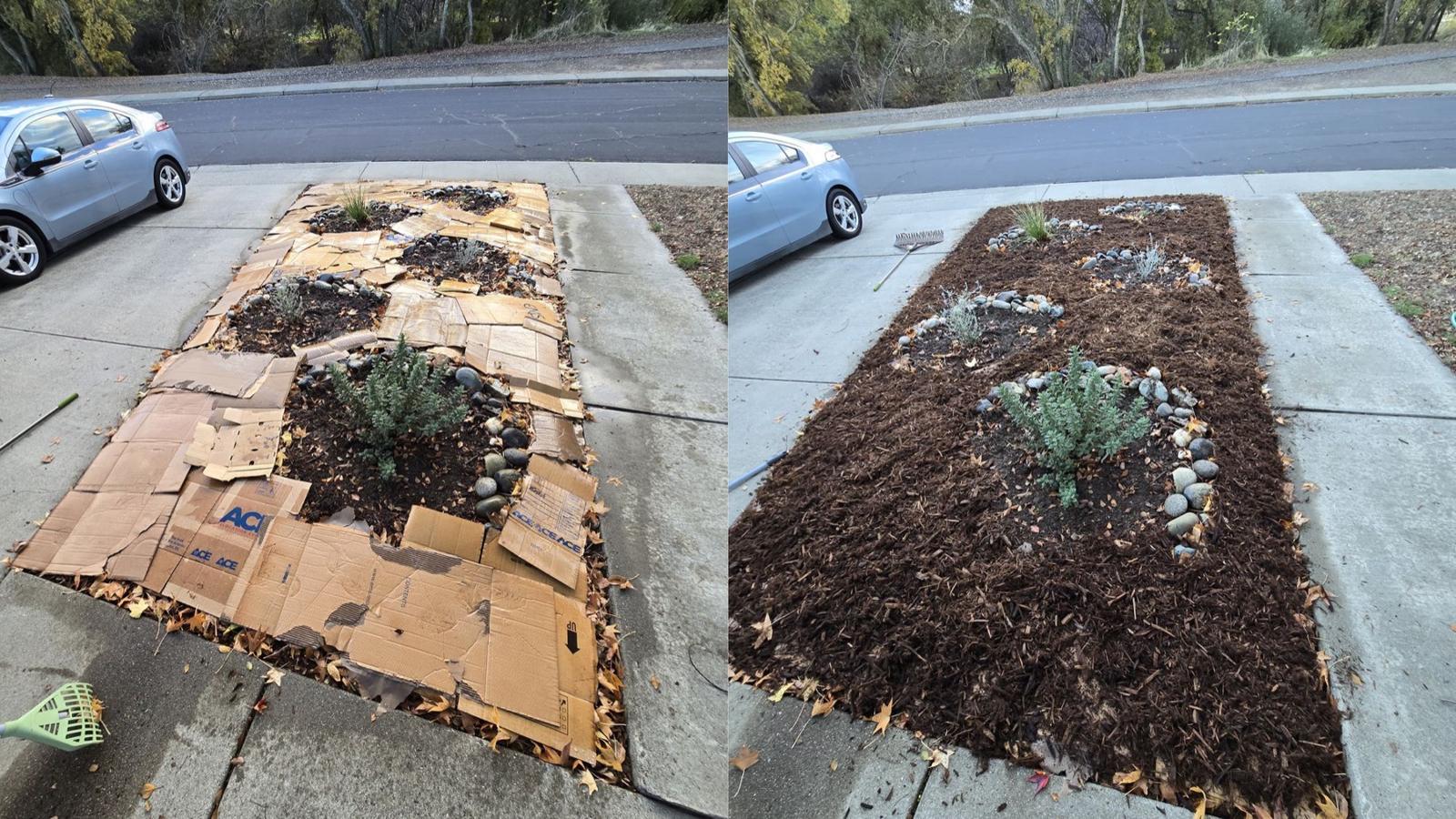
- Timing. PlantTalk recommends applying winter mulch to established perennials after the ground freezes. It then keeps the soil frozen instead of cycling through thaws that heave young plants out of the ground.
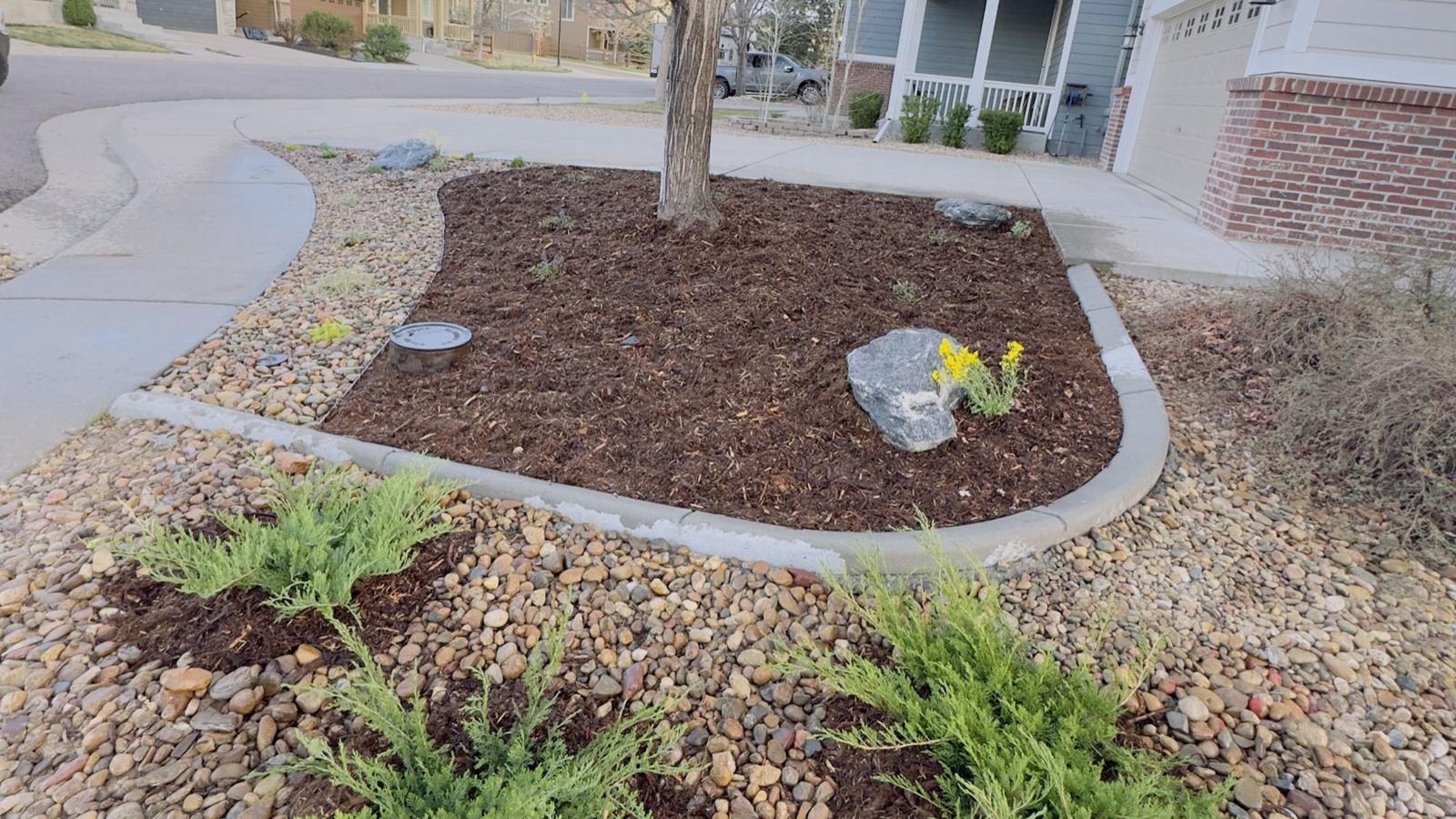
- Material. Stick with what the bed already uses. Wood chips go over perennial and shrub beds. Gravel goes around cactus, agave and the sharp-drainage crowd. Loose, airy materials like shredded leaves or pine boughs are fine for extra cover. Avoid anything that mats into a wet layer, because that leads to mold and rot.
- Depth. CSU Extension recommends about 4 inches of wood chip or gravel mulch. Keep beds at 3–4 inches and pull mulch back off crowns, and at least 6 inches back from trunks.
- Spring. Don't strip winter mulch too early. PlantTalk warns that early removal encourages premature growth that frost can nip.
For choosing materials, see gravel vs. wood mulch.
Shutting down drip and sprinkler systems
Water left in irrigation lines freezes, expands and splits pipe, fittings and valves. Plan the shutdown before the first hard freeze, and give the whole bed one last deep watering first.
Denver Water customers: check the 2026 drought rules. Denver Water has been under Stage 1 drought restrictions since March 25, 2026. Beginning Oct. 1, watering grass or using spray irrigation is prohibited. Trees, shrubs and other plants can still be watered with drip or a hand-held hose with an automatic shutoff nozzle. For xeric beds, that means the spray zones go dark on Oct. 1. Drip zones can run until you winterize them, and winter hand-watering needs a shutoff nozzle. Other utilities have their own rules, so check yours.
Spray and rotor zones (rigid PVC)
CSU's sprinkler winterization guide says that compressed-air blowout is the only reliable way to clear buried lines. Buried pipe shifts over time, and gravity drains can leave water in low spots. Key numbers and cautions from CSU:
- Shut off the water supply at the stop-and-waste or isolation valve first.
- Keep compressor pressure in the 40–80 psi range. Use 80 psi maximum for rigid PVC and 50 psi maximum for polyethylene pipe.
- Size the compressor by dividing the zone's flow in gallons per minute by 7.5 to get the CFM needed.
- Never blow compressed air through the backflow preventer (PVB or RP). Connect the compressor downstream of it.
- Leave PVB ball valves half open for winter so trapped water can't crack them.
- Wear eye protection.
PlantTalk Colorado suggests having systems blown out by professionals unless you have the right compressor, pressure regulation and know-how. Poorly handled air pressure can damage a system. If you want to keep watering into a warm fall, you can wrap the backflow preventer with insulation covered in plastic, down to ground level, to keep the system usable a little longer.
Drip zones
Drip is easier to winterize, and more forgiving. CSU's drip irrigation guide recommends:
- Detach the head assembly, meaning the control valve (if portable), backflow device, filter and pressure regulator, and store it indoors.
- Uncap the ends of the mainline so the lines drain, especially if no emitter sits at the low point. Then recap.
- Blow the lines out with air if the system has many right-angle fittings or check valves that trap water. Use low pressure. Drip tubing is polyethylene, so stay at or below CSU's 50 psi limit for poly pipe. The pressure regulator in the head assembly is there for a reason.
CSU also notes that poly mainline isn't damaged by freezing, and most emitters can stay outdoors all winter. The valves, filter, regulator and backflow device are the parts to protect. If your drip zones run off an in-ground sprinkler system, they get blown out with it. Just keep the pressure low on those zones.
If you're converting old spray heads to drip next spring, now is a good time to map the zones. See converting sprinklers to drip and how to install drip irrigation.
Snow load on shrubs and small trees
Wet spring and fall snows are the dangerous ones, especially when leaves are still on. PlantTalk Colorado flags upright junipers as the classic casualty, because their vertical branches often don't spring back after being bent. Its suggestion is to tie upright junipers in a loose spiral of nylon rope before winter. Small shrubs flattened under plowed or shoveled snow may need corrective pruning in spring.
A few habits from our crews:
- Brush off heavy, wet snow early, while it's still soft. Push the branches up gently with a broom. Don't shake them.
- Leave frozen, ice-coated branches alone until they thaw. Brittle wood snaps.
- Don't pile shoveled snow on shrubs or on the crowns of cactus and agave. Snow melt from deicers carries salt into the bed.
- Wait until spring for repair cuts so you can see what's actually broken.
A simple winter timeline
| When | What to do |
|---|---|
| Late September–October | One last deep soak before shutdown. Finish fall planting at least six weeks before the ground freezes. Map irrigation zones |
| Before the first hard freeze | Detach and store drip head assemblies. Blow out or drain sprinkler lines. Disconnect hoses |
| After the ground freezes | Add or top up mulch. Pull mulch and leaves off cactus and agave crowns |
| November–March | Check the soil during dry, snowless spells. Water when it's above 40°F, at midday, once or twice a month, prioritizing new plantings and evergreens |
| After heavy wet snows | Brush snow off shrubs while it's soft. Leave frozen branches alone |
| March–April | Cut back grasses and perennials before new growth. Remove winter mulch gradually. Recommission irrigation |
The full year-round version is in the xeriscape maintenance calendar.
From our installs
On the Front Range, most of the winter losses Xeris Landscaping (Xeris Landscaping is owned by Xeriscaping.com's founder.) sees fall into two groups. The first is new plantings that went into a snowless December and January with dry roots. The second is plants sitting in wet, compacted clay, where winter sogginess rots the crown. Cold alone rarely kills a correctly chosen xeric plant. So on fall installs we set a reminder to check soil moisture every couple of weeks through winter and hand-water new plants on warm afternoons. On established beds we mostly leave the hose coiled unless we see a long dry spell. We cut grasses back in spring, not fall. They look better, they protect crowns, and snow looks great on them.
Frequently asked questions
Do I need to water my xeriscape in winter?
Only during dry, snowless periods, and mainly for new plantings, young trees and evergreens. CSU Extension recommends about once or twice a month from October through March when it's dry, with air above 40°F and water applied at midday. Established low-water perennials and grasses on native soil often need nothing.
Should I cut back ornamental grasses in the fall?
No. Leave them standing through winter for structure and crown protection, then cut them back in March or April before new growth starts. Remove only diseased or collapsed foliage in fall.
Can I just drain a drip system instead of blowing it out?
Often, yes. CSU Extension says poly drip mainline isn't damaged by freezing. Detach the valve, filter, pressure regulator and backflow device to store indoors, then uncap the line ends to drain. Use low-pressure air only if many fittings or check valves trap water.
What air pressure is safe for a sprinkler blowout?
CSU Extension recommends 40–80 psi, with 80 psi as the maximum for rigid PVC and 50 psi for polyethylene pipe. Never blow air through the backflow preventer itself.
Do cactus and agave need winter protection?
Cold-hardy species like claret cup, prickly pear and Havard agave need dry crowns more than cover. Keep leaves, wet mulch and shoveled snow off them, and don't water established plants in winter.