
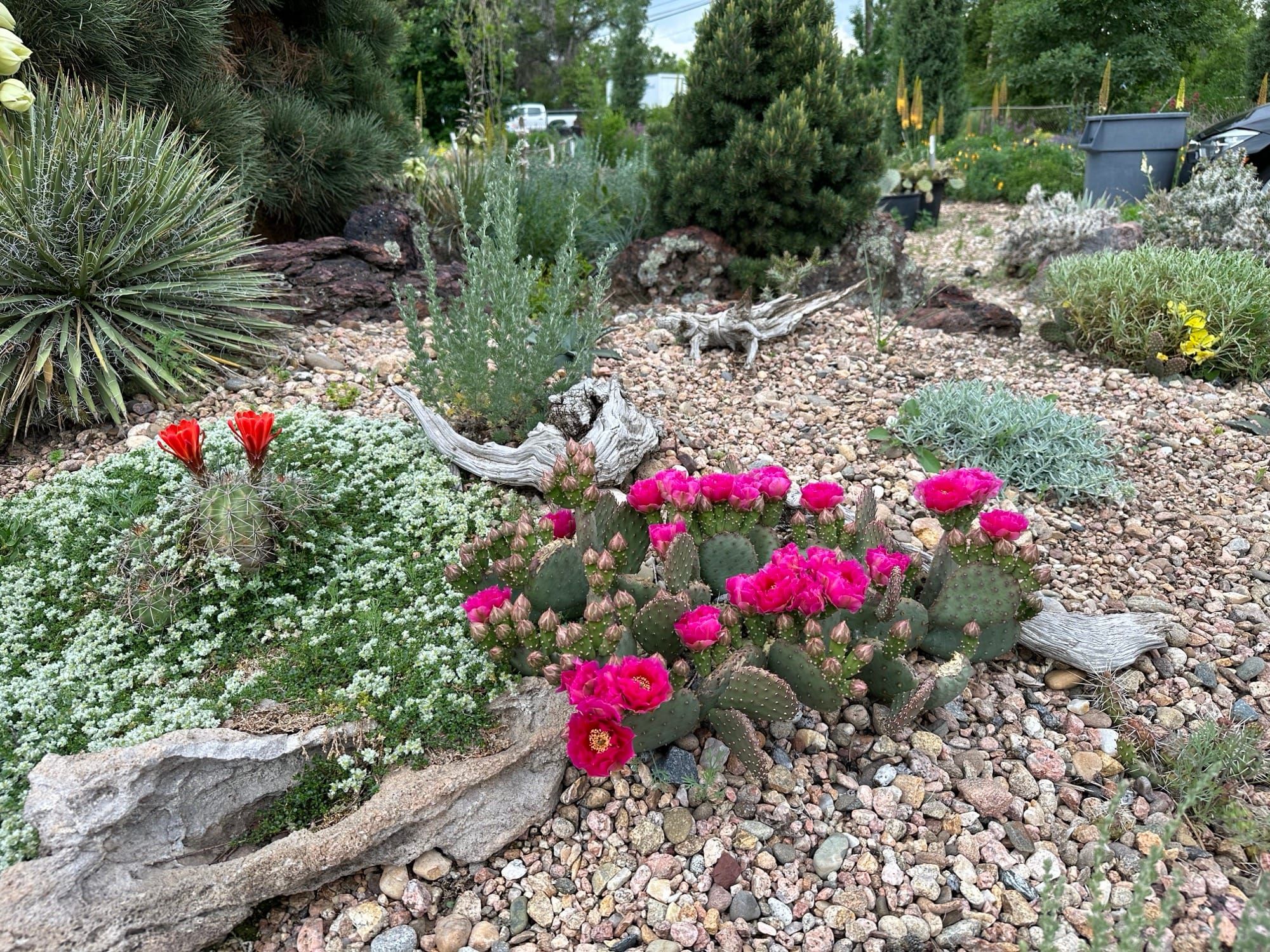
Most desert landscaping ideas fail the same way: a flat sheet of tan gravel, three lonely shrubs, one bored yucca. That's not desert landscaping — that's a parking lot with a plant allowance. The actual desert is the most dramatic landscape on the continent: neon cactus blooms, wild silhouettes, mountains of texture. Here's how to get that yard instead.
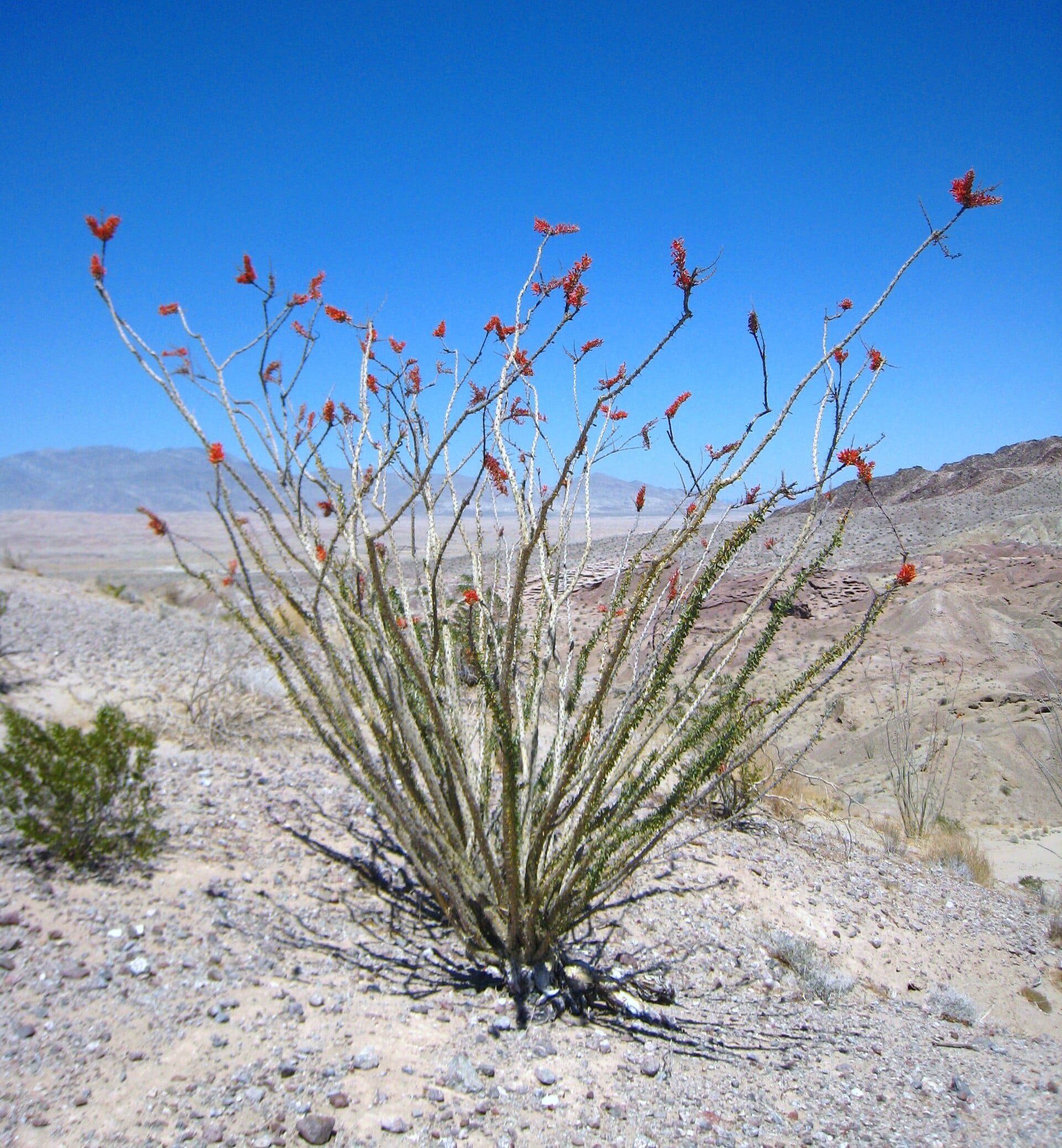
Rule one: the gravel is the background, not the design
The beige-rectangle look happens when rock does all the work. Real desert design inverts it — plants and landforms star, gravel recedes. (The difference between a xeriscape and a "zeroscape" is a whole article, and it shows up in your summer surface temperatures too.)
- Vary the ground plane. Berms, swales, and a dry creek bed give a flat lot the topography deserts actually have.
- Use two or three rock sizes — boulders, cobble, and fines — the way a wash deposits them. Uniform gravel is what reads "boring."
- Plant to 50%+ coverage. Deserts aren't empty; they're spaced. Big difference — and the plants shade the rock, which keeps the whole yard cooler in July.
Color: the desert's best-kept secret
Nothing on Earth outblooms a cactus in April:
- Blooming cactus beds. Beavertail prickly pear (magenta), claret cup (scarlet), and hardy opuntias put on a show that makes roses look shy — and many are cold-hardy well beyond the Sunbelt.
- Long-season desert perennials: penstemon, desert marigold, blackfoot daisy, globemallow, and red yucca bloom for months (full-sun champions here).
- Wildflower drifts. Seed penstemon and poppies through open gravel for a spring flush that self-sows forever.
- Foliage color counts twelve months: blue agaves, silver cenizo, chartreuse sedums, plum-tinted prickly pear pads.
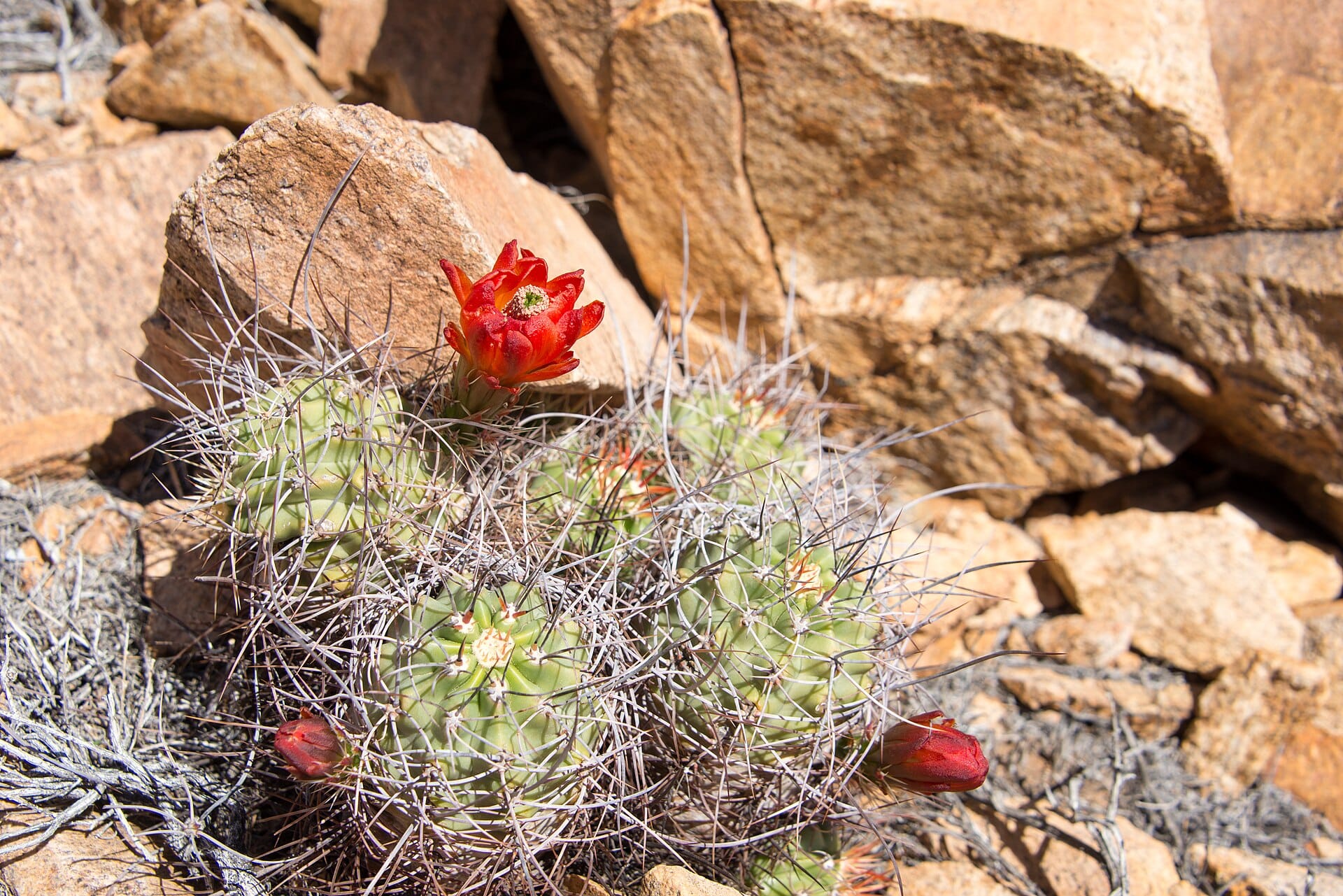
Sculpture: what deserts do better than anywhere
- One heroic specimen — a big agave, a multi-trunked ocotillo, a character-grade yucca — placed like the artwork it is. Cold climate? There are agaves and yuccas hardy to Zone 5.
- Silhouette planting. Put spiky forms where they'll catch low sun or backlight against a wall.
- Boulder groupings buried a third deep, in odd numbers, with a companion plant at the base (rock garden fundamentals).
- Steel, stucco, and shadow. Rusted corten planters and colored walls are the Southwest's signature moves — one bold wall color changes the whole yard.
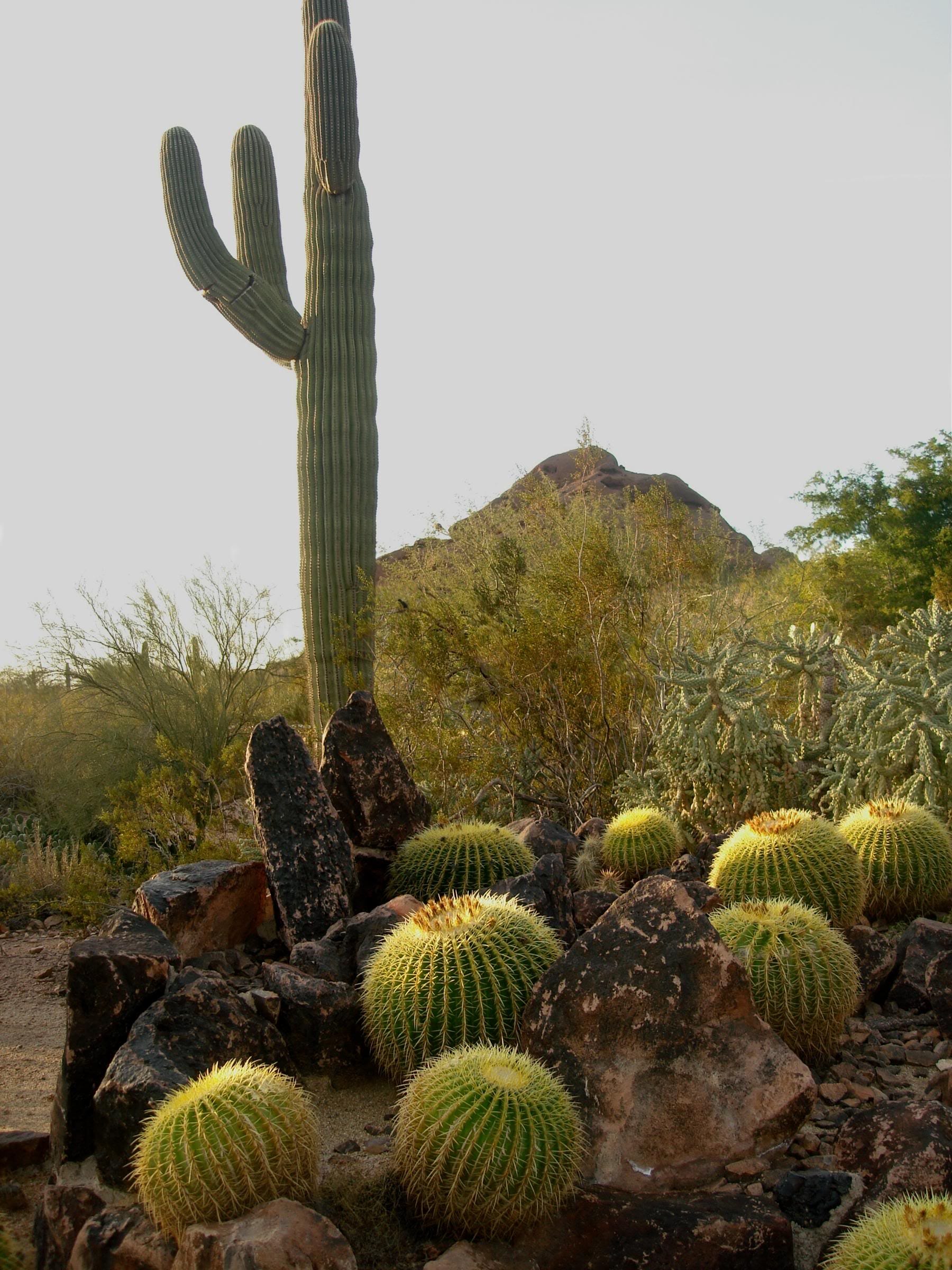
Texture and layers
Flat plantings are boring plantings. Layer it:
- Canopy: desert willow, palo verde, or mesquite for filtered shade (low-water trees).
- Mid-story: shrubs and big accents — cenizo, jojoba, large agaves.
- Ground layer: tough groundcovers, trailing lantana, and flowering natives lapping at the rocks.
- Movement: desert grasses like muhly catch wind and light (grass options).
Light it like a stage
Deserts live twice — day and night. A few low-voltage fixtures uplighting one agave and one tree, plus path lights, transform summer evenings (when you'll actually be outside anyway). Shadows thrown by spiky plants on a bare wall are half the point.
Make it alive
Add a shallow water dish or small bubbler and the yard fills with birds and lizards — in a dry landscape, a cup of water is a wildlife magnet. Plant pollinator natives and hummingbirds patrol the penstemon every morning. A desert yard with wildlife in it is never boring — it's television.
Where to start
Pick a hero plant, build a berm-and-boulder composition around it, and add one drift of blooming color — that trio beats an acre of plain gravel. Work one zone at a time: the view from the street first, then the view from your favorite window. Every zone you finish teaches you what the next one wants, and the budget stays humane. Regional guides for Las Vegas and Phoenix get into local plant lists, and the 10 Steps covers the build.
The desert isn't beige. Your desert landscaping shouldn't be either.