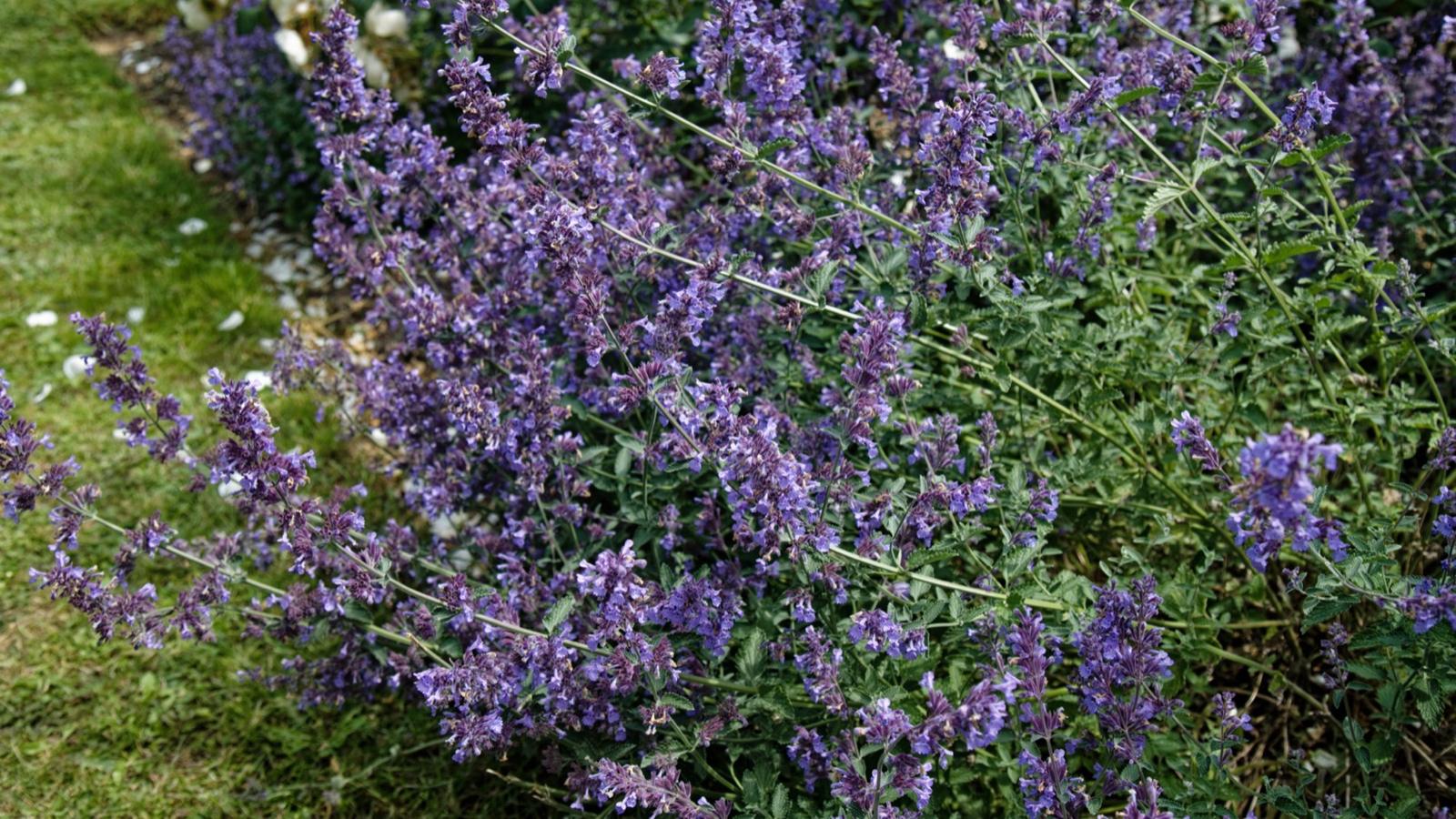
Catmint is about as close to a no-fail plant as a xeriscape gets. Nepeta × faassenii and its best-known variety, 'Walker's Low', form 2-foot mounds of aromatic gray-green leaves covered in lavender-blue flowers from late spring on, and a single midsummer shearing brings them back into bloom until fall. It's hardy to zone 4, drought tolerant once established, rarely touched by deer and loved by bees. If you're planting one perennial in a new low-water bed, this is a good candidate. It ranks #2 of the 40 perennials in our Guide 2.0 plant list.
The two things to know: buy a sterile hybrid, not catnip, and cut it back hard once the first flush fades.
Catmint varieties compared
| Plant/Variety | Zones | Water | Size | Bloom | Notes |
|---|---|---|---|---|---|
| 'Walker's Low' (N. × faassenii) | 3–8 | Low | 2–2.5 ft × 2.5–3 ft | Spring–fall with shearing | 2007 Perennial Plant of the Year; sterile |
| Blue catmint (N. × faassenii, typical forms) | 5–9 | Low | 18–24 in × up to 3 ft | Spring–summer; reblooms | Sterile hybrid; many cultivars |
| Little Trudy (Nepeta 'Psfike') | 4–9 | Low | 8–14 in | April–October | Plant Select compact pick |
| Catnip (N. cataria) | 3–9 | Low | Varies | Summer | Cats love it; can get weedy |
Zones from our plant database (verified September 2026) and Plant Select; sizes from NC State Extension and Plant Select. Check nursery tags for other named cultivars; hardiness varies a little by selection.
Which catmint to buy
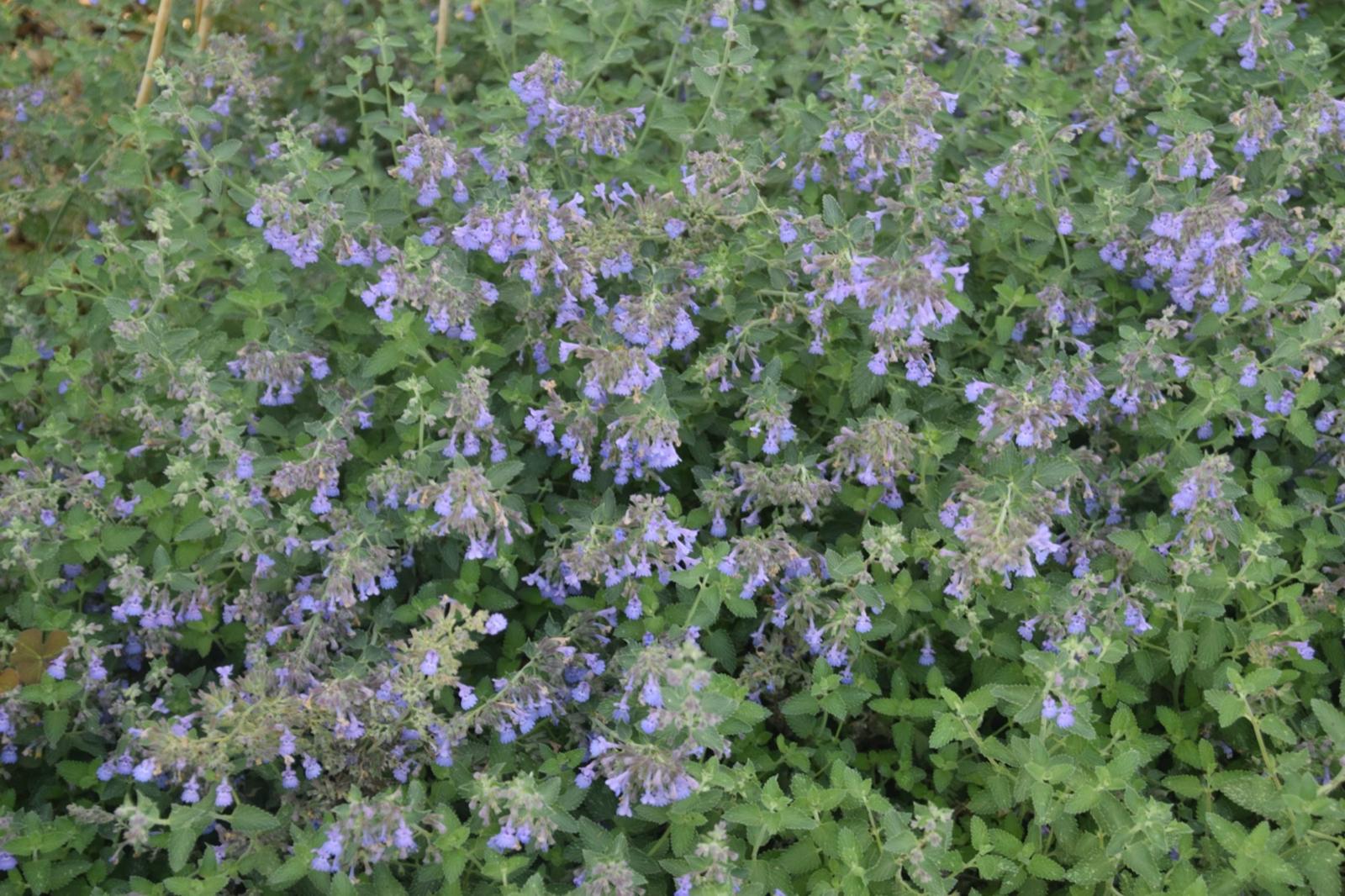
'Walker's Low' is the default for good reason. It's hardy in zones 3–8 per our plant database (NC State Extension is more cautious, at 4–8). NC State describes it as 2 to 2½ feet tall and 2½ to 3 feet wide, and notes that it was the 2007 Perennial Plant of the Year. Despite the name, it isn't low. NC State notes it was named for a garden called Walker's Low. Its flowers are sterile, so it doesn't seed around the garden, and NC State says it "will not take over a garden bed, unlike most plants in the mint family." Our catmint plant page profiles it.
Other N. × faassenii cultivars. NC State lists 'Blue Wonder', 'Junior Walker', 'Six Hills Giant' and several others. 'Junior Walker' is a shorter version of 'Walker's Low' for the front of a bed. 'Six Hills Giant' is the old, big-growing selection, better in a large space or at the back of a border.
Little Trudy (Nepeta 'Psfike') is Plant Select's compact catmint, just 8–14 inches tall, blooming from April to October. It's rated zones 4–9 with "moderate to xeric" water needs and is a good fit for small beds, parking strips and containers.
Catnip (N. cataria) is a different plant. It's the one cats roll in. NC State warns that it can become weedy and suggests growing it in a container. It isn't the plant you want for a low-maintenance ornamental bed.
Catmint vs. catnip
| Catmint (N. × faassenii) | Catnip (N. cataria) | |
|---|---|---|
| Garden use | Ornamental perennial | Herb |
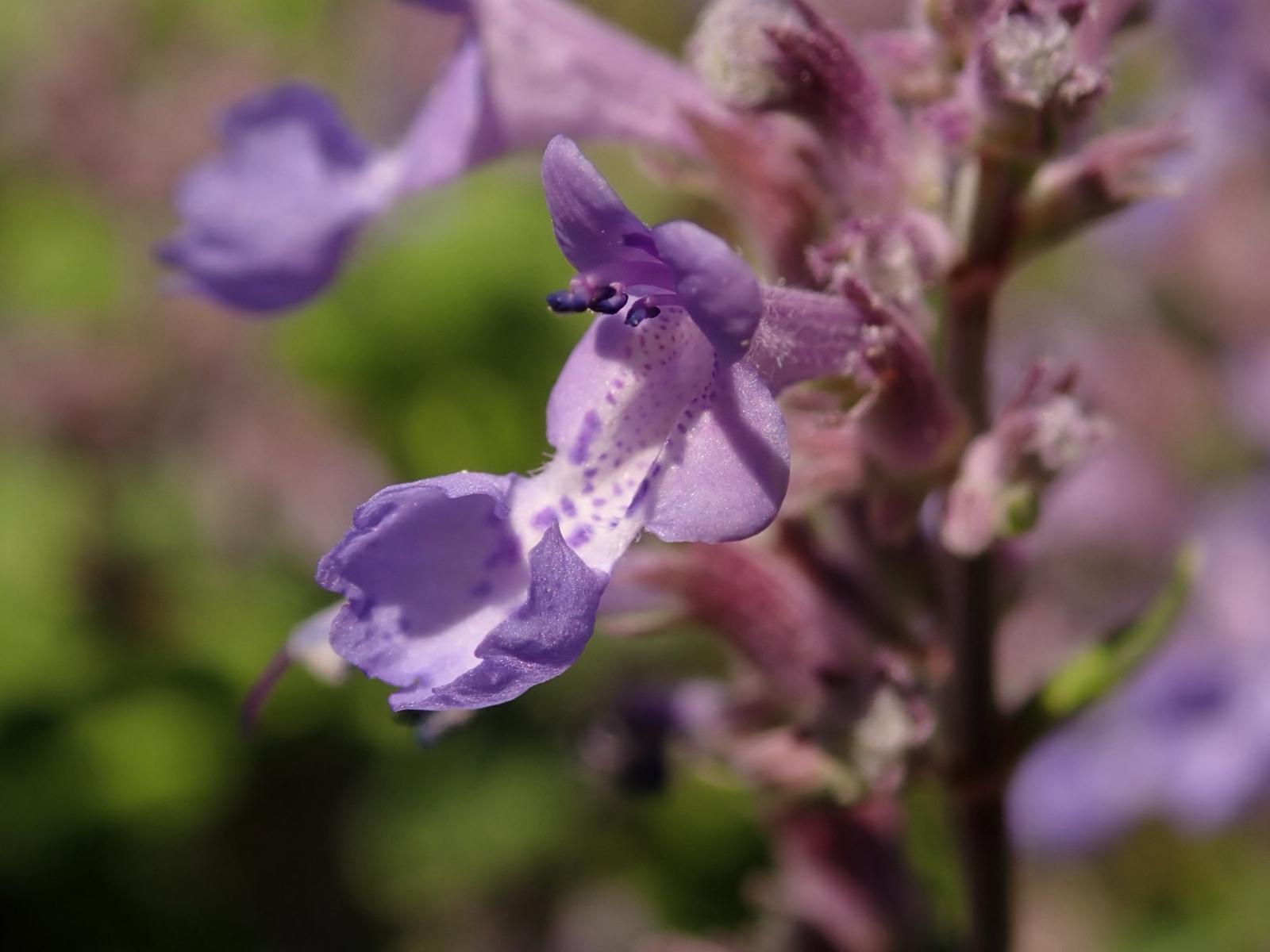
| Flowers | Showy lavender-blue, spring to fall | Small, white to pale lavender |
| Seeds | Sterile; won't self-sow | Seeds and can get weedy |
| Cats | Less attractive to cats, per NC State | Strongly attractive |
Some cats will still nap in a catmint patch, especially young plants. If that's a problem, a few stones or a twiggy cage over new plants for the first month usually solves it.
How to grow catmint
Sun. Full sun for the most flowers. NC State notes that in hot, humid regions catmint benefits from a little afternoon shade.
Soil. Almost any soil that drains. NC State describes 'Walker's Low' as thriving in dry, even rocky soil. Heavy clay is fine as long as water doesn't stand around the crown in winter.
Water. Water weekly through the first growing season. After that, NC State calls blue catmint drought tolerant, and in most of the interior West established plants need only occasional deep watering in the hottest weeks. Overwatered catmint grows soft and floppy.
Fertilizer. Not needed. Lean soil keeps plants compact.
Spacing. Give 'Walker's Low' about 2½ to 3 feet between plants. It fills in fast.
Shearing for rebloom
This is the one job catmint needs, and it makes a big difference.
- After the first flush fades (usually early to midsummer), shear the whole plant back by roughly a third to a half, down to where you see fresh leaves at the base.
- Water once after shearing if the weather is hot and dry.
- Expect a second bloom in a few weeks. NC State notes that the sterile flowers of 'Walker's Low' rebloom when cut back in midsummer, and that removing spent blossoms keeps color going from spring through fall.
Leave the stems standing over winter for a little crown protection, then cut them to a few inches in early spring when new growth appears at the base.
Dividing. Clumps can be divided in spring if they open up in the middle or you want more plants. Because the hybrids are sterile, division is the way to propagate them.
Where catmint works in a xeriscape
NC State suggests planting blue catmint along a path, patio or entrance where you'll brush the aromatic leaves, massing it in borders, and tucking it into containers or the crevices of a rock wall. In a low-water yard, a few spots stand out:
- Bed edges and path borders, where its loose mound softens hard lines of gravel, flagstone or concrete.
- Hell strips and parking strips, where Little Trudy's 8–14 inch height keeps sightlines clear.
- Slopes, planted in groups of five or more to knit together quickly.
- Under roses or around the base of shrubs, as a living mulch that hides bare stems.
Deer, rabbits and pollinators
Catmint is one of the most reliable deer-resistant perennials. Rutgers Cooperative Extension rates Nepeta A, "rarely damaged," and NC State notes that its scent deters deer. See our full list of deer-resistant xeriscape plants.
It's also a strong bee plant. NC State calls 'Walker's Low' a pollinator magnet, and in our experience bumblebees work it all summer. For more bee-friendly low-water plants, see pollinator plants for a low-water garden.
Companions
Catmint's soft mound and cool color work with almost anything. Good partners:
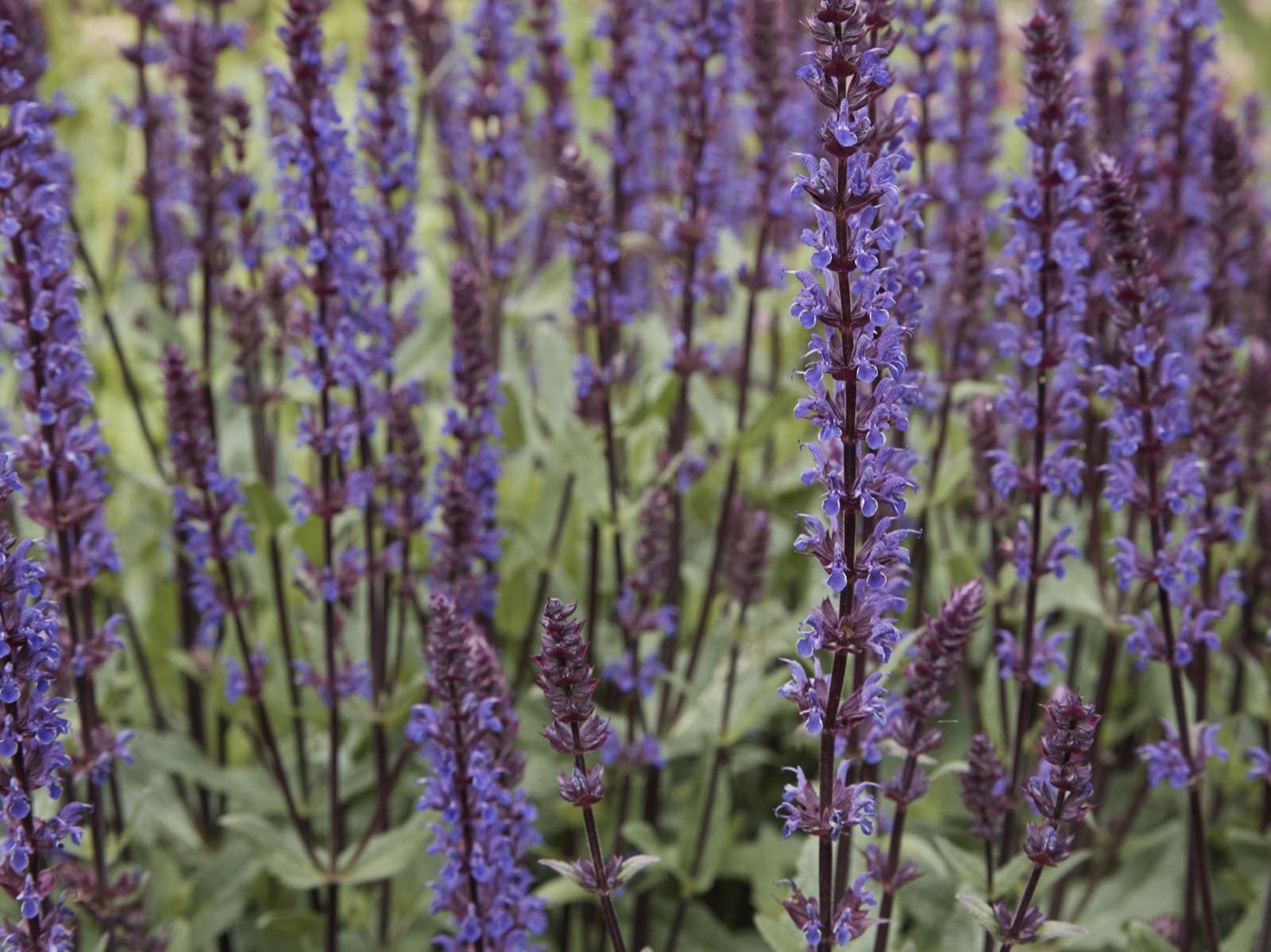
- Salvia 'May Night' for vertical violet spikes; both get sheared at the same time.
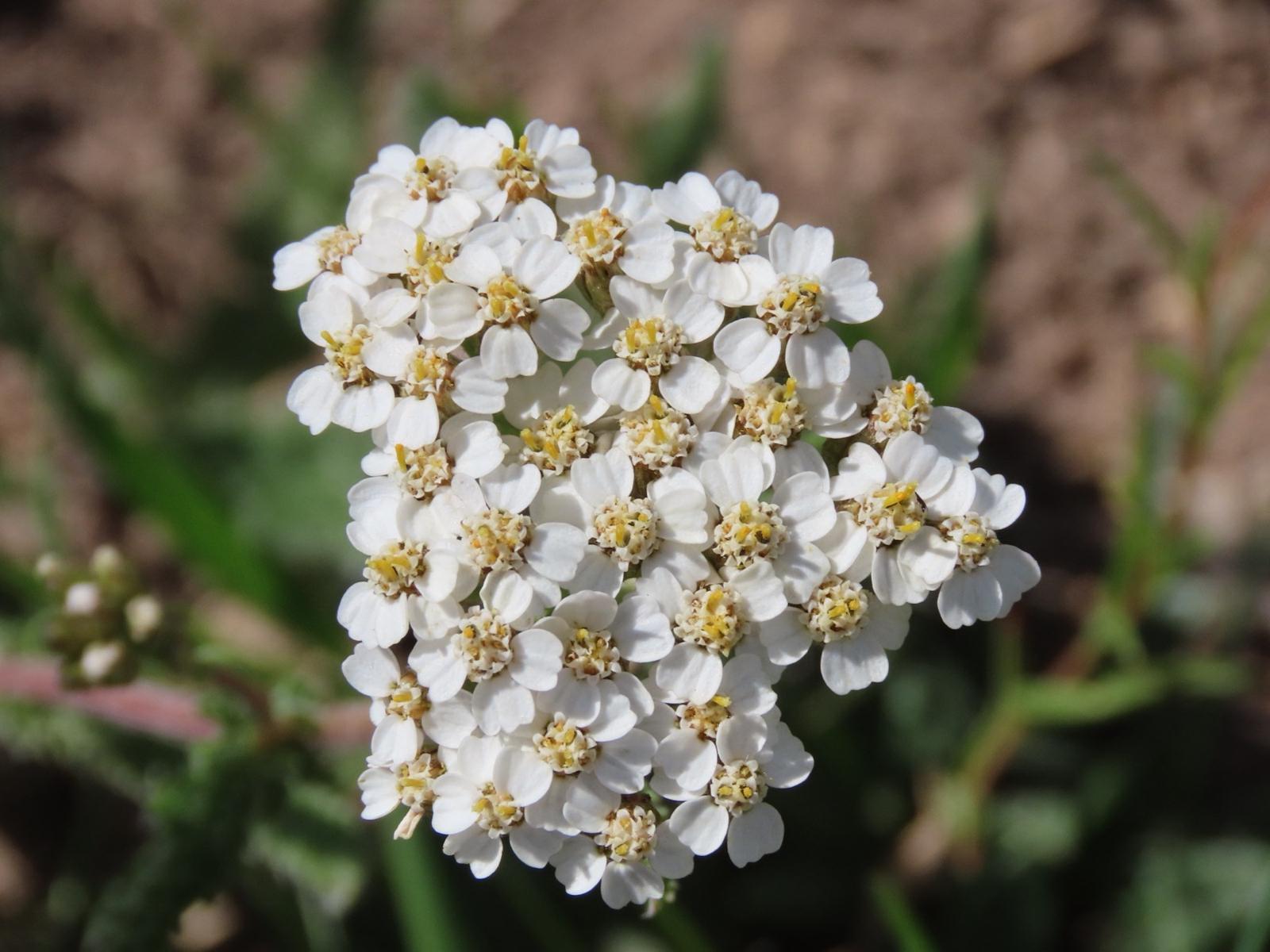
- Yarrow and blanket flower for warm contrast.
- Russian sage and lavender for a silver-and-blue scheme.
- Little bluestem or blue oat grass for texture.
- Red Rocks penstemon for pink spikes in front.
From our installs: 'Walker's Low' goes into more of our Front Range beds than any other perennial. It handles clay, hail and reflected heat off driveways, and it fills space quickly, which matters in a new install. Most of the catmint complaints we hear come from skipping the midsummer shearing: plants flop open in the center and look tired by August. A quick cut with hedge shears in early July fixes it. (Xeris Landscaping is affiliated with Xeriscaping.com.)
Frequently asked questions
Is catmint the same as catnip?
No. Both are Nepeta, but garden catmint (N. × faassenii) is a sterile ornamental hybrid with showy blue flowers, and catnip (N. cataria) is the herb cats react to. NC State notes 'Walker's Low' is less attractive to cats than catnip, and that catnip can become weedy.
Does catmint spread?
The sterile N. × faassenii hybrids don't reseed and grow as expanding clumps. NC State says 'Walker's Low' won't take over a bed. Catnip and some other species do self-sow.
How tall does 'Walker's Low' catmint get?
About 2 to 2½ feet tall and 2½ to 3 feet wide, according to NC State Extension. The "Low" in the name refers to a garden, not its height. For something shorter, try 'Junior Walker' or Plant Select's Little Trudy (8–14 inches).
When should I cut back catmint?
Shear it by a third to a half after the first bloom fades in early to midsummer to get a second bloom, and cut the old stems down in early spring when new growth appears.
Is catmint drought tolerant?
Yes, once established. Water it weekly through its first summer; after that, most established plants in dry Western climates need only occasional deep watering.
For more long-blooming perennials, see drought-tolerant perennials. In cold climates, catmint is on our zone 4 and zone 5 lists.