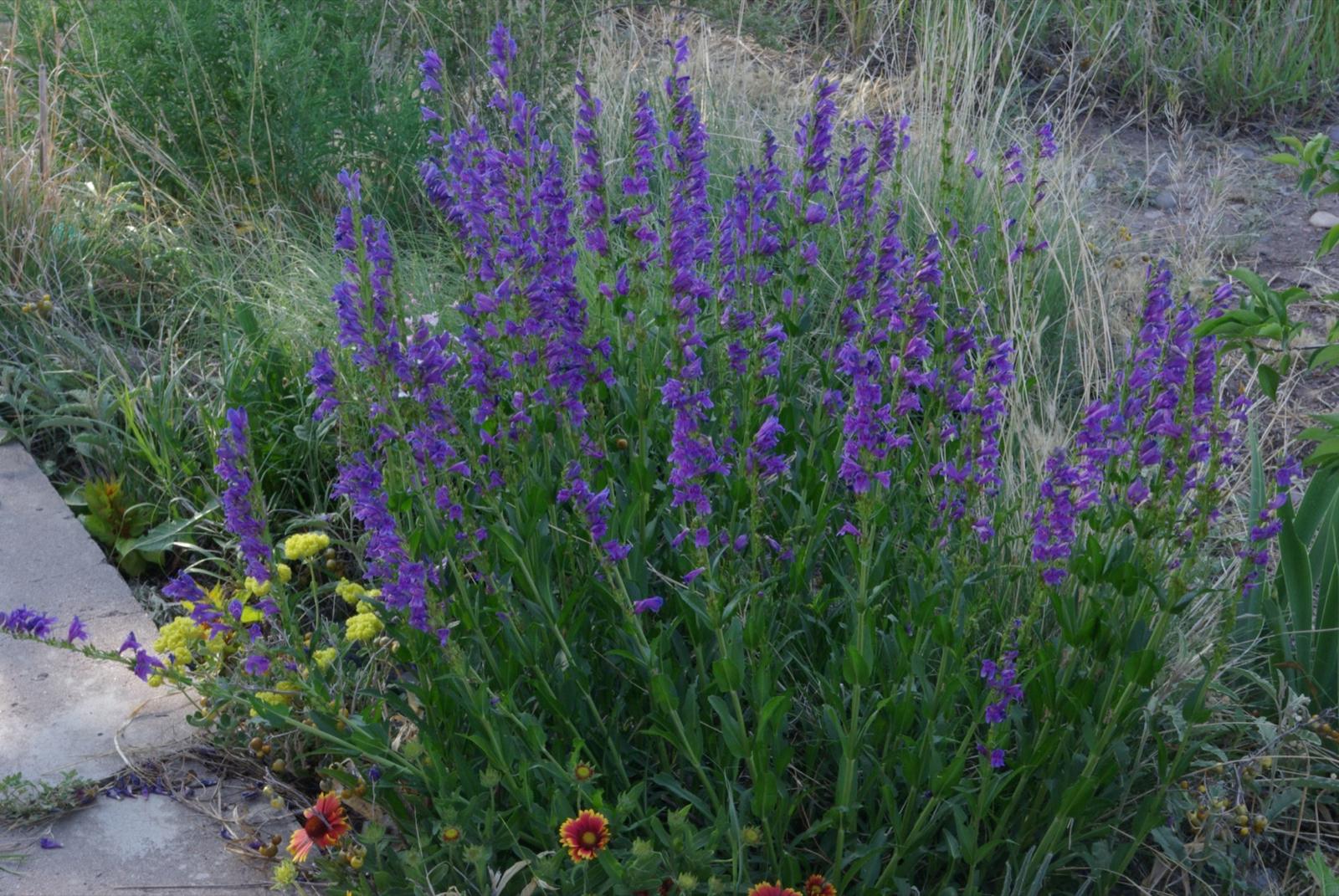
The best penstemon varieties for a dry garden are the Western natives and their close hybrids: Rocky Mountain penstemon for early blue, firecracker penstemon for scarlet spring spikes, pineleaf penstemon for a long orange-red show, and Plant Select's Mexicali hybrids like Red Rocks and Pikes Peak Purple for color from June into August. Hummingbirds work all of the red and pink tubular types hard. Grow any of them in lean, fast-draining soil with gravel mulch and almost no fertilizer. Rich soil and extra water kill more penstemons than drought does.
Penstemon is a large genus found almost entirely in North America. The ten below are the ones worth hunting down for a low-water yard, with the zones and sizes you need to place them.
Penstemon varieties compared
| Plant/Variety | Zones | Water | Size | Bloom | Notes |
|---|---|---|---|---|---|
| Rocky Mountain penstemon (P. strictus) | 4–9 | Very low | 24–30 in | Late spring–early summer | Blue-violet; wants spring moisture |
| Firecracker penstemon (P. eatonii) | 4–9 | Very low | 10–40 in | Early spring–early summer | Scarlet; hummingbird favorite |
| Pineleaf penstemon (P. pinifolius) | 4–8 | Low | 8–18 in | June–August | Orange-red; needle foliage |
| Bridges' penstemon (P. rostriflorus) | 4b–8 | Low | 24–36 in | Summer | Red; Plant Select |
| Scarlet bugler (P. barbatus) | 5–8 | Low | 16–20 in ('Coral Baby') | May–July | Red to coral; hummingbirds |
| Desert beardtongue (P. pseudospectabilis) | 5–9 | Very low | 32–36 in | May–July | Rose-pink; toothed leaves |
| Parry's penstemon (P. parryi) | 8–10 | Low | 1.5 ft rosette | Spring | Hot pink; low desert |
| Shell-leaf penstemon 'Prairie Jewel' (P. grandiflorus) | 3–9 | Low | 20–36 in | Early summer | Big pink-to-purple bells |
| Mexicali hybrids: Red Rocks, Pikes Peak Purple | 4b–8 | Low–moderate | 14–18 in | June–August | Longest bloom; Plant Select |
| Silverton bluemat (P. linarioides) | 4–10 | Low | 8–12 in | May–June | Groundcover; lavender-blue |
Zones and sizes come from our plant database (verified September 2026), Plant Select, CSU Extension, Utah State University Extension and AMWUA plant pages. USU rates firecracker penstemon a little more cautiously, zones 3–7.
The 10 varieties
1. Rocky Mountain penstemon (Penstemon strictus)
The archetypal Western penstemon and the one on our Rocky Mountain penstemon plant page. Dense spikes of blue-violet flowers rise over glossy, semi-evergreen leaves in late spring. It's a bee plant first, but hummingbirds visit too. CSU Extension counts it as completely drought tolerant once established and adds one caveat: it needs good spring moisture, so give it a soak in a dry April or May. It's hardy in zones 4–9; Plant Select's white form, Blanca Peak, is rated 4a–8.
2. Firecracker penstemon (Penstemon eatonii)
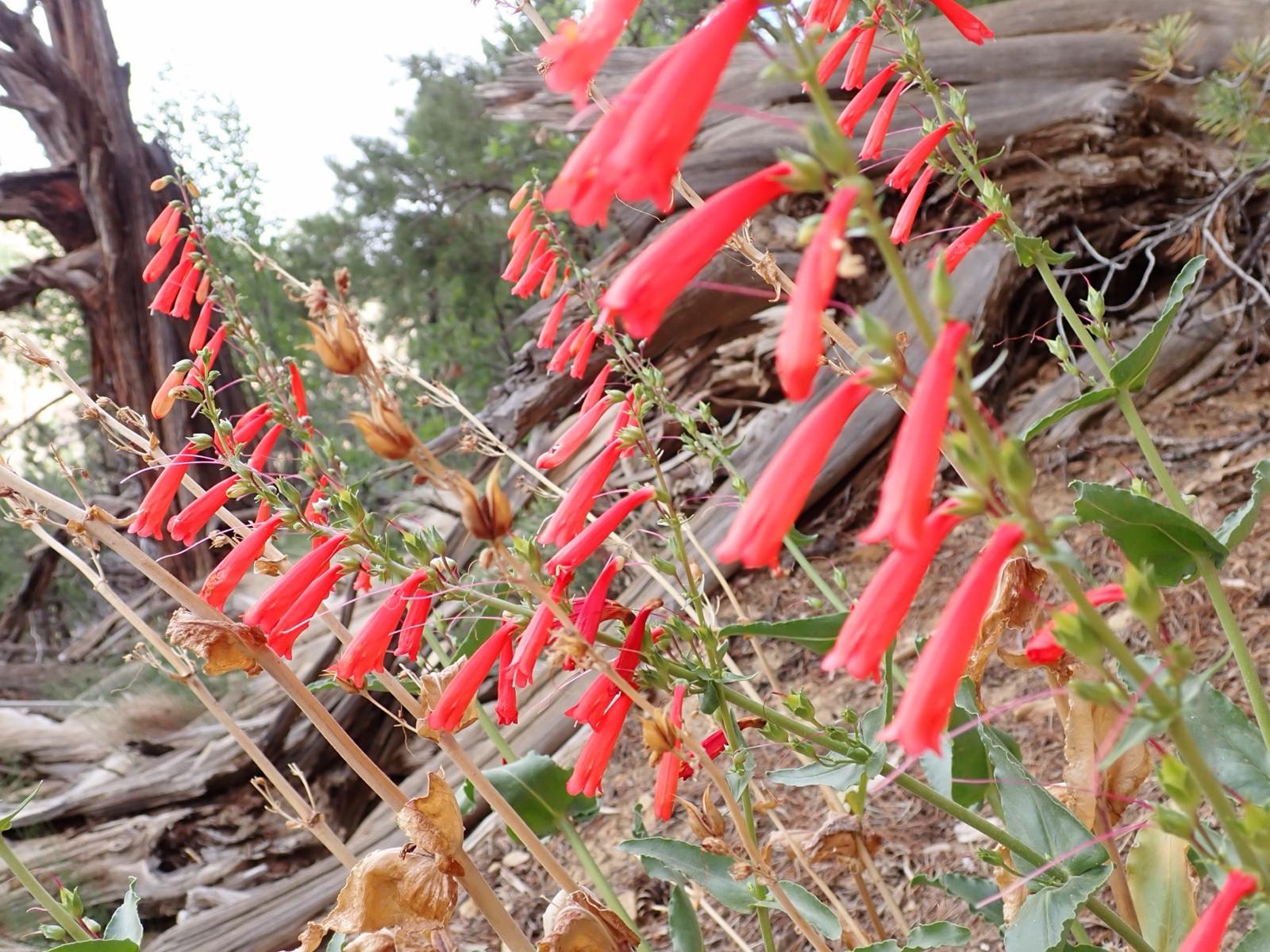
Arching stems of narrow scarlet tubes, and one of the earliest hummingbird flowers of the year. Utah State University Extension describes it as cold hardy across the Intermountain West, native from 3,000 to 11,000 feet, and happiest in low-fertility soil with excellent drainage. It also grows in the Phoenix area: AMWUA lists it as hardy to 0°F and recommends fall planting for spring flowers. USU warns that it reseeds freely and flops or rots if overwatered.
3. Pineleaf penstemon (Penstemon pinifolius)
A low, shrubby mound of needle-like leaves covered in narrow orange-red tubes from June into August. It's one of the easiest penstemons for a rock garden or a hot bed edge. Plant Select carries two selections: Half Pint, a compact 8–10 inch form rated zones 4–9, and SteppeSuns Sunset Glow, a warmer orange at 12–18 inches rated 4–8.
4. Bridges' penstemon (Penstemon rostriflorus)
A bushier red penstemon, 2–3 feet tall and wide, that blooms in summer after the spring species have finished. That timing makes it valuable for hummingbirds. Plant Select introduced it in 2006 and rates it zones 4b–8, from moderate water to xeric.
5. Scarlet bugler (Penstemon barbatus)
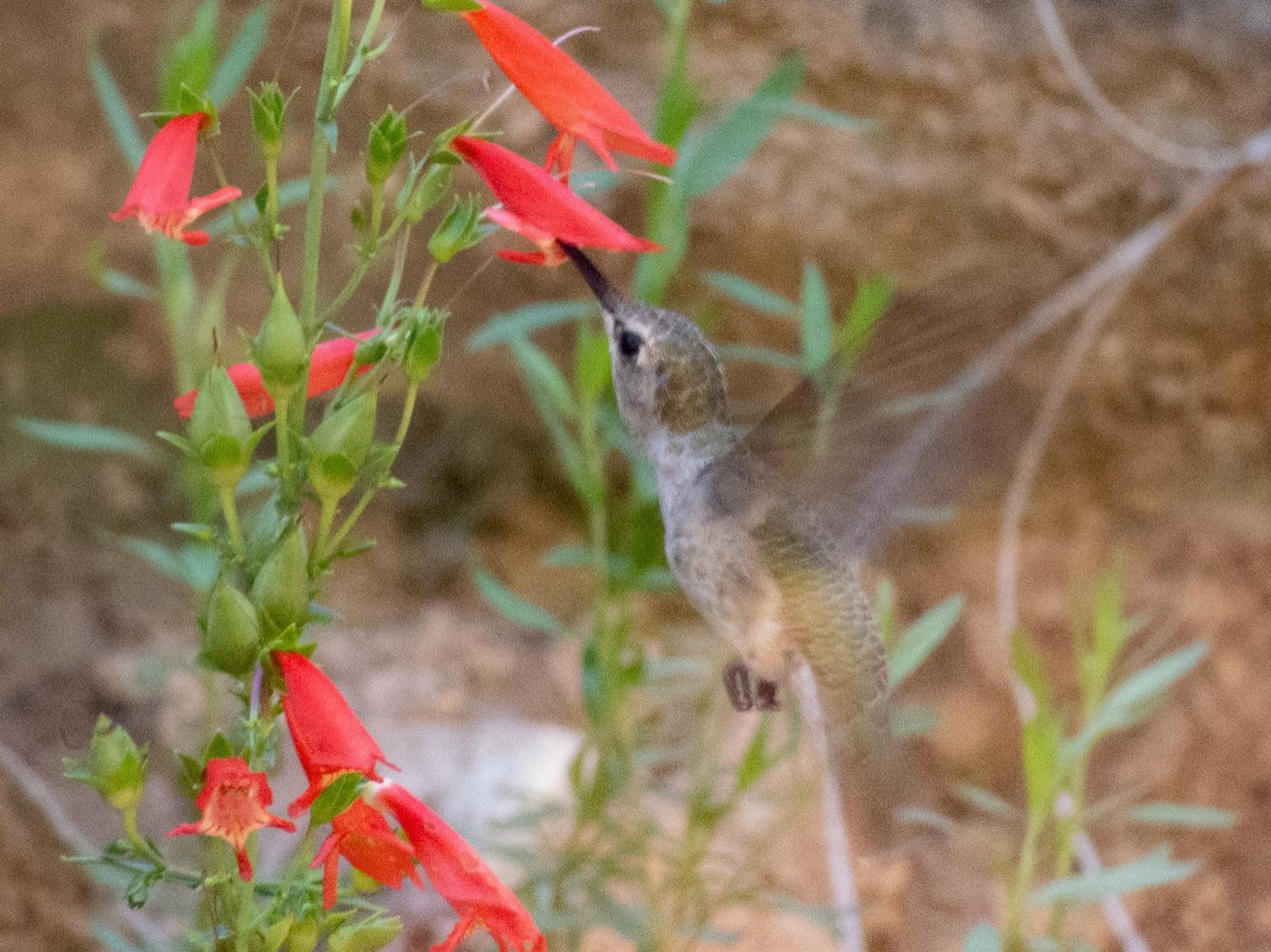
Also called beardlip or golden-beard penstemon. Tall, loose stems carry red, down-turned tubes shaped exactly for a hummingbird's bill. Plant Select's 'Coral Baby' stays at 16–20 inches with coral-pink flowers from May to July, rated zones 5–8. CSU lists P. barbatus forms among penstemons for perennial borders, which means they tolerate a bit more water than the desert species.
6. Desert beardtongue (Penstemon pseudospectabilis)
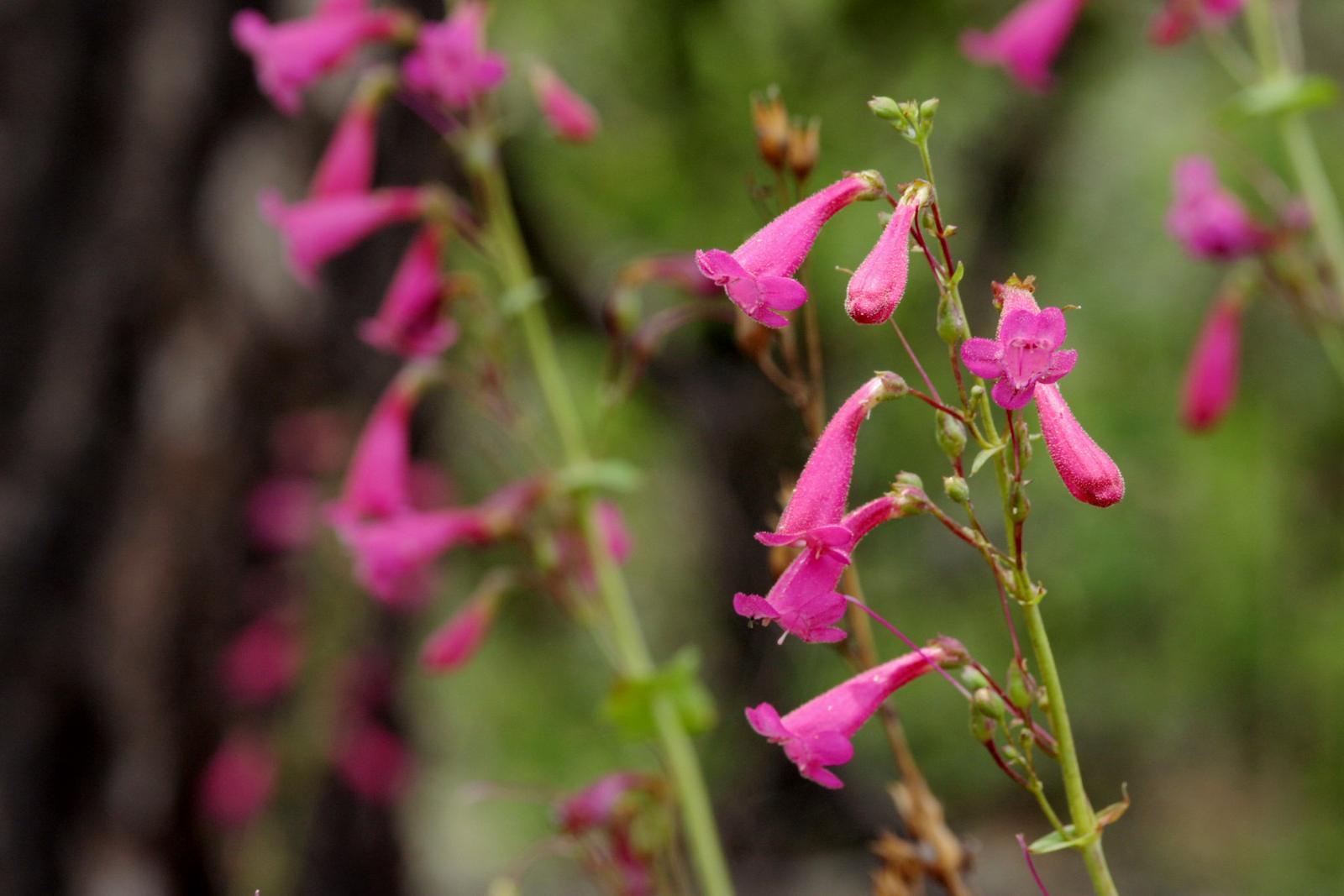
Rose-pink flowers on 32–36 inch stems above distinctive toothed, blue-green leaves that clasp the stem. It's rated zones 5–9 by Plant Select and hardy to 0°F by AMWUA, which lists it as canyon penstemon for the Phoenix area. Plant Select's tip: a few deep soakings during the growing season prolong bloom.
7. Parry's penstemon (Penstemon parryi)
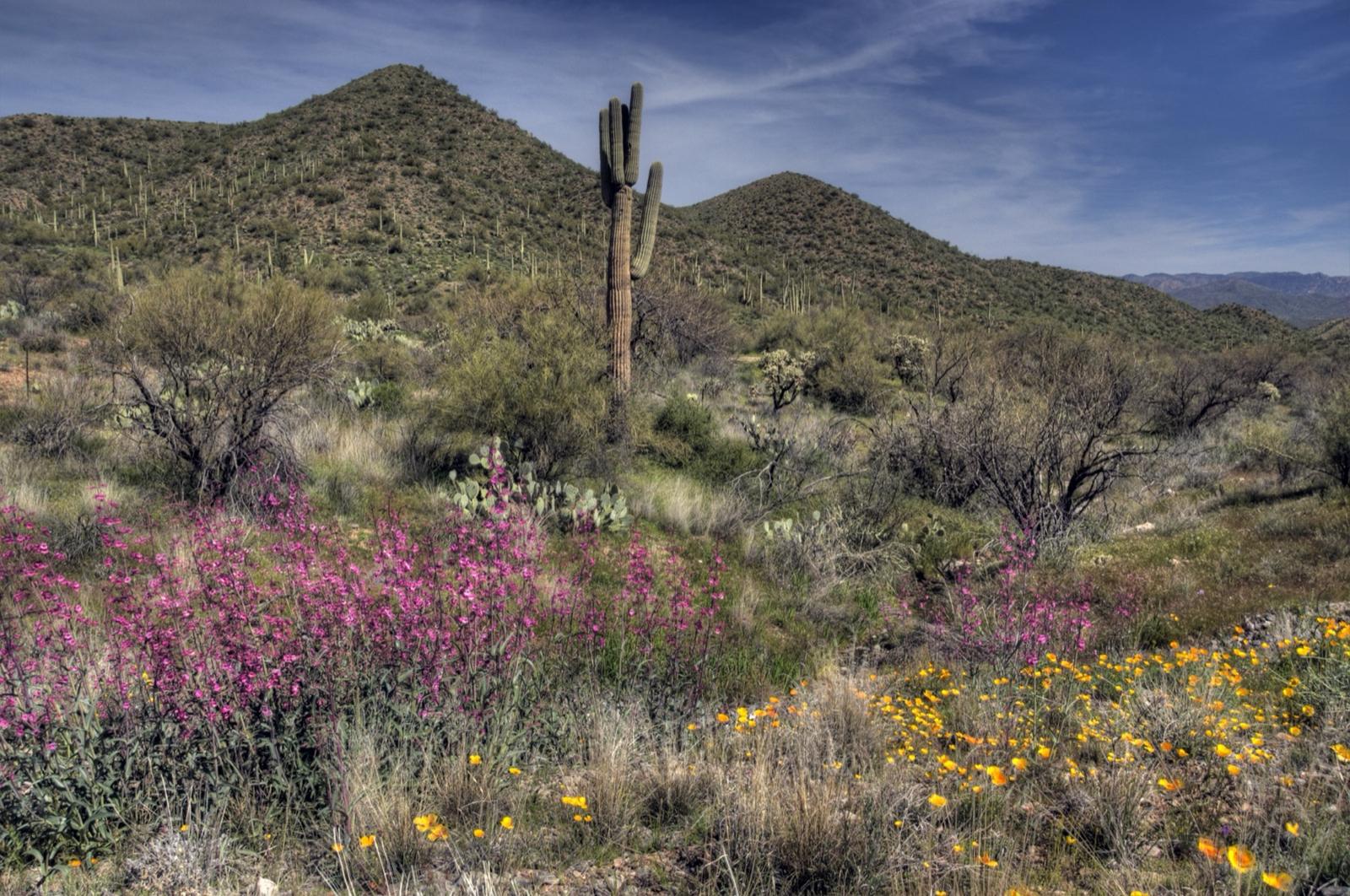
The low-desert penstemon. Hot pink spikes rise from a low evergreen rosette in spring. AMWUA rates it hardy to about 15°F, so it belongs in the warm zones of Phoenix, Tucson and Las Vegas rather than on the Front Range. Plant it in fall. It reseeds readily, which is how it persists. See our Phoenix xeriscaping guide for companions.
8. Shell-leaf penstemon 'Prairie Jewel' (Penstemon grandiflorus)
A Great Plains native with the biggest flowers on this list: fat, inflated bells in pink, lavender and white over waxy blue-gray leaves. Plant Select's Prairie Jewel is rated zones 3–9, the widest cold range here. Its tip sheet is blunt: excessive watering causes weak, floppy growth and a short life, but the plant will persist in buffalograss or a xeriscape.
9. Mexicali hybrids: Red Rocks, Pikes Peak Purple and kin
Hybrids with Mexican penstemon parentage, bred for a long bloom on tidy plants. Plant Select introduced Red Rocks (rose-pink, 'P008S') and Pikes Peak Purple ('P007S') in 1999; both reach 14–18 inches and bloom June through August in zones 4b–8. Later additions include Windwalker Garnet (2014), Carolyn's Hope (pink, 2014) and Shadow Mountain (lavender, blooming May to September). Plant Select rates the group "moderate to dry," so they want a bit more water than the wild species.
10. Silverton bluemat penstemon (Penstemon linarioides subsp. coloradoensis)
A mat of silvery, needle-fine leaves 8–12 inches tall, covered in lavender-blue flowers in May and June. Rated zones 4–10 and good up to about 8,000 feet. Plant Select's warning applies to most small penstemons: it's not suited to frequently irrigated, poorly drained or heavily amended soil.
Two more worth knowing. Palmer's penstemon (P. palmeri) has pale pink, fragrant flowers on tall stems; CSU lists it for Colorado xeriscapes. Foxglove penstemon 'Husker Red' (P. digitalis) is the eastern garden standard, with maroon foliage and white flowers. CSU puts foxglove penstemon in its perennial-border list, not its xeriscape list, so plant it where it gets regular water.
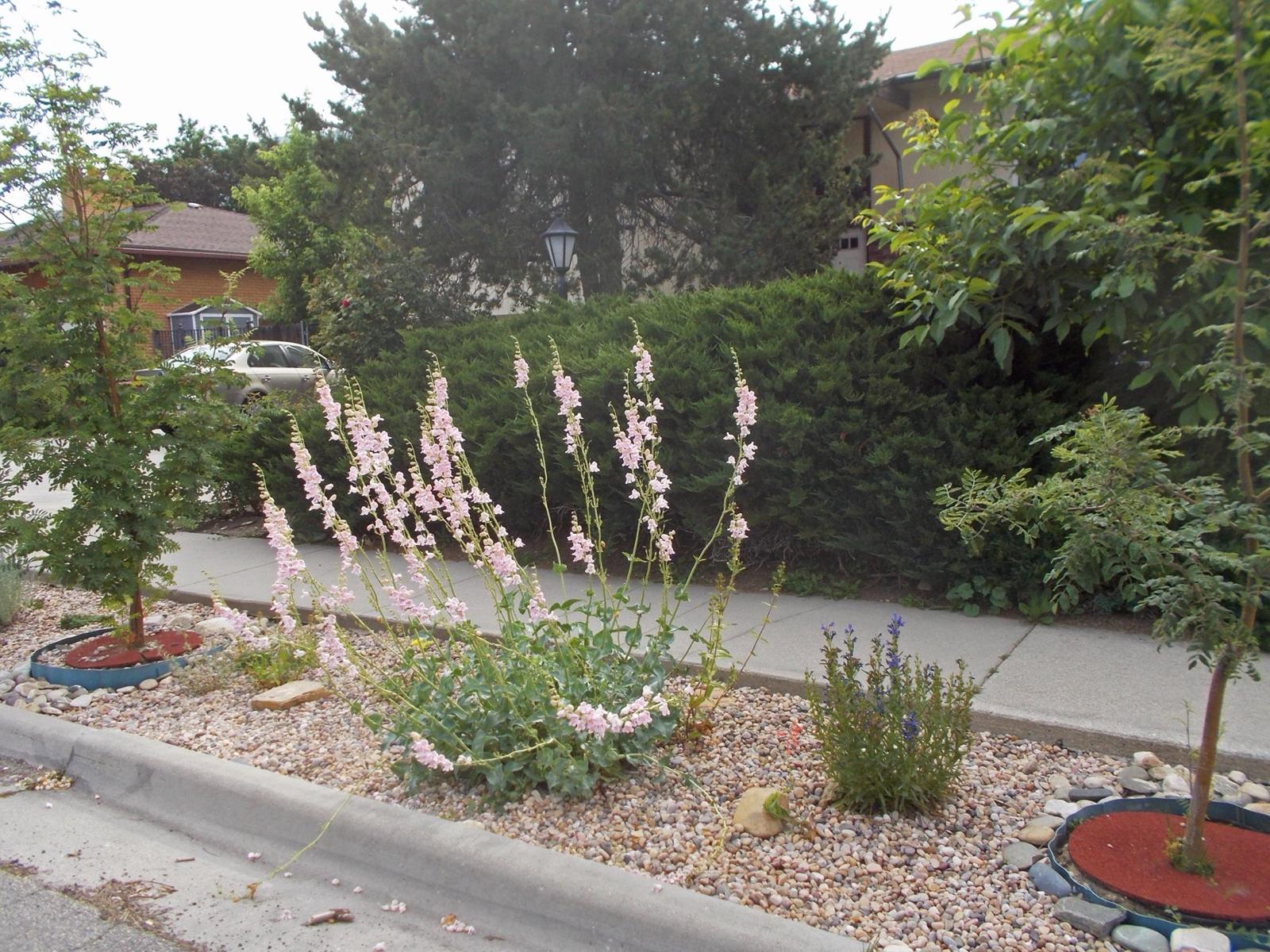
Where to plant penstemons
Full sun. CSU says most penstemons need at least six hours of full sun to grow upright stems with clear flower color. Species from high elevations or wetter places do better with some afternoon shade.
Lean, fast-draining soil. The American Penstemon Society's advice is to avoid peat moss and manure, especially in dry climates. If you're on clay, build a raised bed or berm about 6 inches deep with a mix of coarse sand and fine gravel. The roots will reach down into the native soil while the crown stays out of standing water. Slopes, rock gardens, hell strips and the tops of berms are all good spots.
Gravel mulch, not bark. Penstemon crowns need to stay dry. APS recommends mulches that don't hold water. In arid climates that usually means gravel or grit, kept a little away from the crown.
Skip the fertilizer. CSU notes that most garden soils don't need it for penstemons, and extra nitrogen gives you tall, weak stems.
Short-lived by nature: deadheading and reseeding
Many penstemons are short-lived perennials. That's part of how they're built, not a sign you did something wrong. You can work with that in two ways:
- To extend a plant's life, cut flower stalks before seed forms. CSU says removing spent stalks before they set seed can increase the lifespan, and Plant Select recommends deadheading for the first two years on several of its penstemons to build a stronger plant.
- To keep a colony going, leave some stalks to ripen and drop seed. Firecracker, desert beardtongue and Parry's penstemon all reseed readily in gravel.
Most yards do both: deadhead the showpiece plants, and let a few in the back go to seed.
Watch for sudden collapse in wet soil. CSU describes root and crown rot as plants that "suddenly collapse and die" and pull out of the ground easily. Don't replant a penstemon in the same wet spot.
From our installs: Penstemons are among the plants we lose most often in the first year on Front Range clay. It almost always happens where irrigation overspray or a downspout keeps the soil wet. We plant them high, in a gravel-topped berm or at the top of a slope, water them in, and cut back hard once they root. We also plant them in groups of three or more so a short-lived plant or two doesn't leave a hole. (Xeris Landscaping is owned by Xeriscaping.com's founder.)
Frequently asked questions
Which penstemon is best for hummingbirds?
The red and coral tubular species: firecracker penstemon, scarlet bugler, pineleaf penstemon, Bridges' penstemon and Parry's penstemon in the low desert. Planting a spring bloomer (firecracker) with a summer bloomer (Bridges' or pineleaf) gives hummingbirds nectar for several months.
Why did my penstemon die after two or three years?
Usually one of two reasons. Some penstemons are naturally short-lived, especially if they're allowed to set a heavy crop of seed. The other common cause is crown rot from wet soil, rich amendments or bark mulch piled against the stems. Deadheading and gravel mulch help with both.
Do penstemons need to be watered?
Established Western species need little or no supplemental water in most of the interior West. CSU notes that even Rocky Mountain penstemon wants good spring moisture. Plant Select's Mexicali hybrids and 'Husker Red' want more regular water than the wild species.
Are penstemons deer resistant?
Only somewhat. Rutgers Cooperative Extension rates penstemon C, "occasionally severely damaged," usually from deer nipping flower stalks. Plant Select marks its penstemons deer resistant under Colorado conditions. If deer are heavy in your area, see our deer-resistant xeriscape plants.
When should I plant penstemons?
In cold-winter regions, plant in spring or early fall so roots establish before extremes. In the low desert, AMWUA recommends fall planting for spring flowers.
Penstemons pair well with agastache, blanket flower and blue grama in drought-tolerant perennial plantings, and they're some of the top pollinator plants for a low-water garden. In cold zones, check our zone 5 plant list for the hardiest picks.