The deer-resistant xeriscape plants that hold up best share a few traits: strong-smelling oils (catmint, lavender, Russian sage, agastache), fuzzy or silver leaves, stiff grass blades, and spines. Start with those and you can plant a low-water yard that deer mostly walk past. Mostly. Rutgers Cooperative Extension, which rates hundreds of landscape plants by browse damage, and Colorado State University Extension both say the same thing up front: no plant is deer-proof, and a hungry deer in February will sample almost anything.
What follows is 16 drought-tolerant plants with the lowest browse risk, the zones and sizes you need to place them, and a short list of popular xeric plants that deer eat more often than their labels suggest.
How to read deer ratings
The most useful public dataset is Rutgers' Landscape Plants Rated by Deer Resistance. It was compiled from nursery professionals, extension staff and Master Gardeners in northern New Jersey, which has some of the heaviest deer pressure in the country. It uses four grades:
- A: rarely damaged
- B: seldom severely damaged
- C: occasionally severely damaged
- D: frequently severely damaged
Rutgers recommends sticking to A and B plants wherever deer are a problem. Those ratings come from white-tailed deer country, while much of the West has mule deer too, so we cross-checked against CSU Extension's Colorado lists. Where the two agree, you can be fairly confident.
The 16 at a glance
| Plant/Variety | Zones | Water | Size | Bloom | Notes |
|---|---|---|---|---|---|
| Catmint 'Walker's Low' | 3–8 | Low | 24–30 in | Late spring–fall | Rutgers A |
| English lavender | 5–9 | Low | 18–24 in | Early–mid summer | Rutgers A; CSU "rarely browsed" |
| Russian sage | 4–9 | Very low | 3–4 ft | July–fall | Rutgers A; CSU "rarely browsed" |
| Agastache (A. rupestris) | 4–10 | Very low | 20–36 in | Midsummer–frost | Rutgers A (genus) |
| Threadleaf coreopsis 'Moonbeam' | 3–9 | Low | 18–24 in | Summer | Rutgers A |
| Yarrow | 3–9 | Very low | 18–36 in | Summer | Rutgers B; CSU "rarely browsed" |
| Salvia 'May Night' | 4–8 | Low | 18–24 in | Late spring, rebloom | Rutgers B |
| Red hot poker | 5–9 | Low | 2–4 ft | Summer | Rutgers B |
| Blue oat grass | 4–8 | Low | 18–30 in | Evergreen blue foliage | Rutgers A |
| Little bluestem | 3–9 | Very low | 2–4 ft | Copper fall color | Rutgers A |
| Feather reed grass 'Karl Foerster' | 4–9 | Low | 3–5 ft | June plumes | Rutgers A (genus) |
| Blue mist spirea | 5–9 | Low | 2–3 ft | Late summer | Rutgers A |
| Potentilla | 2–7 | Low | 2–4 ft | Early summer–fall | Rutgers A; CSU list |
| Apache plume (canyon plume) | 4–8 | Very low | 4–6 ft | May–Sept + pink plumes | CSU "rarely browsed" |
| Rocky Mountain juniper | 3–7 | Very low | 20–30 ft | Evergreen | CSU "rarely browsed" |
| Soft-leaf yucca | 4–10 | Very low | 3 ft; spikes 5–6 ft | Early summer | Rutgers A |
Zones come from our plant database, which was checked against Plant Select, NC State Extension and other sources in September 2026. Water ratings assume the plant is established, usually after one full growing season.
Aromatic perennials: the first line of defense
Plants loaded with volatile oils are the most reliable group. Deer seem to find the smell and taste unpleasant, and most of these plants are also some of the toughest drought-tolerant perennials you can buy.
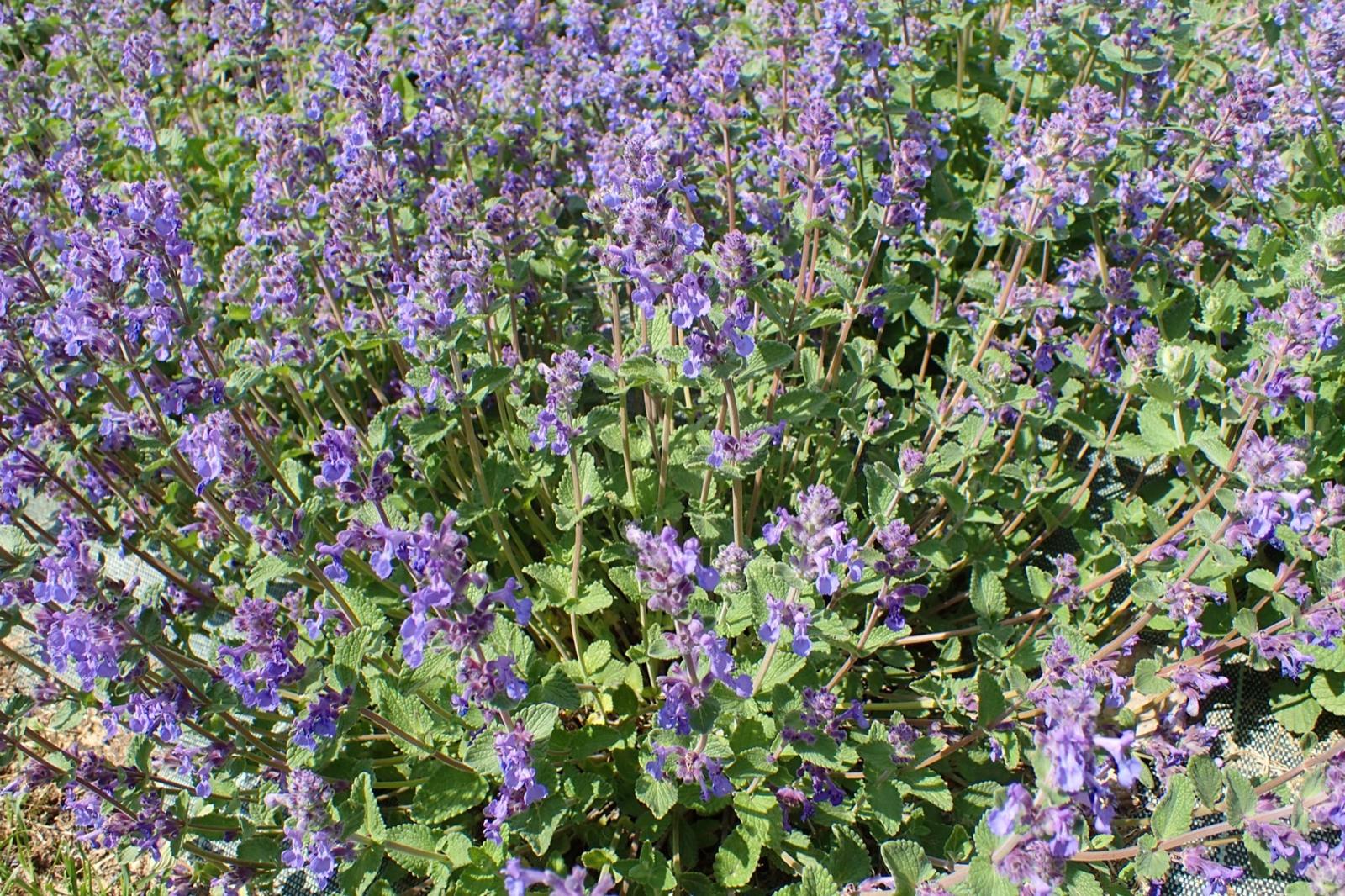
Catmint (Nepeta × faassenii 'Walker's Low'). Zones 3–8, about 2 to 2½ feet tall and wider than that. Gray-green, minty foliage and a haze of lavender-blue from late spring on. Shear it by about a third after the first flush and it reblooms into fall. It's the plant we'd pick first for a deer-pressured bed.
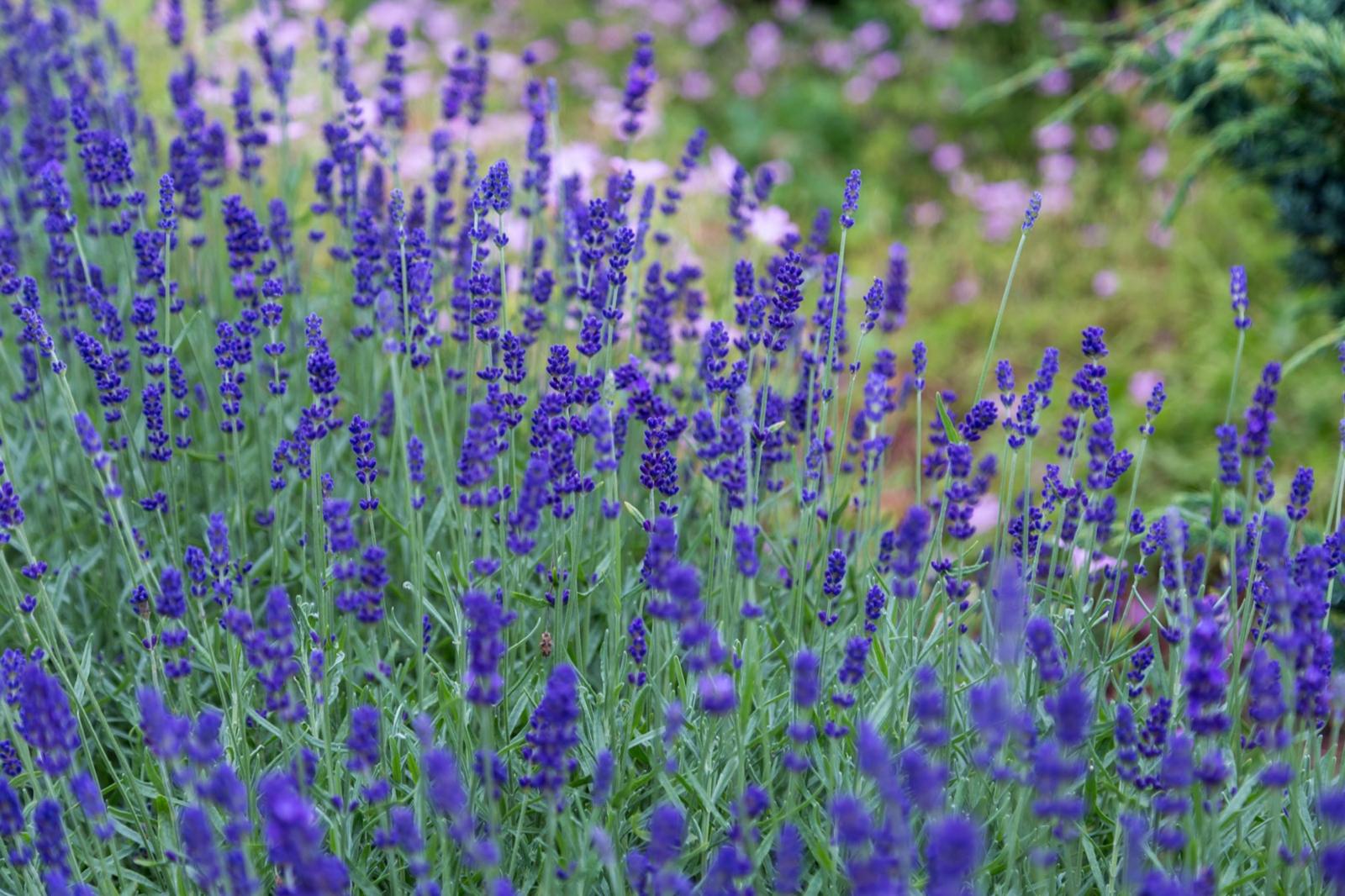
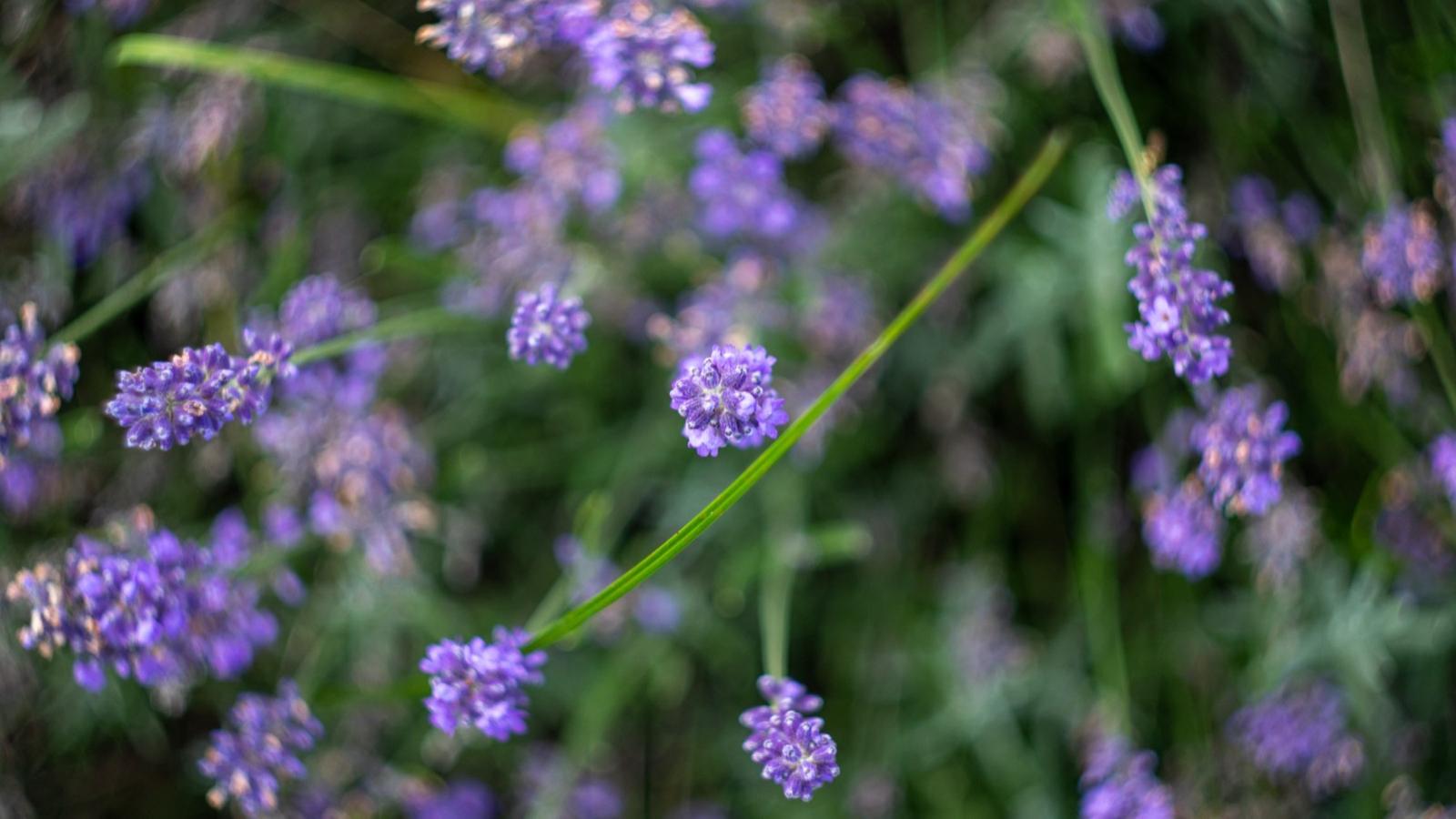
Lavender (Lavandula angustifolia). Zones 5–9. Rutgers rates the genus A and CSU lists it among plants rarely browsed. English lavender is the hardier type for cold-winter yards. The catch is drainage, not deer: it rots in wet clay faster than anything on this list.
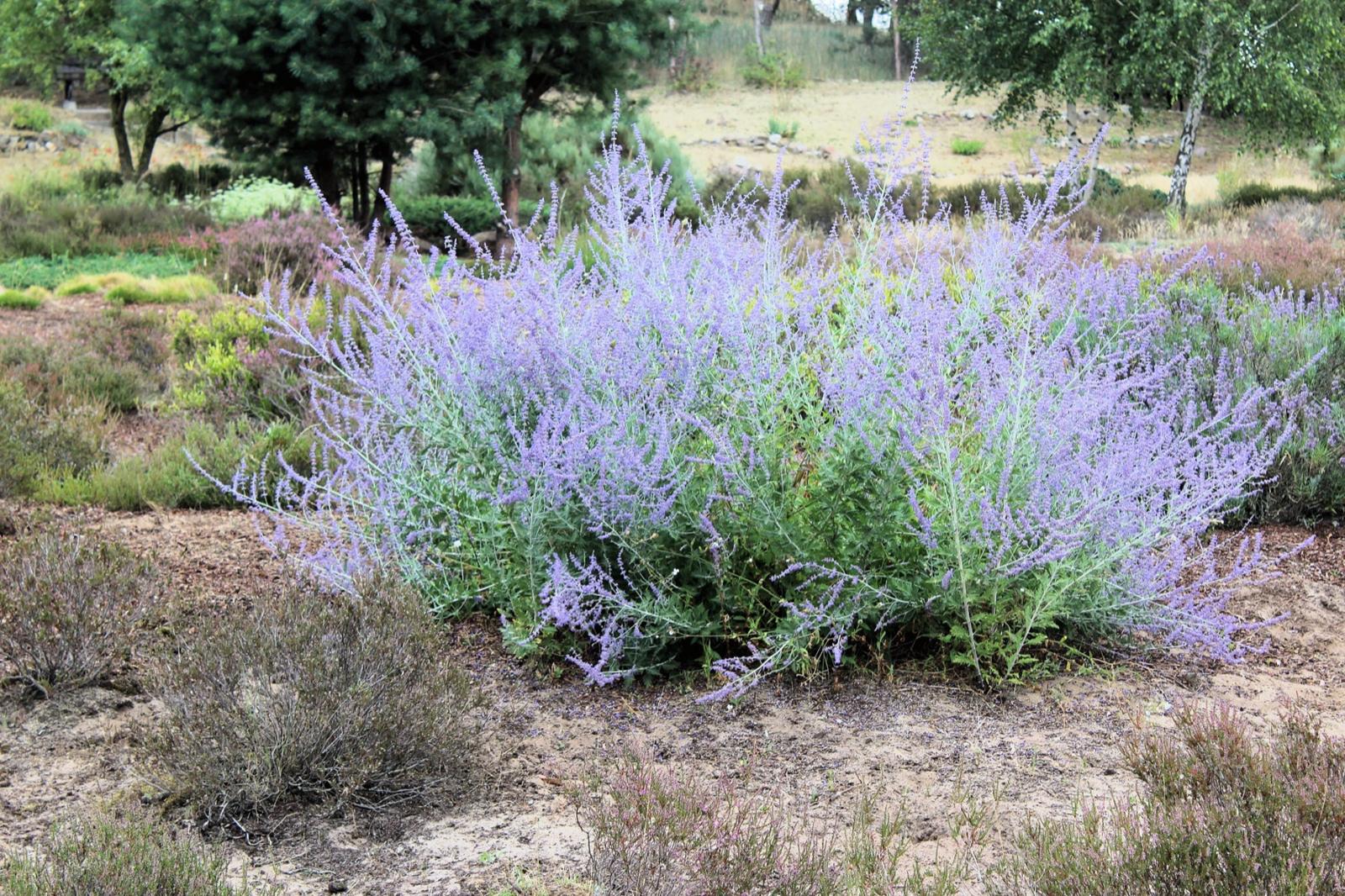
Russian sage (Salvia yangii, formerly Perovskia). Zones 4–9, 3 to 4 feet tall, silver stems and lavender-blue flowers from July into fall. Both Rutgers (A) and CSU list it. Give it room; it runs a little by roots once happy.
Agastache (hummingbird mint). Zones 4–10 for A. rupestris (Plant Select rates its Sunset hyssop 4b–10), 20–36 inches, licorice-scented foliage and orange-pink spikes from midsummer to frost. Rutgers rates the genus A. Plant it high, in gravel-mulched lean soil, or winter wetness kills it.
Threadleaf coreopsis 'Moonbeam' (Coreopsis verticillata). Zones 3–9, fine needle-like foliage under pale yellow daisies all summer. An A on the Rutgers list; its cousin lance-leaf coreopsis only rates B.
Yarrow (Achillea millefolium). Zones 3–9. Rutgers gives common yarrow a B, and CSU puts it on its rarely-browsed list. The bitter, ferny foliage is the reason. Keep it lean or it flops.
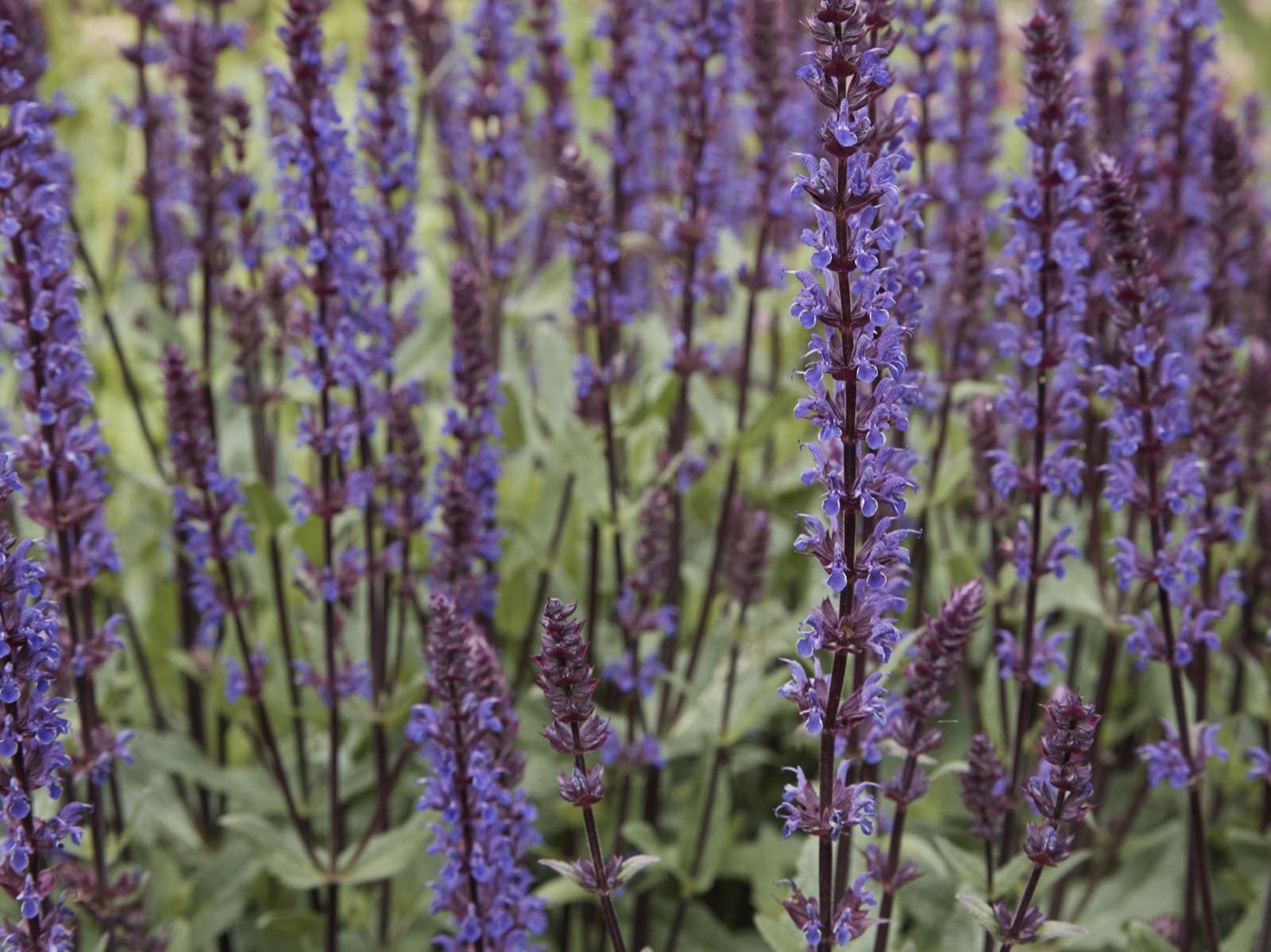
Salvia 'May Night' (Salvia nemorosa). Zones 4–8, deep violet spikes in late spring. Rutgers rates meadow sage B. Deadhead for a second bloom.
Red hot poker (Kniphofia). Zones 5–9, grassy leaves and orange-red torches that hummingbirds work hard. Rated B.
Grasses deer mostly ignore
Ornamental grasses are low-risk because the blades are tough, fibrous and low in the nutrients deer are after. All four of these carry a Rutgers A (feather reed grass at the genus level).
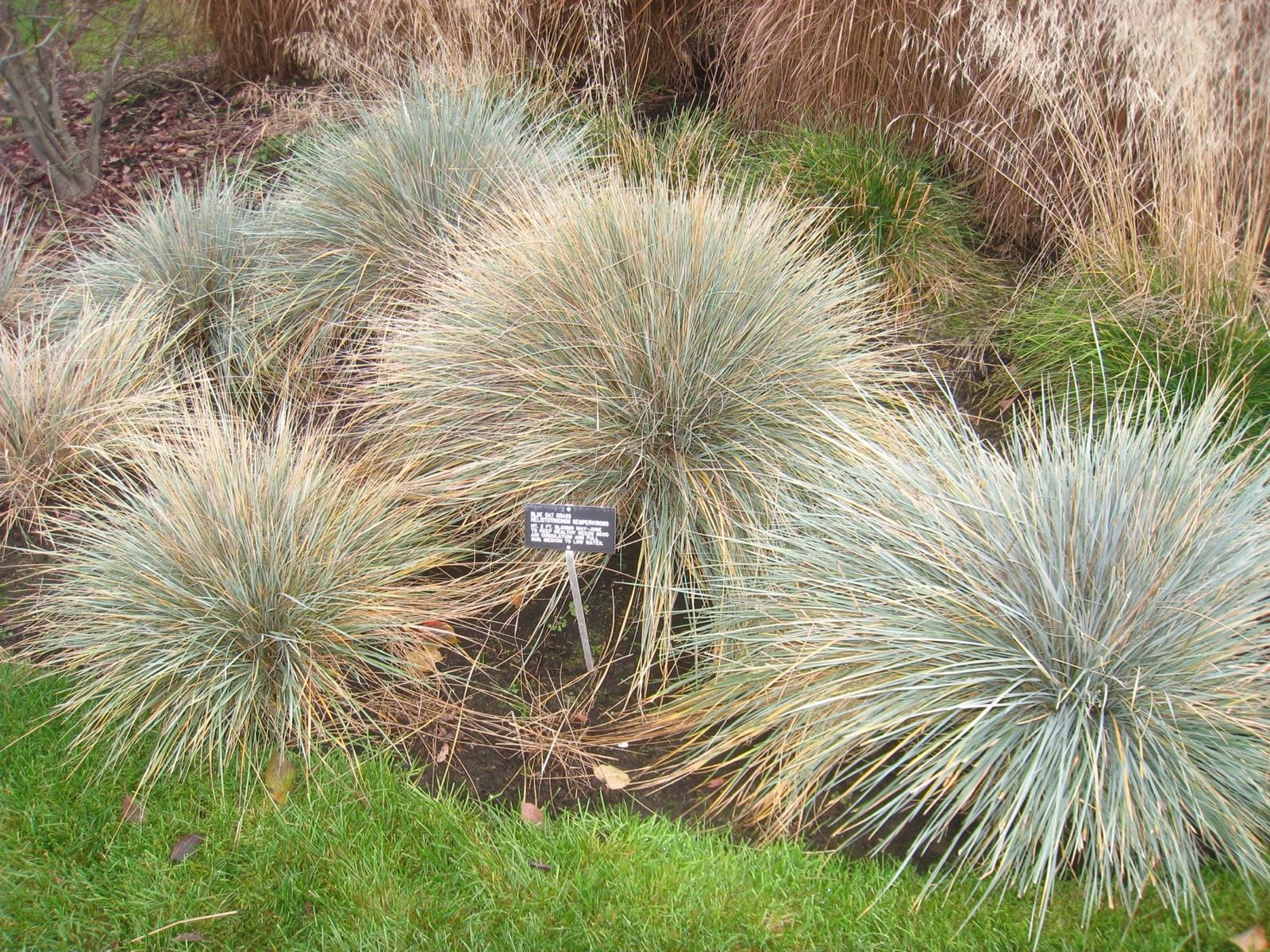
- Blue oat grass: zones 4–8, 18–30 inches, evergreen blue fountain. Wants sharp drainage and hates being crowded.
- Little bluestem: zones 3–9, 2–4 feet, native, turns copper-red in fall and stands all winter.
- Feather reed grass 'Karl Foerster': zones 4–9, 3–5 feet, the strongest vertical accent in the dry garden.
- Switchgrass: zones 4–9, 4–6 feet, native, with airy seed clouds. Needs a bit more water than the other three.
More options, with water and height comparisons, are in our ornamental grasses guide.
Shrubs and trees with a good track record
Shrubs are where deer do the most expensive damage, so it pays to be picky.
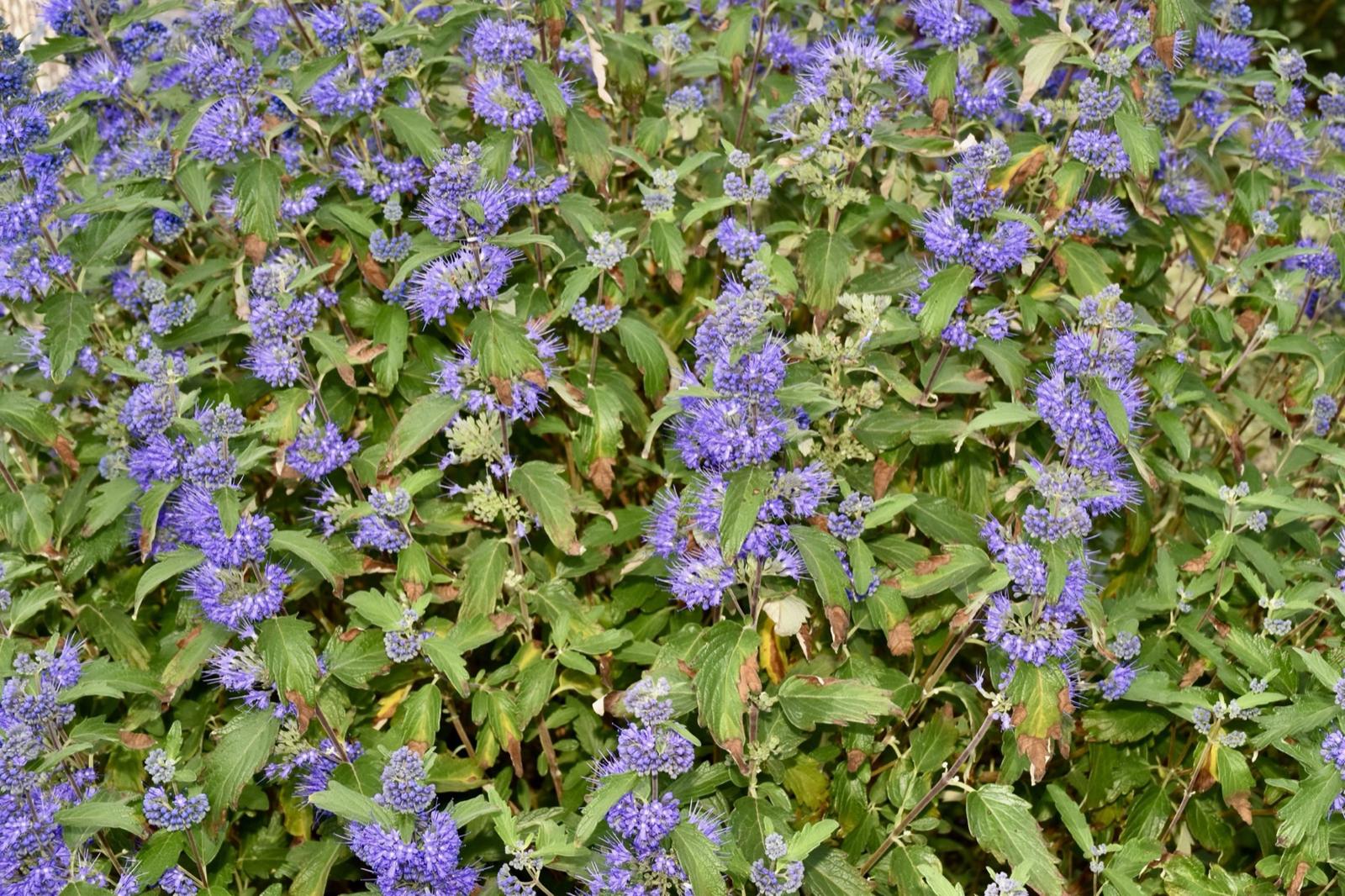
Blue mist spirea (Caryopteris × clandonensis). Zones 5–9, 2–3 feet. Aromatic gray-green leaves, blue flowers in August. It's on both the Rutgers A list and CSU's list. In cold winters it often dies back; cut it to 6–12 inches in spring and it blooms on new growth.
Potentilla (Potentilla fruticosa, also sold as Dasiphora). Zones 2–7, 2–4 feet, yellow or white flowers from early summer into fall. Rutgers A, CSU-listed. Better in the cooler, higher parts of the West than in low-desert heat.
Apache plume (Fallugia paradoxa, now called canyon plume by Plant Select). Zones 4–8, 4–6 feet, white flowers and pink feathery seed heads at the same time from May to September. CSU lists it among plants deer rarely browse, and Plant Select marks it deer resistant.
Rocky Mountain juniper (Juniperus scopulorum). Zones 3–7, 20–30 feet for the species, with narrow cultivars for tight spaces. CSU lists it as rarely browsed; Rutgers rates the species B and one cultivar, 'Moonglow', A.
Soft-leaf yucca (Yucca filamentosa). Zones 4–10. Rutgers rates it A. The evergreen rosettes give winter structure and the flower spikes reach 5–6 feet.
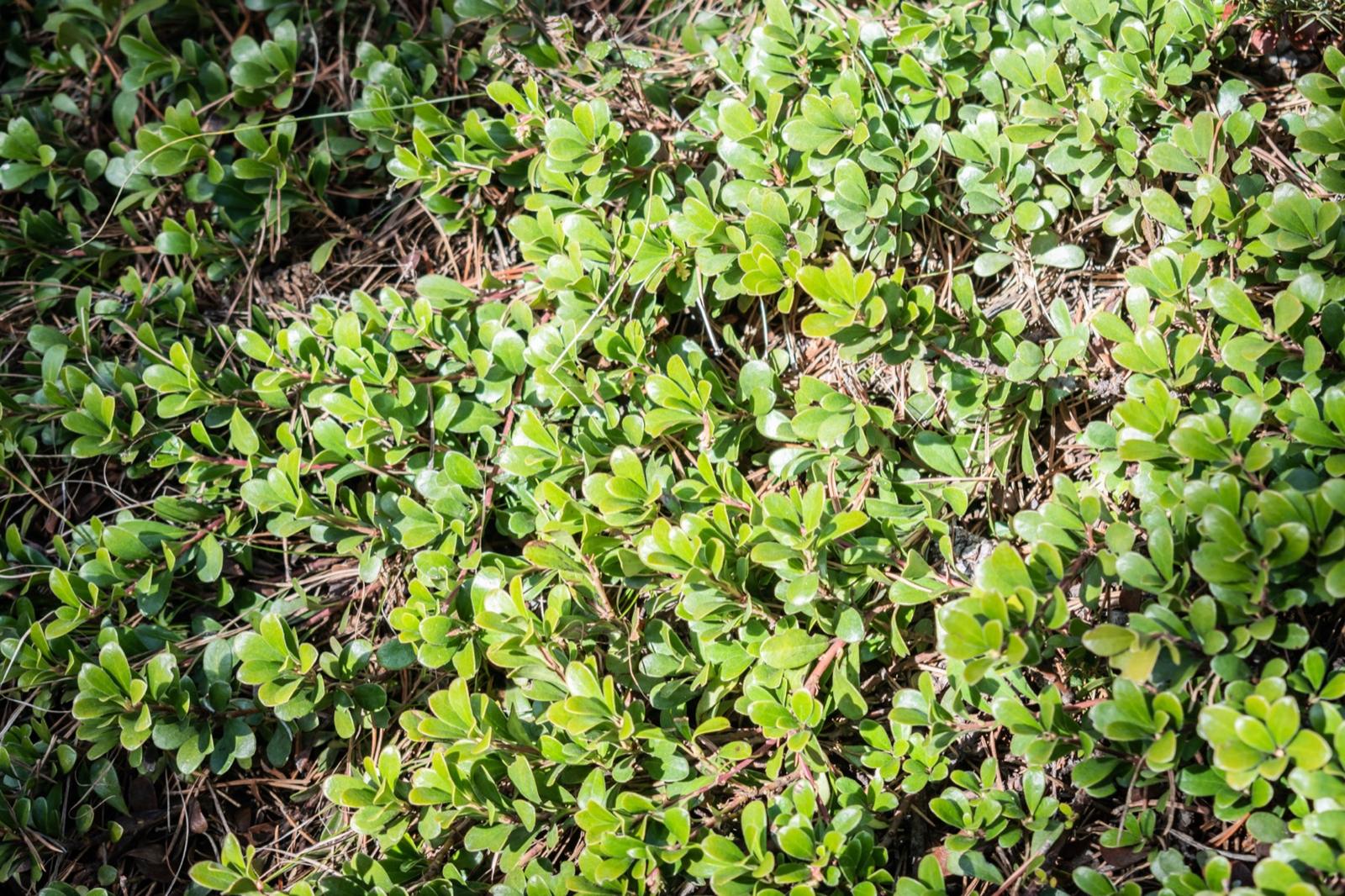
Two more CSU names worth knowing: pinyon pine and Oregon grape holly (Mahonia), both on its rarely-browsed list. For full profiles of the shrubs above, see drought-tolerant shrubs.
Low-water favorites deer eat more than you'd think
Several plants that nursery tags and plant databases, including ours, flag as deer resistant get a worse grade from Rutgers. They're still great xeriscape plants. Just don't build a deer-country bed around them without protection.
| Plant | Rutgers rating | What to expect |
|---|---|---|
| Penstemon | C | Flower stalks nipped just before bloom, especially in spring |
| Blanket flower (Gaillardia) | C | Buds and flowers eaten; foliage often left |
| Showy sedum ('Autumn Joy' types) | C | Succulent new growth browsed in spring |
| Purple coneflower | B | Young plants and buds sampled |
| Eastern redbud | C | Browsed as a young tree |
Plant Select, which trials plants in Colorado, also marks its Colorado Gold gazania as not deer resistant. Tuck these plants close to the house, surround them with a buffer of catmint and grasses, or protect them for the first couple of seasons while they bulk up.
Planting a deer-resistant xeriscape that holds up
A few habits matter as much as the plant list.
- Skip the fertilizer and extra water. CSU notes that highly fertilized, highly irrigated plants are more attractive to deer than lean-grown natives. Soft, lush growth is exactly what browsers look for. Xeriscape plants grown hard are less appealing.
- Protect new transplants. Almost everything gets tasted when it comes out of the nursery pot. A cage of welded wire or a spray repellent for the first season buys time. CSU's research found a spray of 20 percent whole eggs and 80 percent water was among the more effective repellents, reapplied about every 30 days.
- Layer the bed. Put the most aromatic plants (catmint, lavender, Russian sage) on the edges deer approach from, with the riskier plants inside.
- Fence where it counts. If you have a vegetable garden or roses, CSU recommends a woven-wire fence 8 feet high. That's the only method it calls a sure thing.
From our installs: On Front Range jobs near open space, we plant the aromatic perennials and grasses first and leave penstemons and other "maybe" plants for spots near the house. Most of the browse damage we see happens in the first spring after planting, when everything is soft and newly watered, so we cage or spray new plants through their first season. Once the roots are established and we cut the establishment watering back, damage drops off. (Xeris Landscaping is owned by Xeriscaping.com's founder.)
For establishment watering schedules, see first-year xeriscape care. If deer pressure is heavy where you live, as it is on the west side of Colorado Springs, lean harder on the A-rated plants above.
Frequently asked questions
Are any plants completely deer-proof?
No. CSU Extension states plainly that a hungry deer will find almost any plant palatable. Ratings describe how often plants are damaged under typical pressure. In a drought year or a hard winter, even catmint and lavender can get sampled.
Which drought-tolerant perennials are most deer-resistant?
On the Rutgers list, the low-water perennials rated A ("rarely damaged") include catmint, lavender, Russian sage, agastache, threadleaf coreopsis, artemisia, ornamental alliums and yucca. Yarrow, meadow sage and red hot poker rate B.
Do deer eat penstemon?
Sometimes. Rutgers rates penstemon C, "occasionally severely damaged," usually because deer nip the flower stalks. In heavy deer areas, plan to protect penstemons until they're well established.
Do deer-resistant plants also resist rabbits?
Not reliably. Rabbits have different tastes and go after low new growth, especially in spring. Don't assume a deer rating covers them. Chicken-wire collars around new plants handle both problems.
Is it worth using repellents on xeriscape plants?
For new plantings, yes. CSU notes that repellents work best on plants deer already find less appealing, which is exactly what this list is. Reapply after rain and about every 30 days, and switch products occasionally.
Want the full ranked plant list with water needs and regions? Our free guide covers 80 low-water plants, shrubs and trees. For more flowering options, see drought-tolerant perennials and pollinator plants for a low-water garden.