
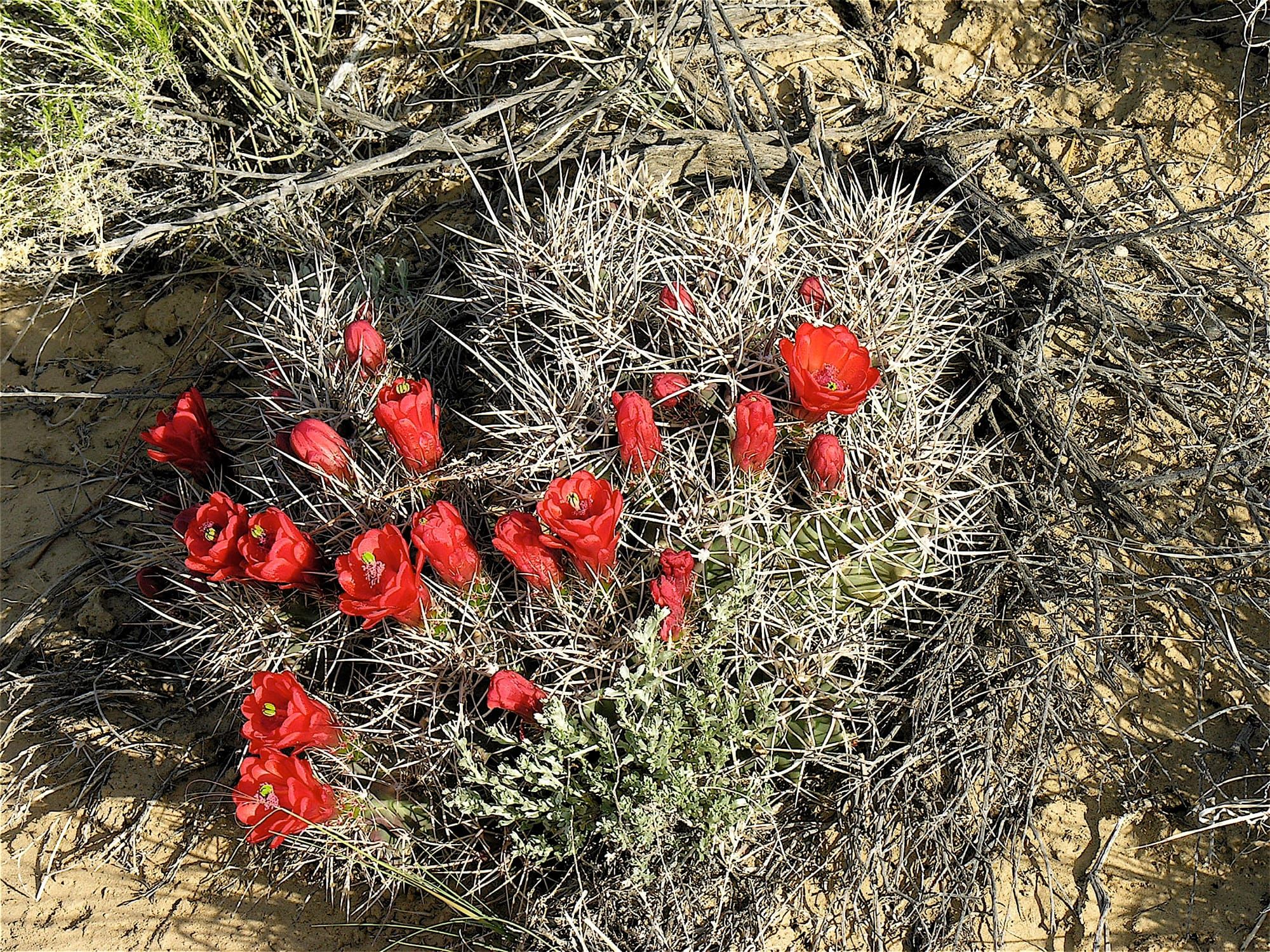
Here's a fact that surprises almost everyone: cactus grow wild in every one of the lower 48 states — and in Canada. The brittle prickly pear ranges north of Edmonton. So if you've written off cold hardy cactus because you garden where winters hit −20°F, good news: a real palette exists, it blooms more extravagantly than nearly anything else in the low-water garden, and it asks for exactly two things — sun and drainage.
Same rule as their agave and yucca cousins: winter wet kills hardy cactus, not winter cold. Nail the drainage and Zone 4 is easy; skip it and even Zone 7 will rot them.
Prickly pears (Opuntia) — the easy ones
- Opuntia polyacantha (plains prickly pear) — Zones 3b–9. The native of the shortgrass prairie: low pads, ferocious spines, and silky June flowers in yellow, pink, or magenta. Practically unkillable in full sun.
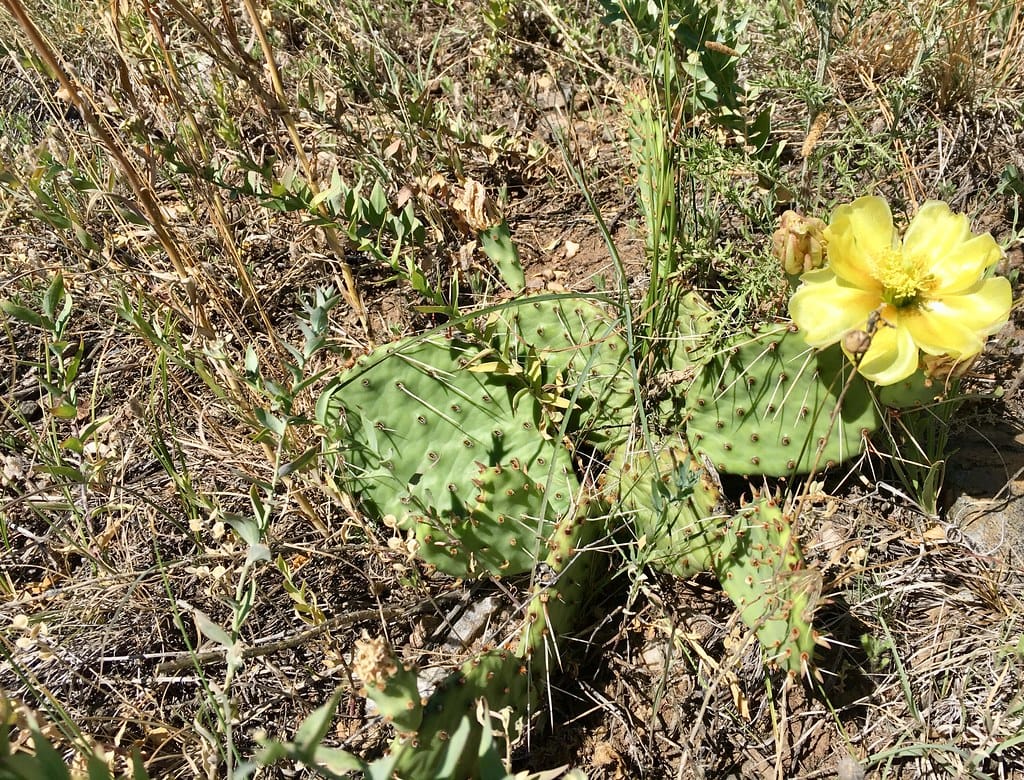
- Opuntia humifusa (eastern prickly pear) — Zones 4–9. The spreading, nearly spineless one that even humid-summer gardeners can grow.
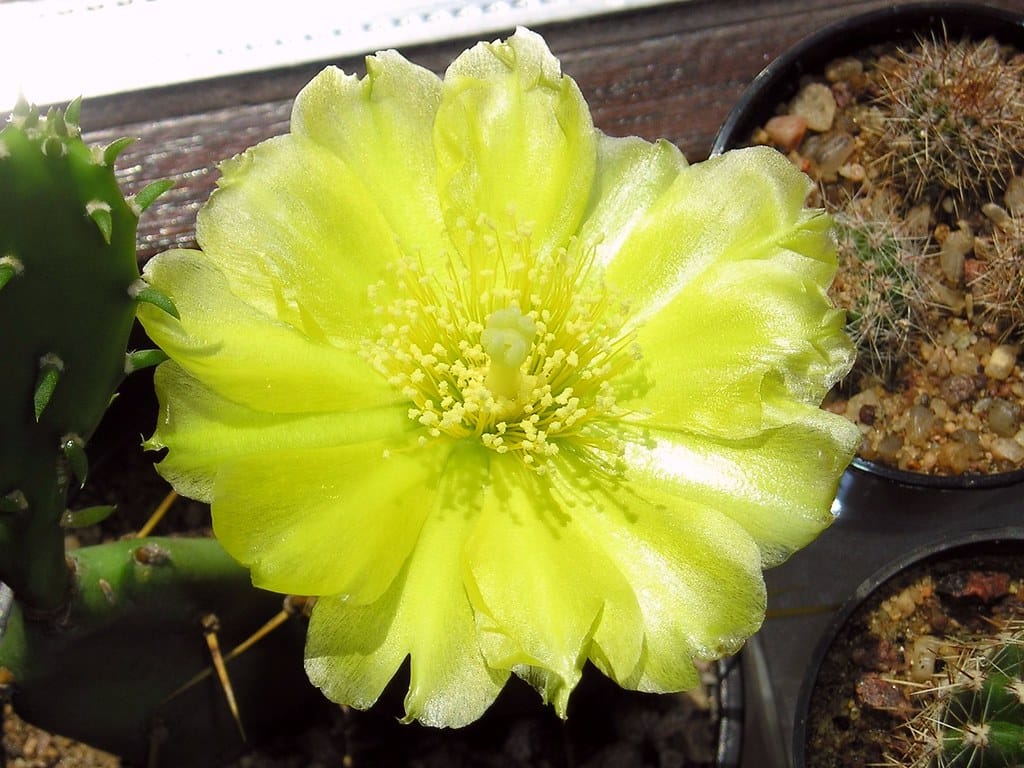
- Opuntia fragilis (brittle prickly pear) — Zones 2–7. The cold-hardiness champion of the entire cactus family — hardy where winters hit −50°F. Tiny, but a conversation piece.
- Named hybrids ('Coombe's Winter Glow' and dozens more) bring bigger flowers and better winter color to Zones 4–5.
Handle all of them with barbecue tongs — the tiny glochid bristles are worse than the big spines.
Hedgehogs, balls, and the sculptural crowd
- Claret cup cactus (Echinocereus triglochidiatus) — Zones 5–9. The showpiece: a mound of ribbed stems that disappears under scarlet, hummingbird-pollinated goblets every spring. Old clumps carry dozens of blooms at once and stop foot traffic cold.
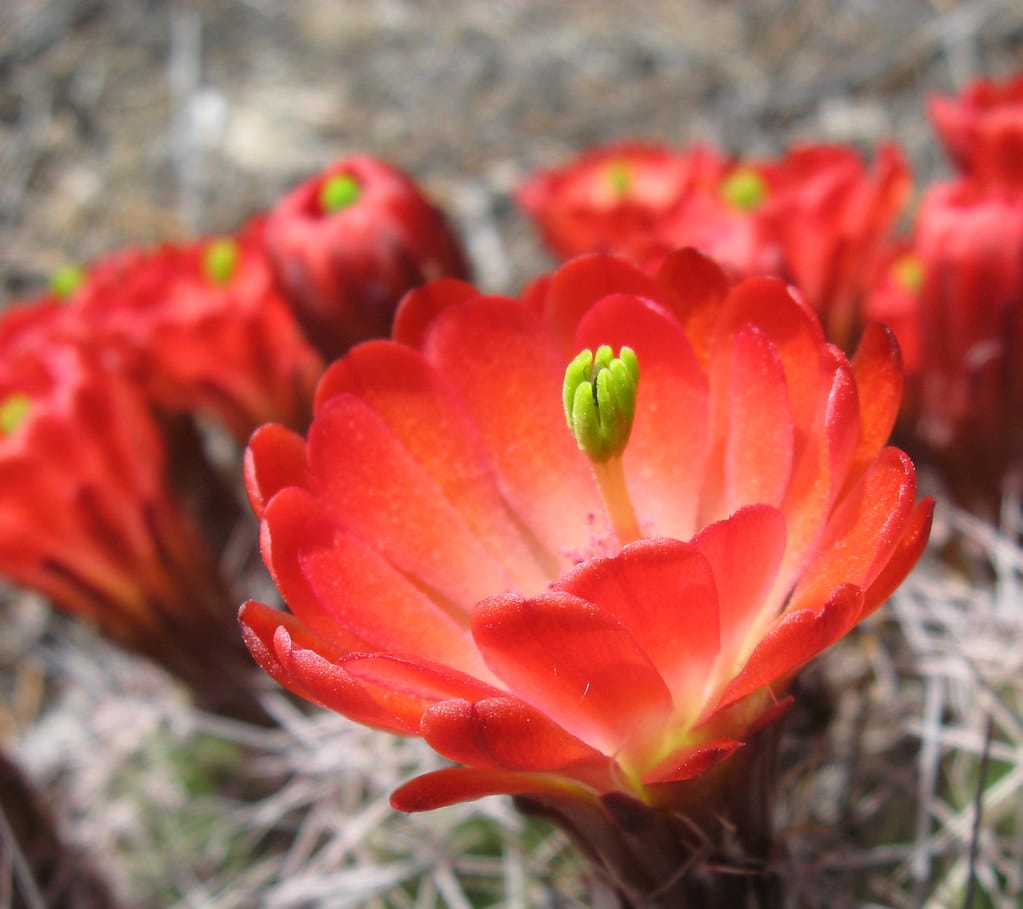
- Echinocereus viridiflorus — Zones 4–8. A fist-sized hedgehog with lemon-scented green flowers, native as far north as Wyoming.
- Escobaria vivipara (spinystar) — Zones 3–8. A golf-ball cactus with a crown of pink blooms, hardy across the northern plains. Perfect for troughs and rock gardens.
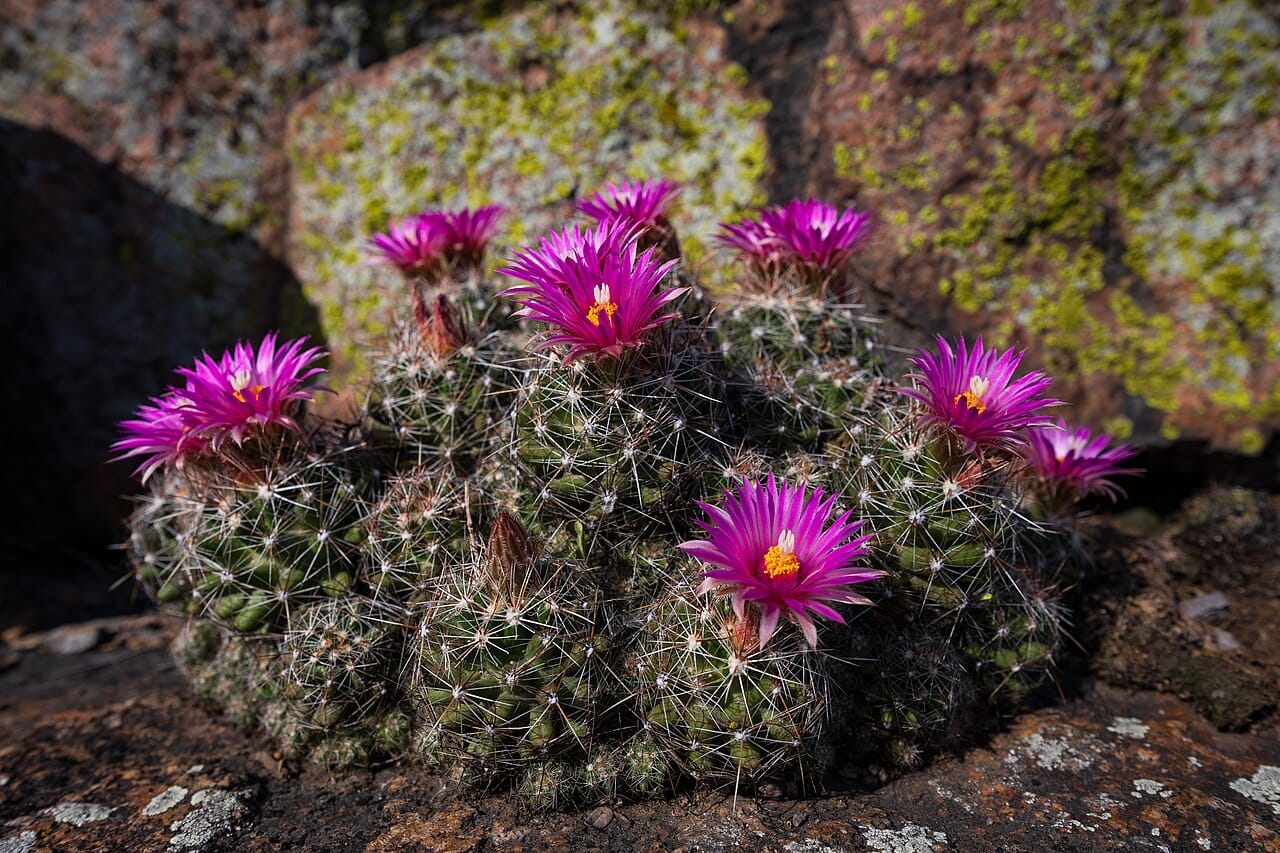
- Pediocactus simpsonii (mountain ball cactus) — Zones 4–8. Lives at 10,000 feet in the Rockies; wants a gritty scree and cool roots.
Cholla — the architectural gamble
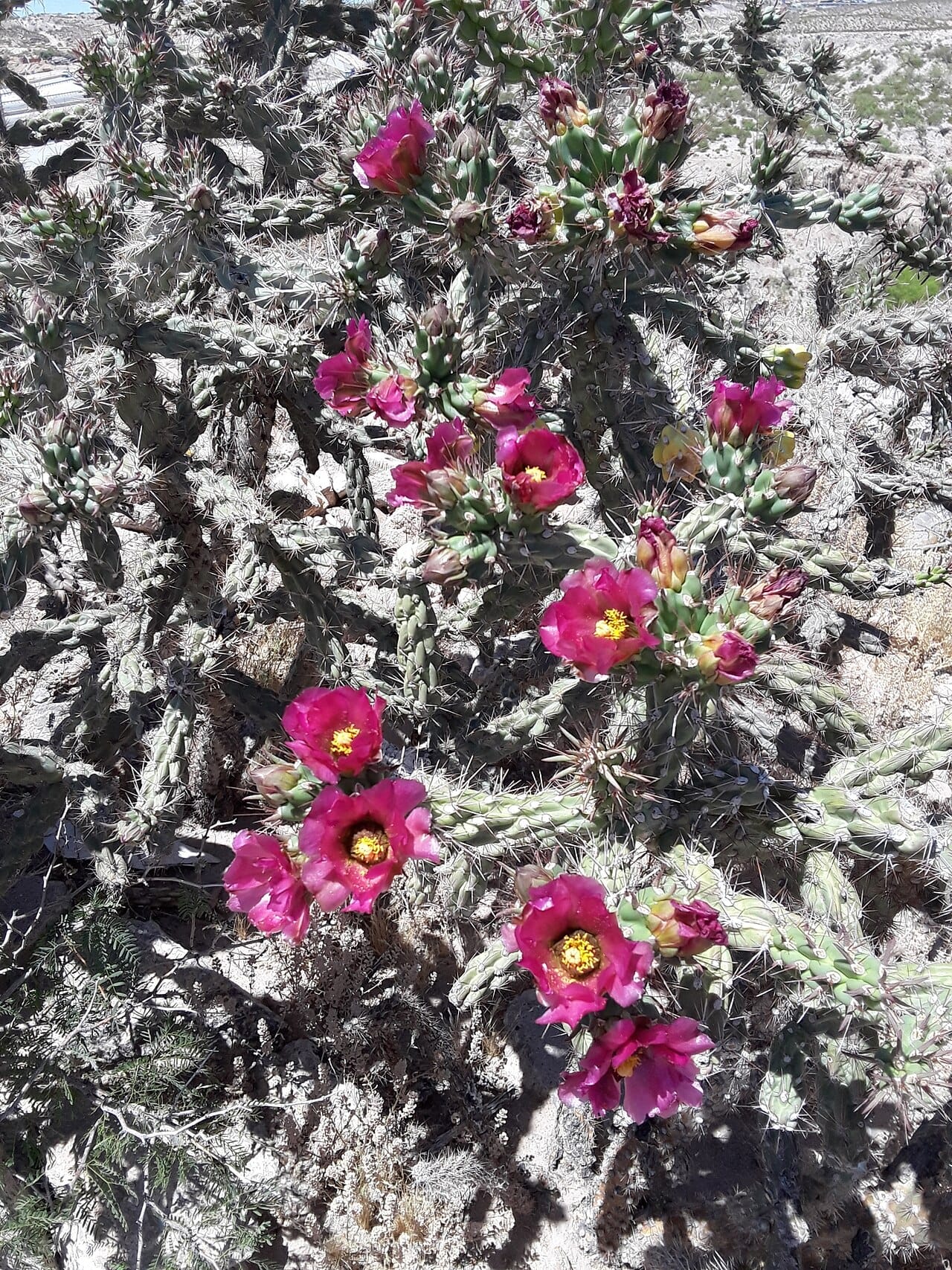
Cane cholla (Cylindropuntia imbricata) — Zones 5–9 grows into a genuinely tree-like, spiny silhouette with magenta summer flowers and yellow winter fruit. Striking, and hardy well below zero — but it's armed like a medieval weapon and sheds rooting joints, so plant it far from paths, pets, and anywhere you'll ever reach with a rake.
The winter shrivel (don't panic)
Every fall, hardy cactus deliberately dehydrate — pads wrinkle, deflate, flop flat, and turn purple-bronze. New growers assume death and dig up healthy plants every spring. It's antifreeze strategy: less water in the tissue means less ice damage. Leave them alone; they replump within weeks of warm weather. A cactus that's soft and black, by contrast, has rotted — almost always from wet soil, not cold.
How to plant them
- Full sun, all day. Six hours minimum; more is better.
- Mound it and grit it. Raise the bed 8–12 inches and mix native soil roughly half-and-half with coarse sand or fine gravel — no compost (soil prep guide).
- Gravel mulch only, an inch or two, tucked under the pads — it keeps crowns dry and reflects the heat they love (gravel vs. wood).
- Plant in late spring through midsummer so roots grab before winter. Water every week or two the first season — yes, even cactus get establishment water — then stop. Established plants generally need nothing beyond rainfall, and overwatering is their only real enemy.
- Site away from snow-shed and roof drip lines — the drainage rule applies to sky water too.
Where they shine
Cactus earn their keep as the flowering jewels of a rock garden, the tough guys of a hell strip, and the winter structure in Zone 5 and Zone 6 beds. Mass the prickly pears, spotlight a claret cup where you'll see it bloom in May, and surround everything with cold-hardy succulents that share the same gritty, dry recipe.
New to the whole approach? The beginner's guide to xeriscaping shows where a cactus bed fits in the bigger plan.