
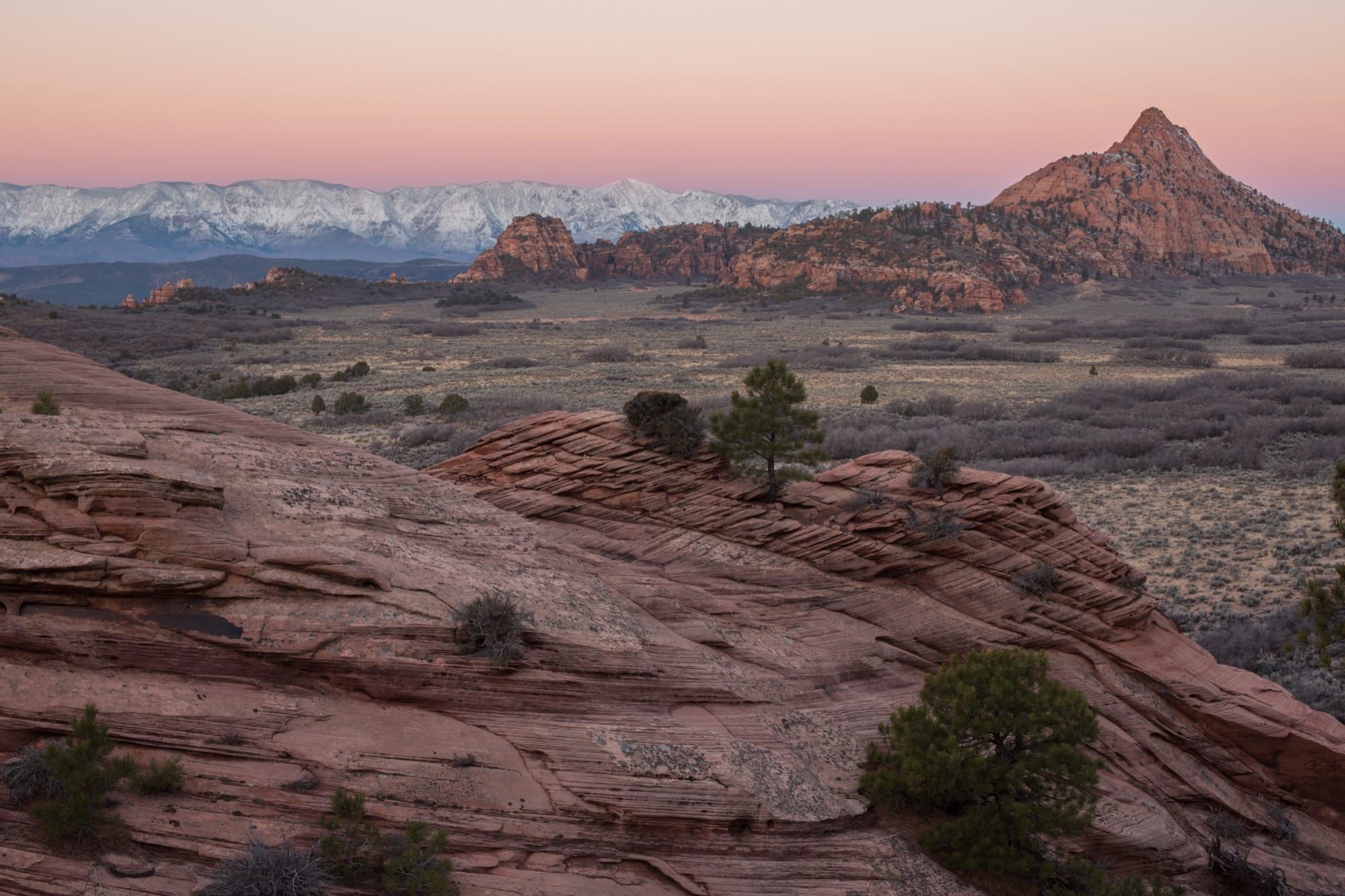
St. George is where Utah stops being the Rockies and becomes the Mojave. Red sandstone, Joshua trees on the outskirts, and roughly 8 inches of rain a year — paired with one of the fastest-growing metro populations in the country and a water supply (the Virgin River) that was fully spoken for decades ago. No community in Utah has a stronger case for xeriscaping, and none has a better-looking regional style to borrow from.
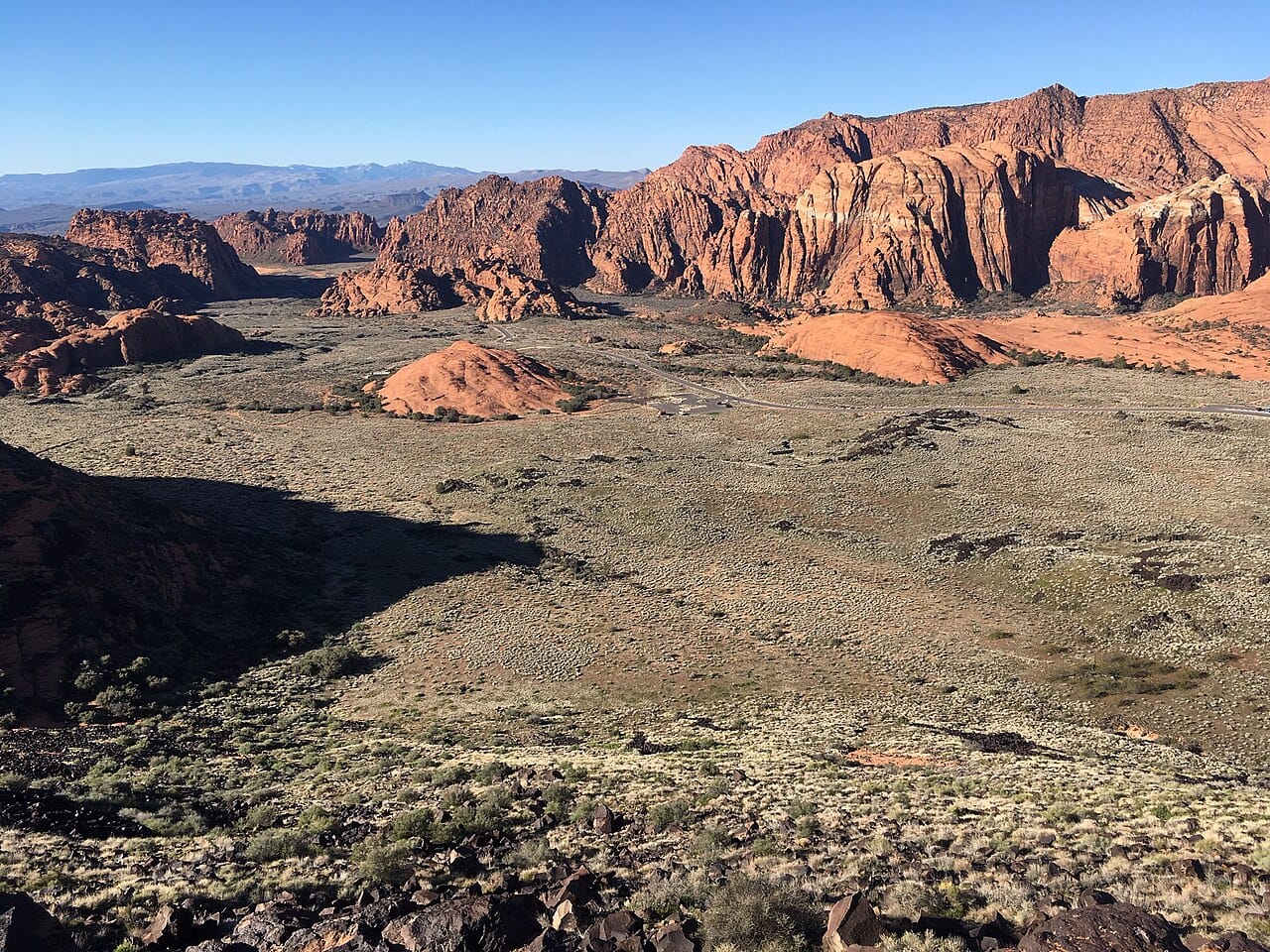
St. George growing conditions
- Hardiness zone: roughly 8a, a full two zones warmer than Salt Lake — but winters still freeze, so true frost-tender Phoenix plants won't survive here.
- Mojave-edge climate: 100°F+ summers, intense sun, drying winds, and alkaline, fast-draining sandy or decomposed-sandstone soils.
- The plant test is twofold — handle 105°F in July and the mid-teens in a cold January snap. Vegas palettes need editing; Salt Lake palettes toast.
Rebates and rules: check the district
Washington County's explosive growth has made water conservation official policy:
- The Washington County Water Conservancy District runs turf-replacement incentives and water-efficiency programs — check their current offerings and rates, which change with funding cycles.
- Utah Water Savers (the statewide portal) handles applications for participating southern Utah communities, including park-strip conversions.
- Newer subdivisions face landscape ordinances limiting lawn area — if you're building, waterwise design isn't optional anyway.
- As everywhere: get pre-approved before removing any living grass, and expect living-plant coverage requirements.
Visit the Red Hills Desert Garden in St. George before you plan anything — it's a free, full-scale demonstration of exactly what this guide describes.
The Mojave-edge plant palette
Trees: desert willow (the region's workhorse — pink summer bloom, fine texture), netleaf hackberry, Fremont cottonwood only where water justifies it, and mesquite or palo verde only in the warmest microclimates — they're gambles in a cold winter.
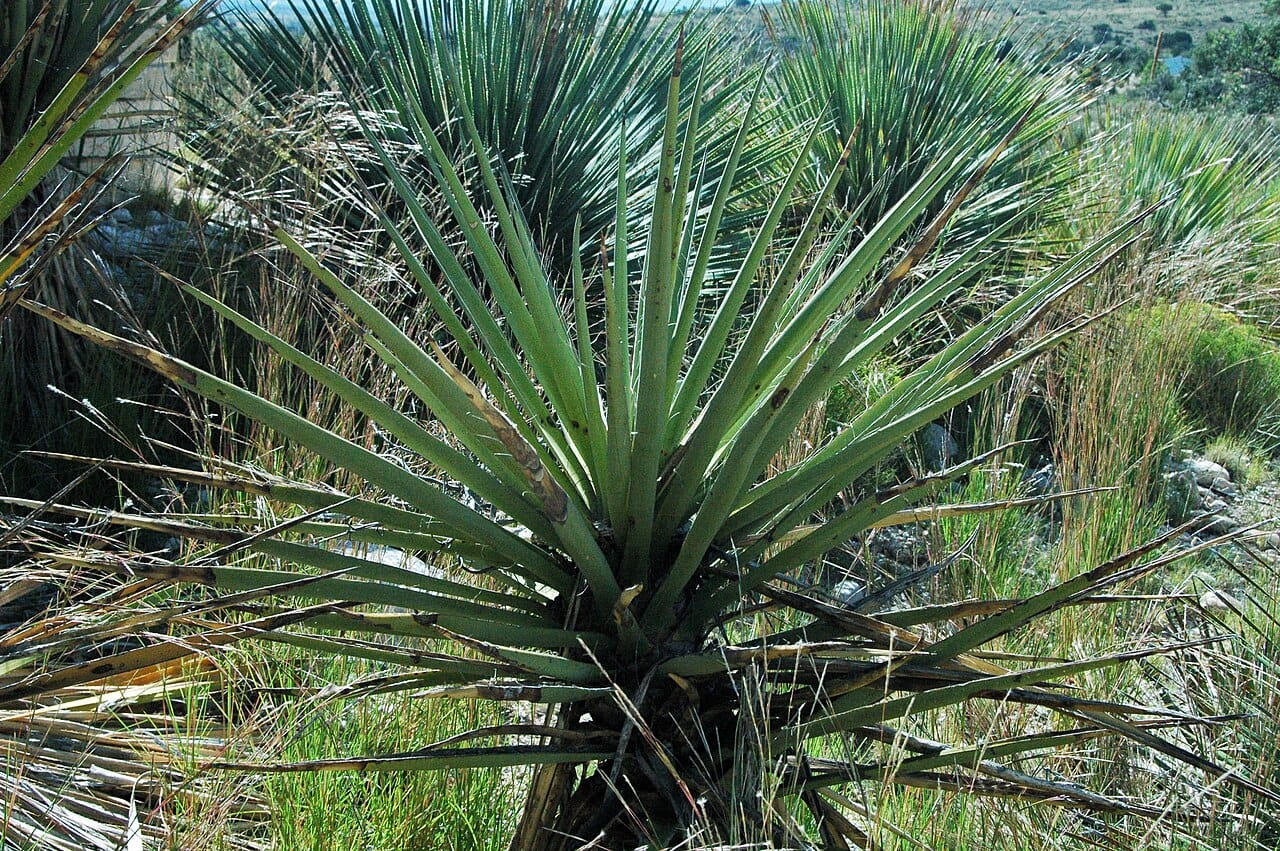
Structure: this is cold-hardy agave and yucca country — Utah agave, Parry's agave, banana yucca, red yucca (hesperaloe), and beargrass all shrug off both seasons' extremes.
Shrubs: Apache plume, blackbrush, rabbitbrush, brittlebush in warm pockets, and Texas ranger (cenizo) in protected spots.
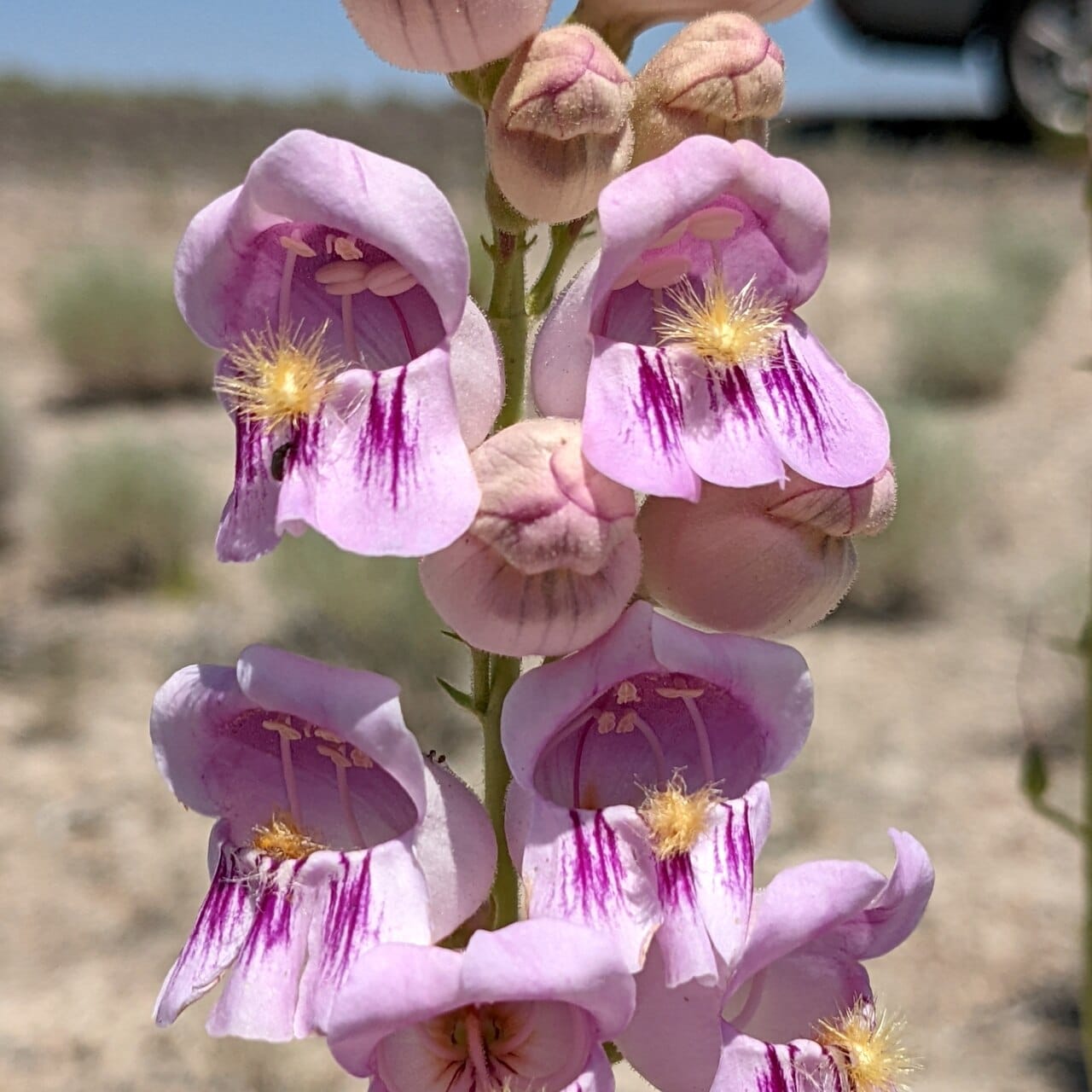
Color: globe mallow (apricot against red rock is the local signature), desert marigold, firecracker penstemon, Palmer's penstemon (fragrant, head-high), blackfoot daisy, and autumn sage for hummingbirds.
Design notes: the red-rock look
- Let the sandstone lead. Local red and buff rock, used in decomposed-granite mulches and boulder groupings, ties the yard to the cliffs behind it. Imported white quartz fights the entire landscape.
- Contrast silver and red. Silver-leaved plants — brittlebush, artemisia, globe mallow foliage — glow against red rock and red walls.
- Shade the west side. A desert willow off the patio makes summer evenings usable; St. George summers are Phoenix-lite.
- Sculptural restraint works here like almost nowhere else in Utah — agave, yucca, and ocotillo silhouettes against stucco read genuinely Mojave. More ideas in our desert landscaping guide, and note how the Las Vegas playbook applies 100 miles down I-15 — minus its most cold-tender plants.
Getting started
- Check current district and Utah Water Savers programs; get pre-approved with photos of living lawn.
- Walk Red Hills Desert Garden with a camera and steal shamelessly.
- Follow the 10 Steps to Xeriscaping: remove turf, install drip, plant in fall — St. George's long warm autumn is a planting gift.
- Deep-soak monthly once established; most failures here are drownings, not droughts.
St. George sits in the most photogenic desert in Utah. Plant globe mallow against red rock, put an agave where the sunset hits it, and stop fighting the Mojave — it was always going to win.